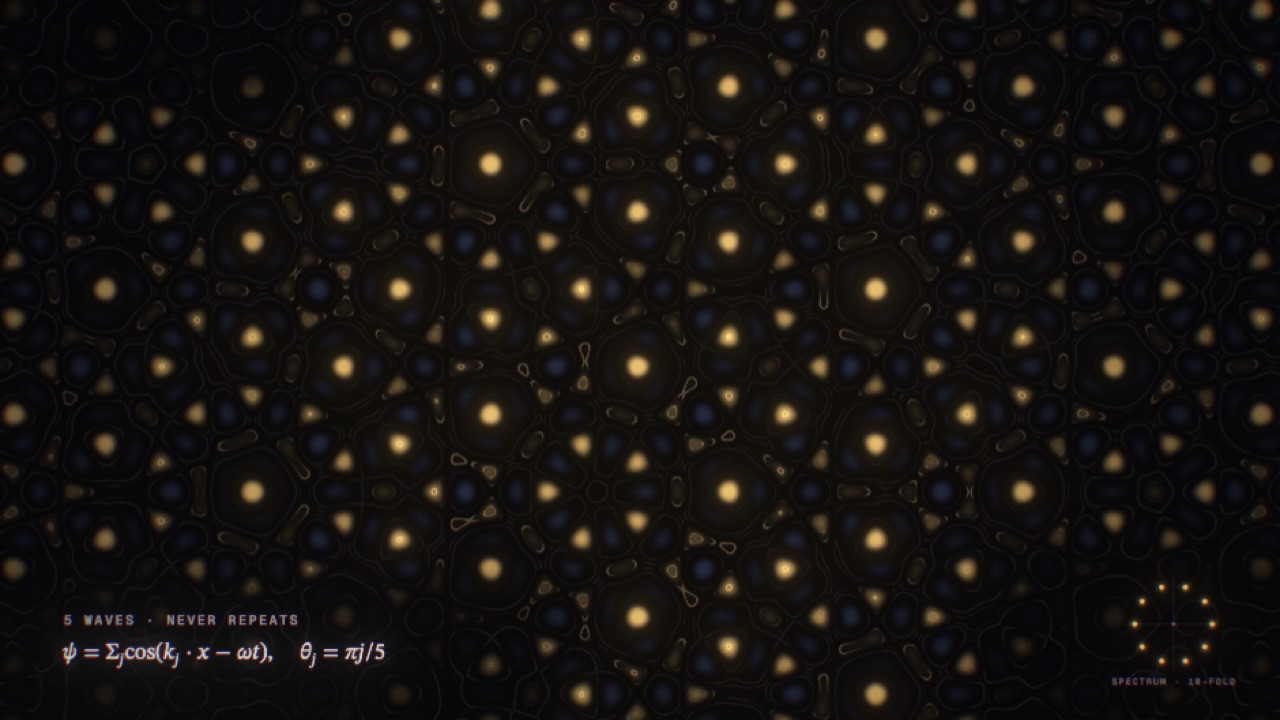
I Circles on circles
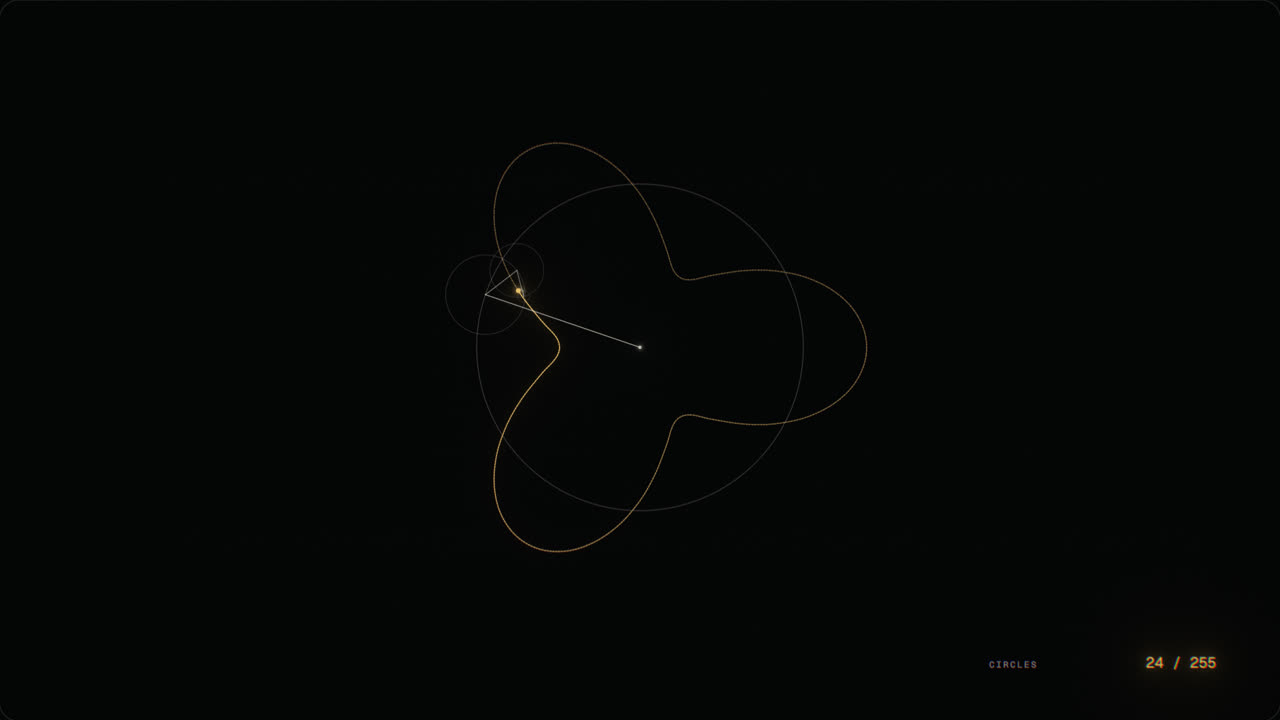
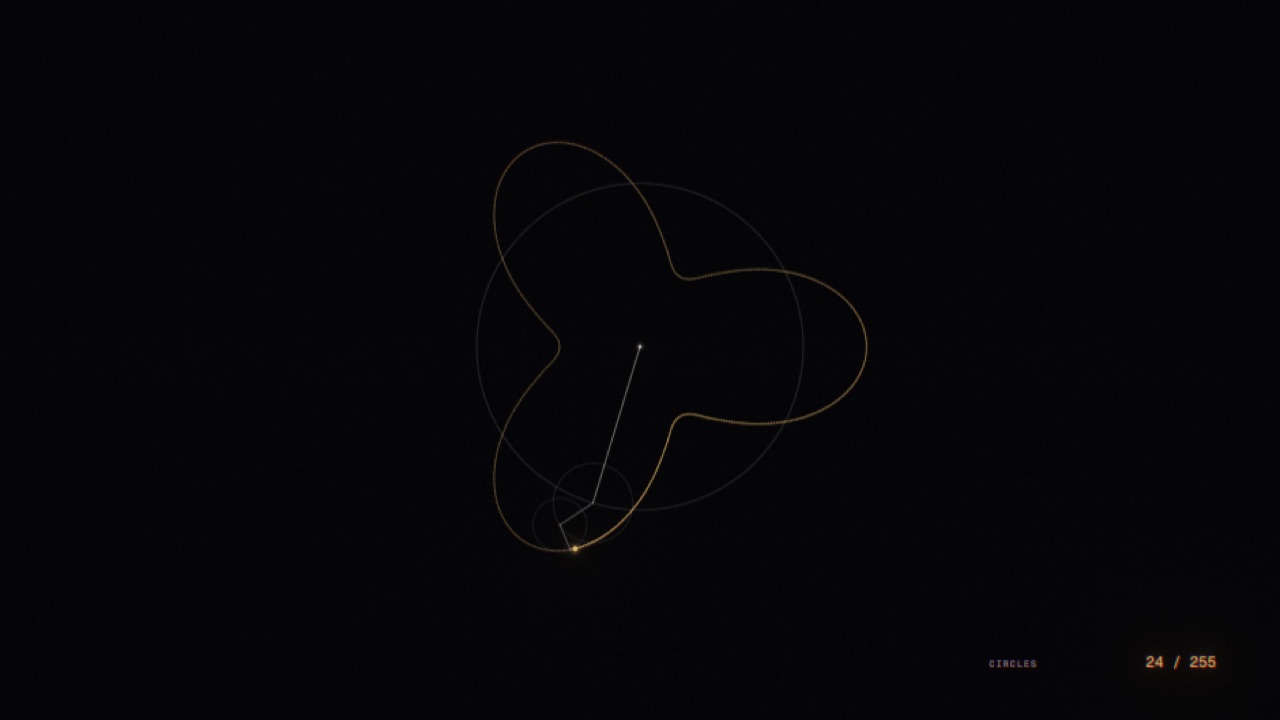
Each term cne2πins of a Fourier series is a circle of radius |cn| that turns n times while the pen goes round once. Put each circle on the rim of the one before and the pen, on the rim of the last, draws the sum. The spectrum in the corner shows which circles are turning and how large each one is.
- A square wave
- f(x)=(4/π)(sinx+sin3x/3+sin5x/5+⋯)Only the odd harmonics, each with a radius in proportion to 1/n. Seen from the side the circles trace a square wave, and next to every jump the partial sums overshoot by about 9 per cent of the jump however many terms are added: the Gibbs phenomenon.
- Fejér's averages
- σN=(S0+S1+⋯+SN−1)/NAverage the partial sums instead of stopping at the last one and the overshoot is gone. Each circle shrinks by the factor 1−n/N; the averaging kernel is never negative, so the averages stay between −1 and 1.
- A snowflake
- z(s)=Σcne2πins,n=1,−5,7,−11,⋯The Koch snowflake is continuous and has a tangent nowhere. Turning it by a sixth of a turn is the same as starting a sixth of the way round, so only the frequencies n≡1 mod 6 appear. Add more circles and finer notches appear, though any finite number of them only approximates the curve.
- One circle again
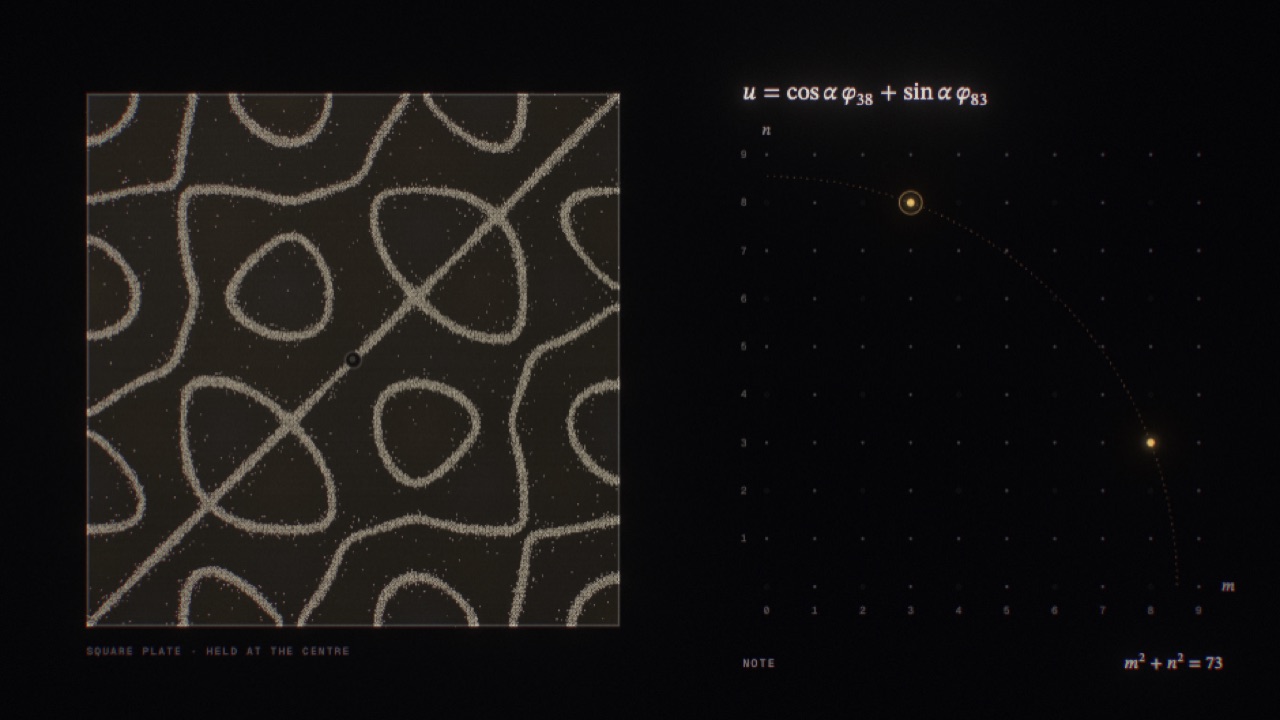
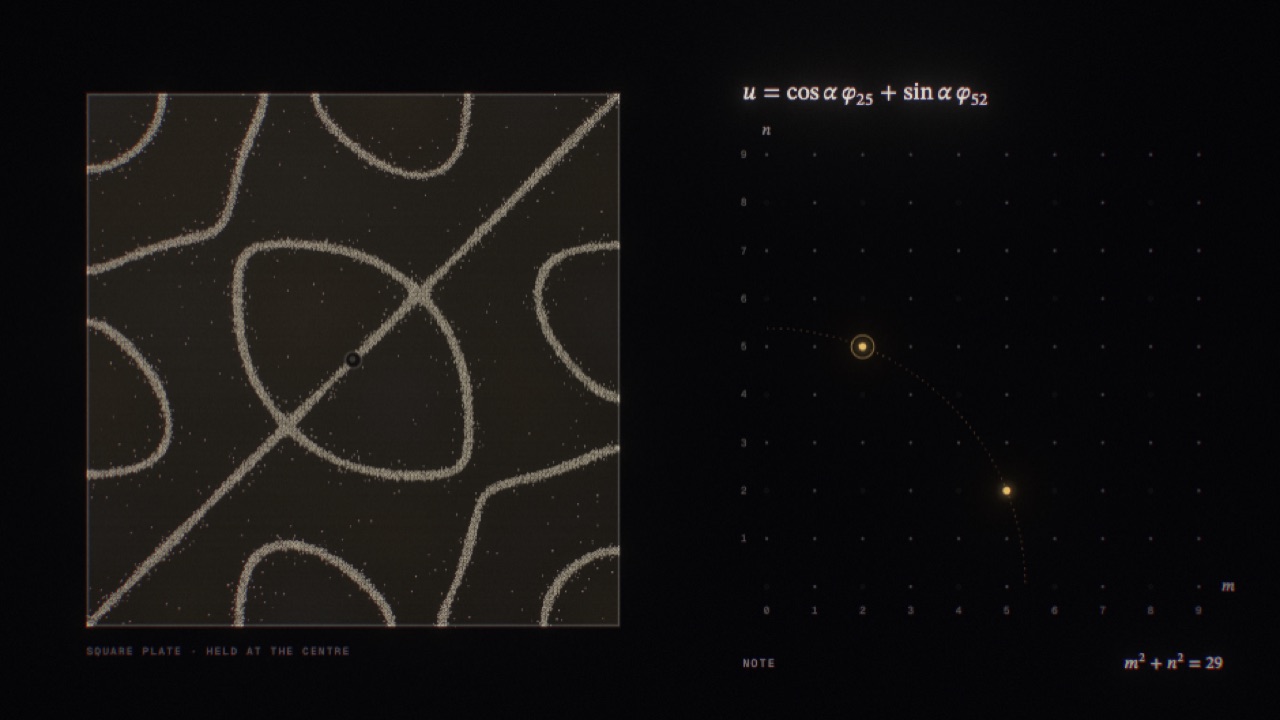
- z(s)=c1e2πisThe circles leave, the fastest first, until only the one turning at speed 1 is left: both series begin with it, and so did the plate.