Hands-on mathematics
Studio
Some things become clear only once you handle them: adjust a parameter, drag a shape, and watch the structure change. Every tool here grows out of a volume of the series, and its pictures are computed live in your browser.
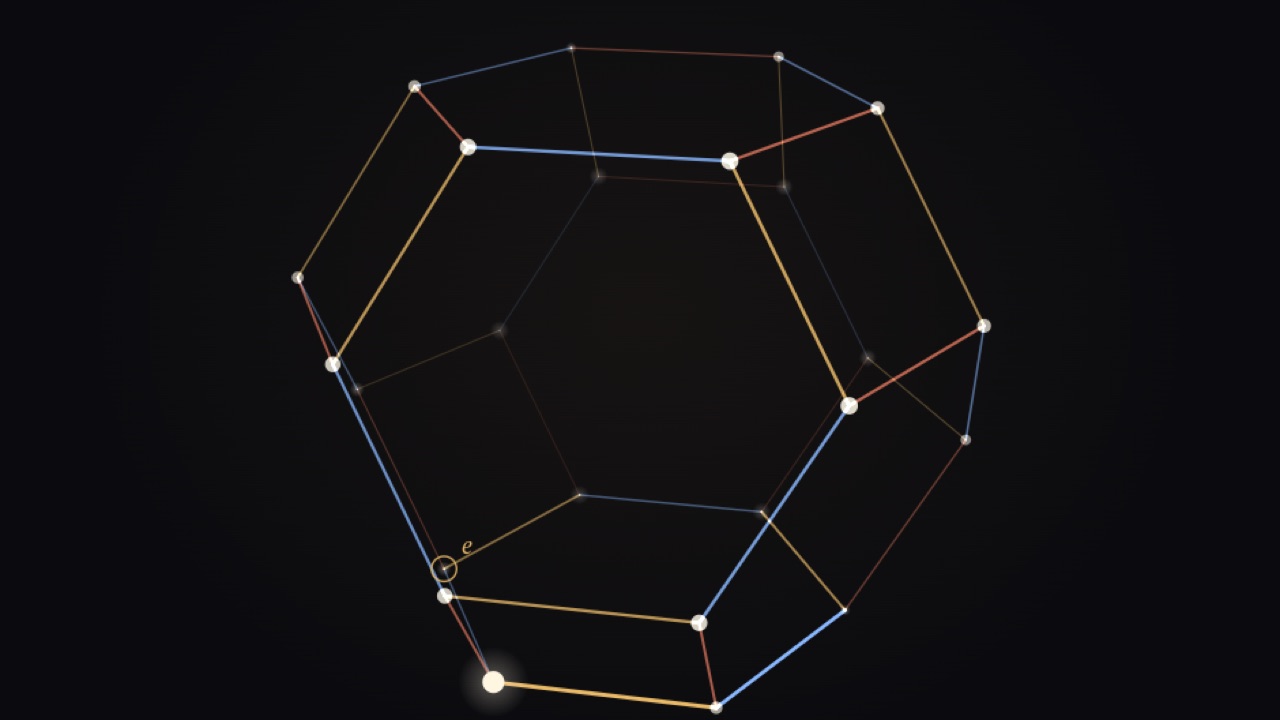
The Order Beneath · No.00InvariantGroup theory
The Order Beneath · No.01ConformalComplex analysis
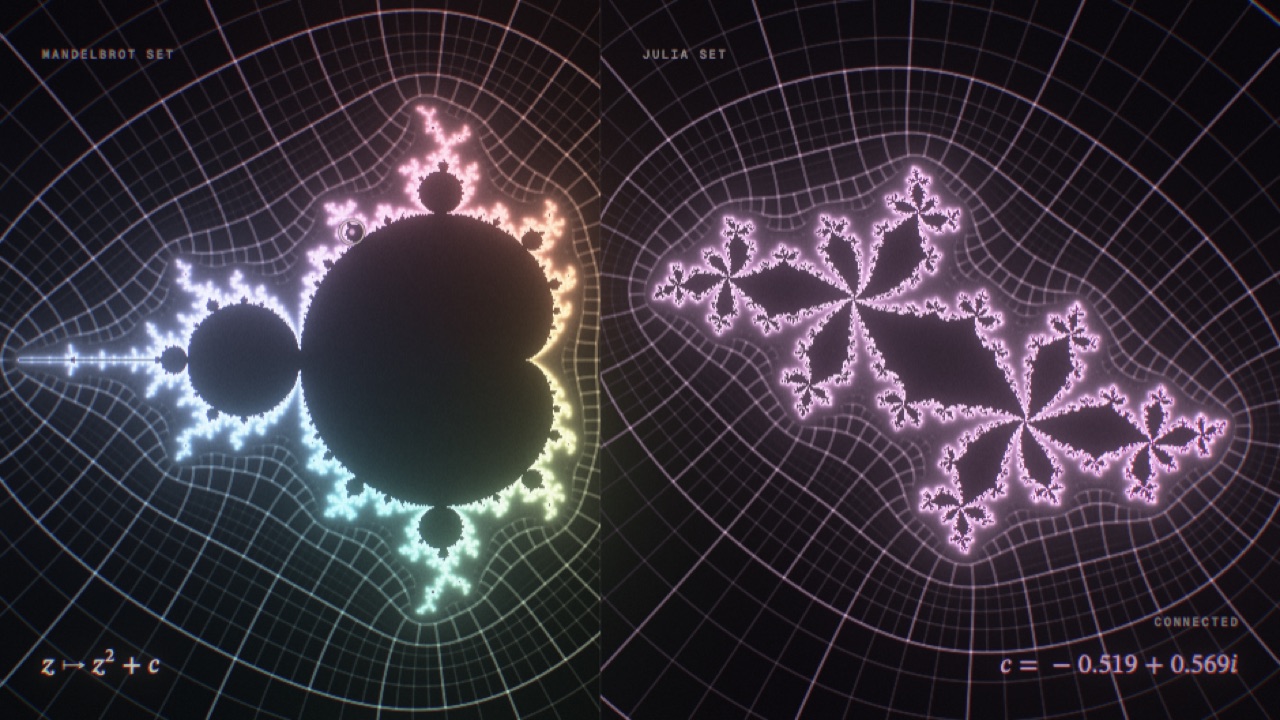 Plate IVJulia setsWhat Julia set belongs to each point of the Mandelbrot set?Open →
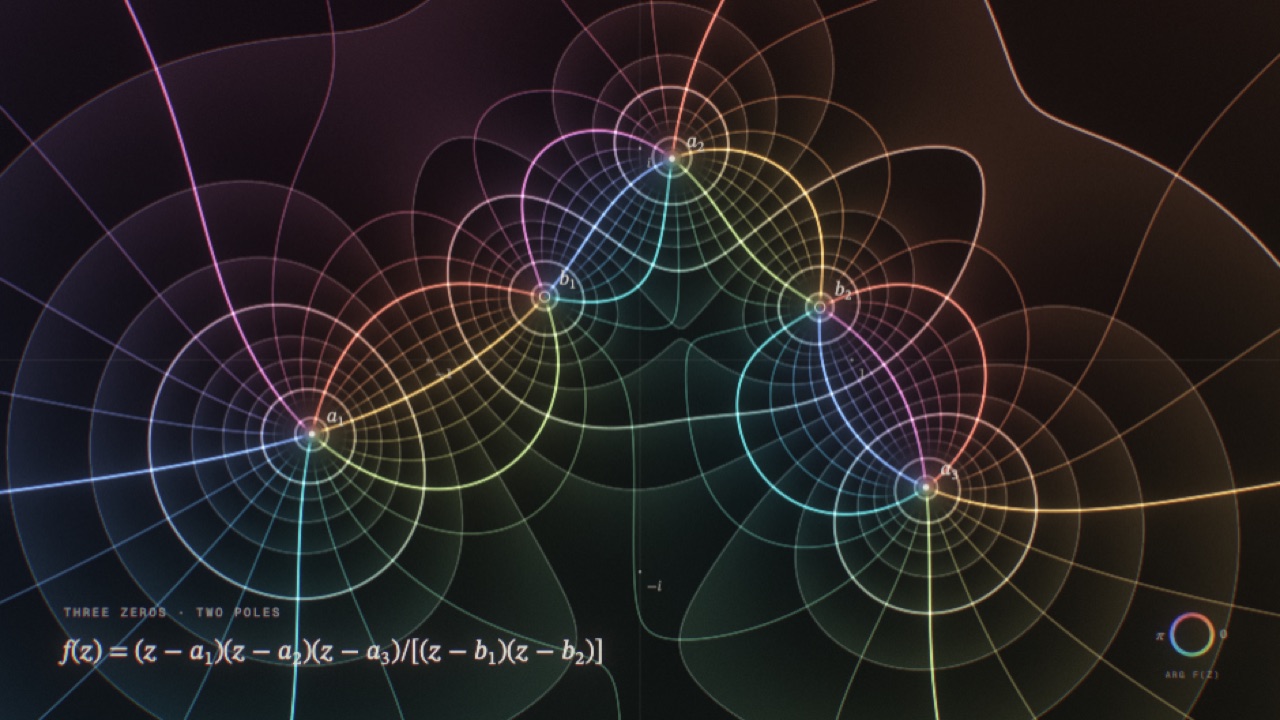 Plate IZeros and polesDrag the zeros and poles: how do the colours follow?Open →
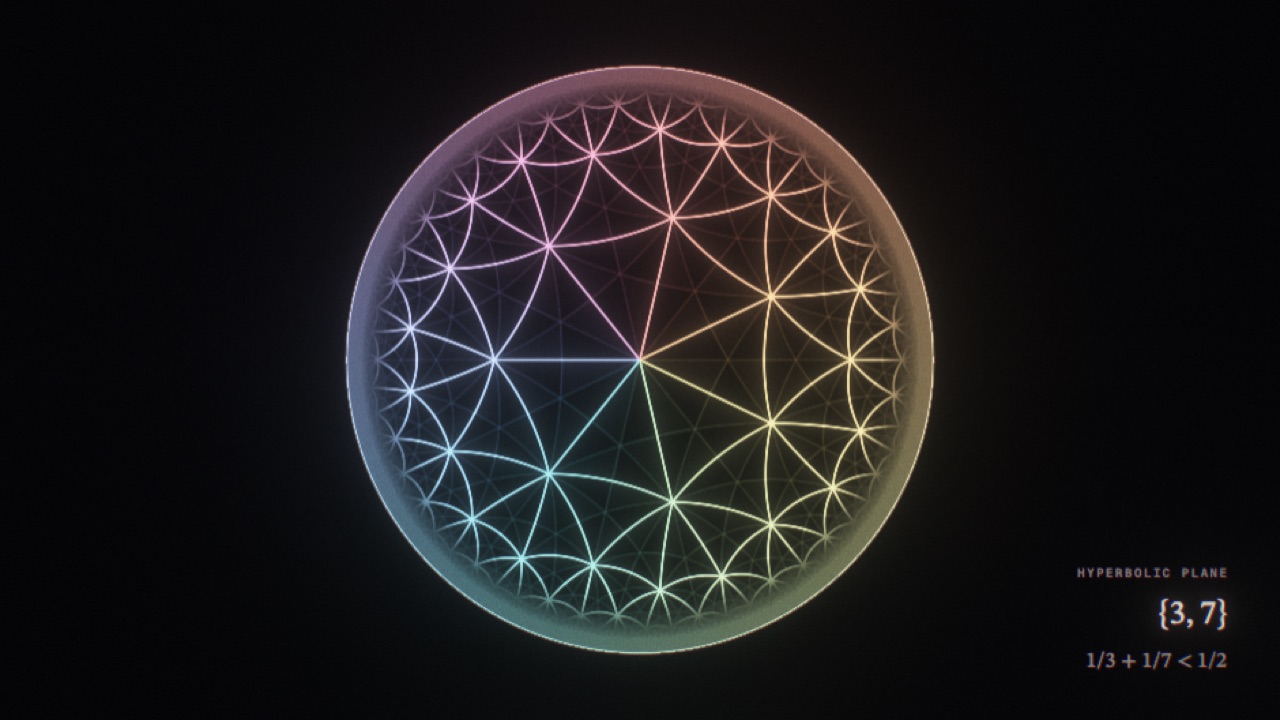 Plate IIIHyperbolic tilingsHow many triangles must meet at each corner before they tile the hyperbolic plane?Open →
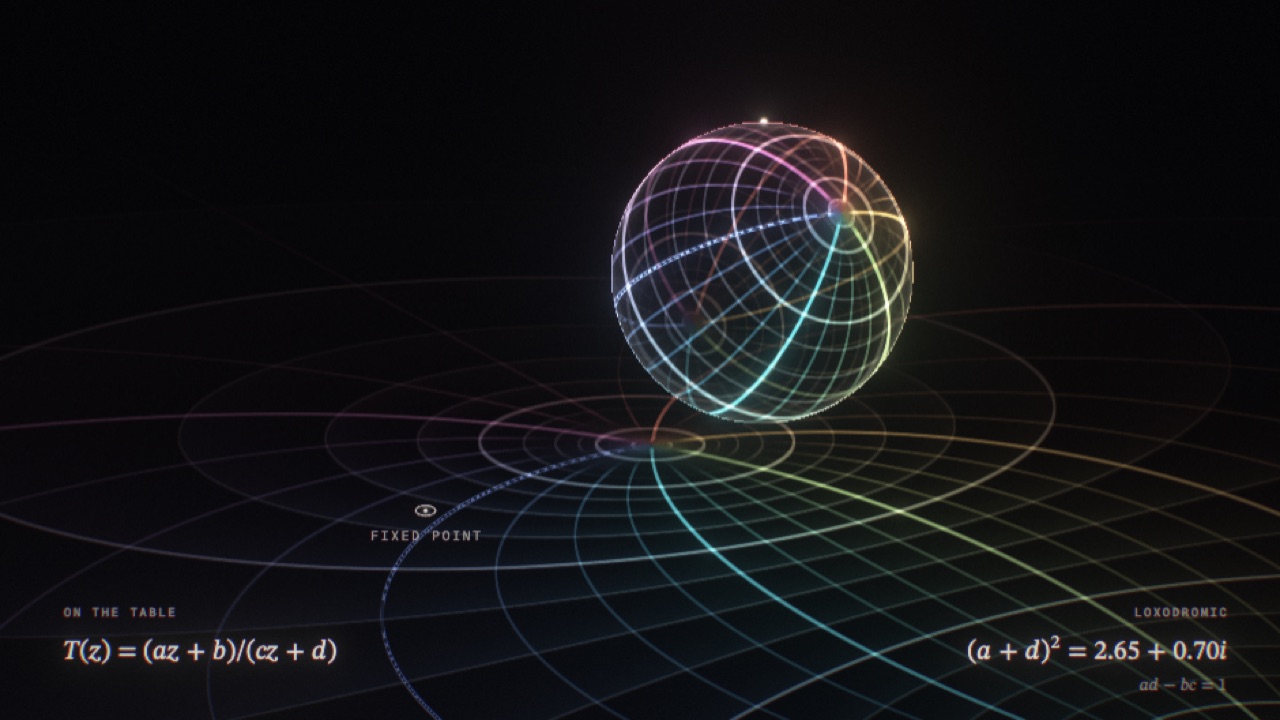 Plate IIMöbius transformationsTurn the sphere: what happens on the plane?Open →
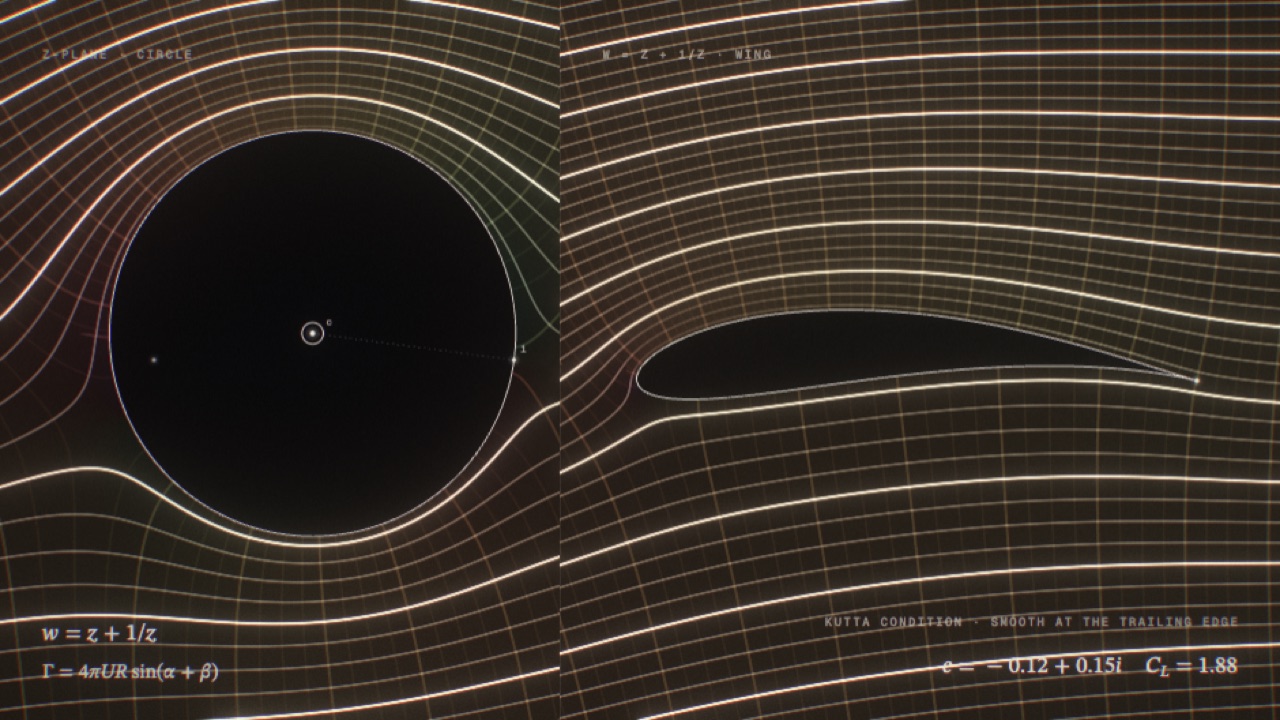 Plate IJoukowski's wingHow does a circle become a wing?Open →
The Order Beneath · No.02SpectralFourier analysis
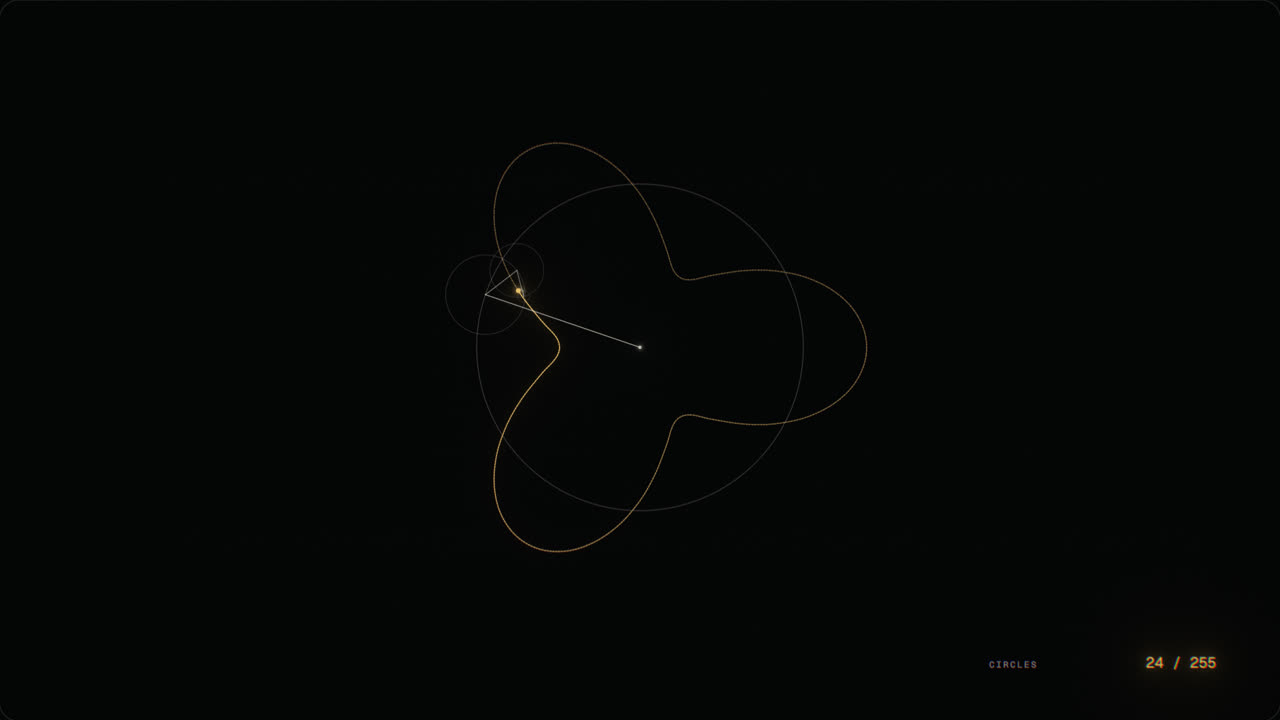 Plate ICircles on circlesDraw any line: how many circles does it take to trace it?Open →
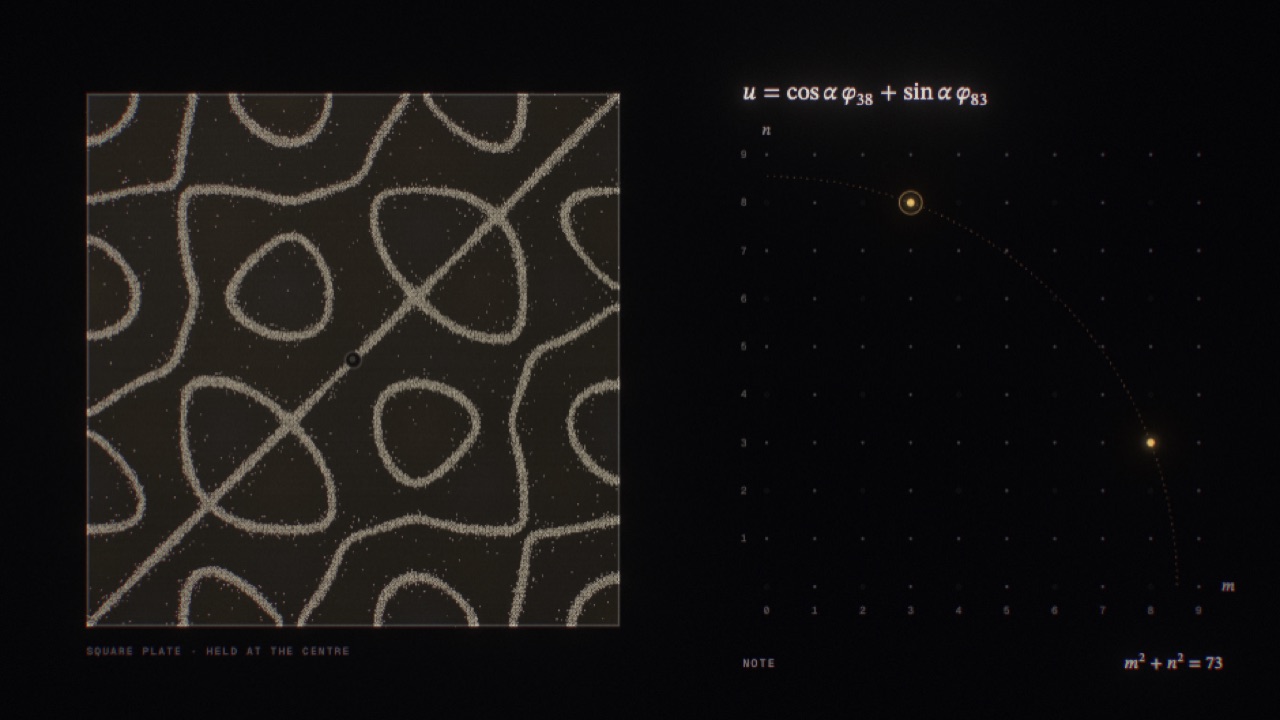 Plate IIChladni figuresChange the note: where does the sand gather?Open →
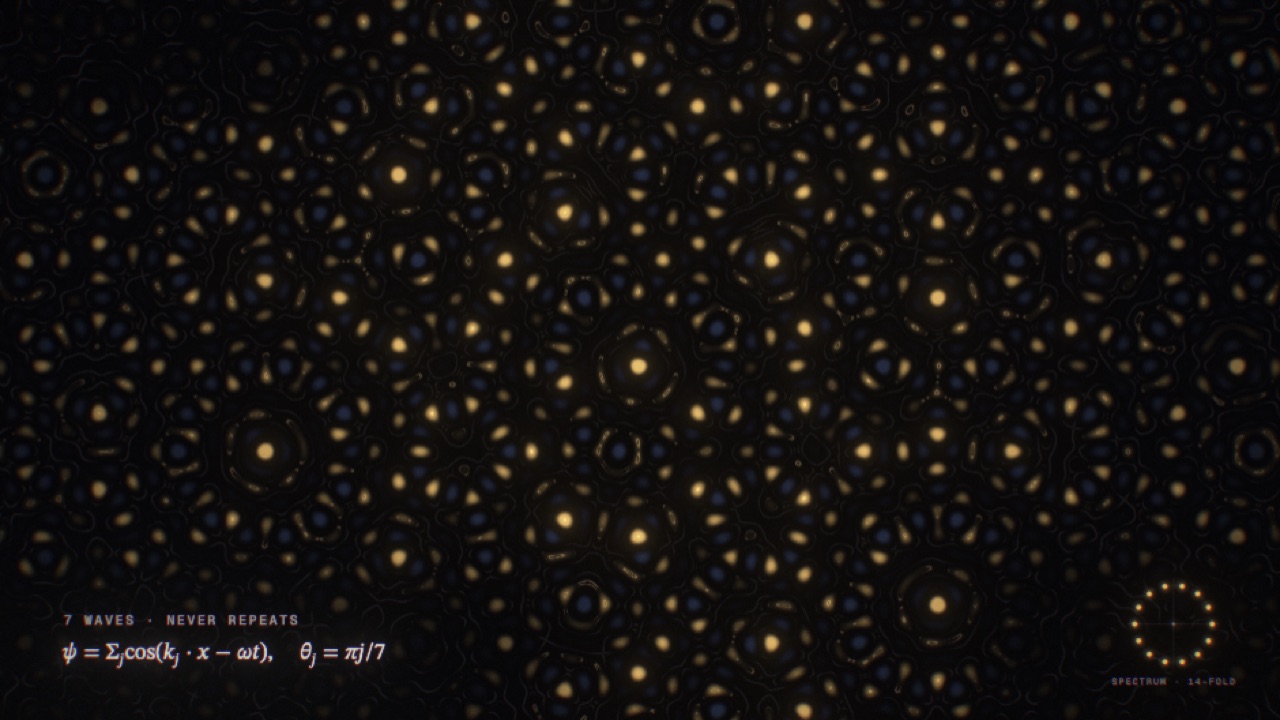 Plate IIIQuasicrystalsHow many plane waves must be added before the pattern stops repeating?Open →
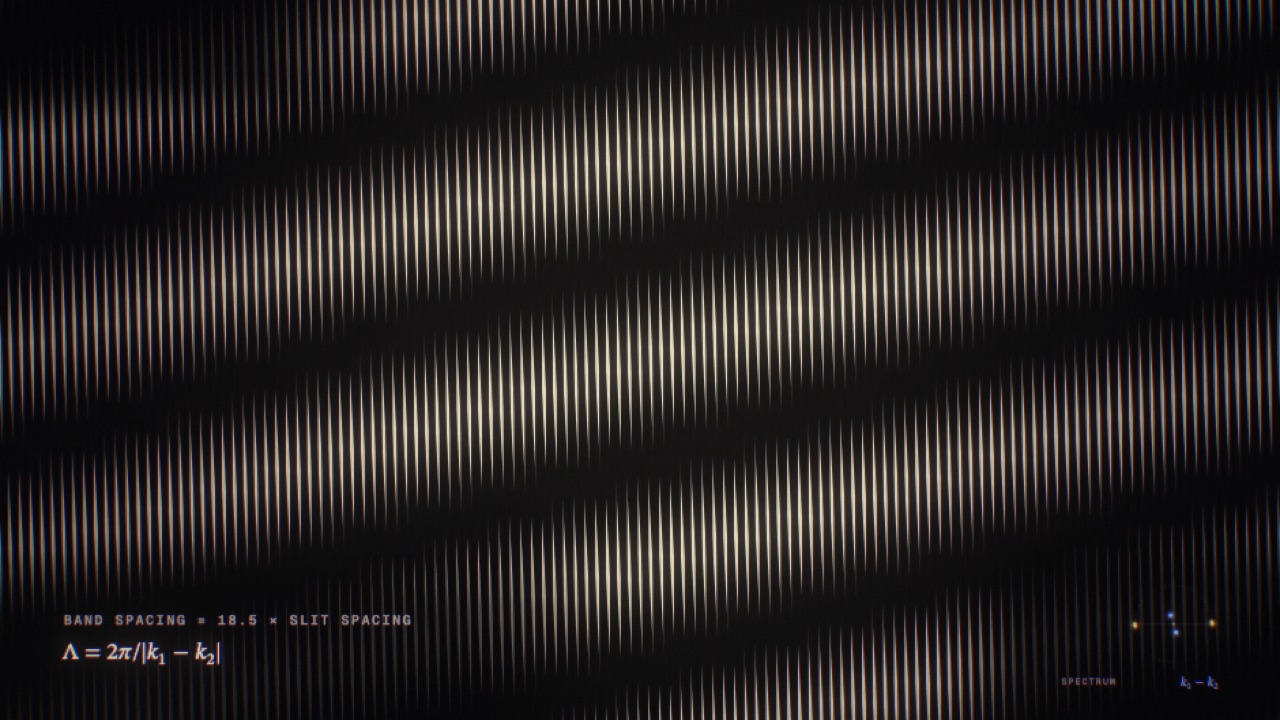 Plate IVMoiréSet two layers of fine slits a little out of step: what grows out of them?Open →
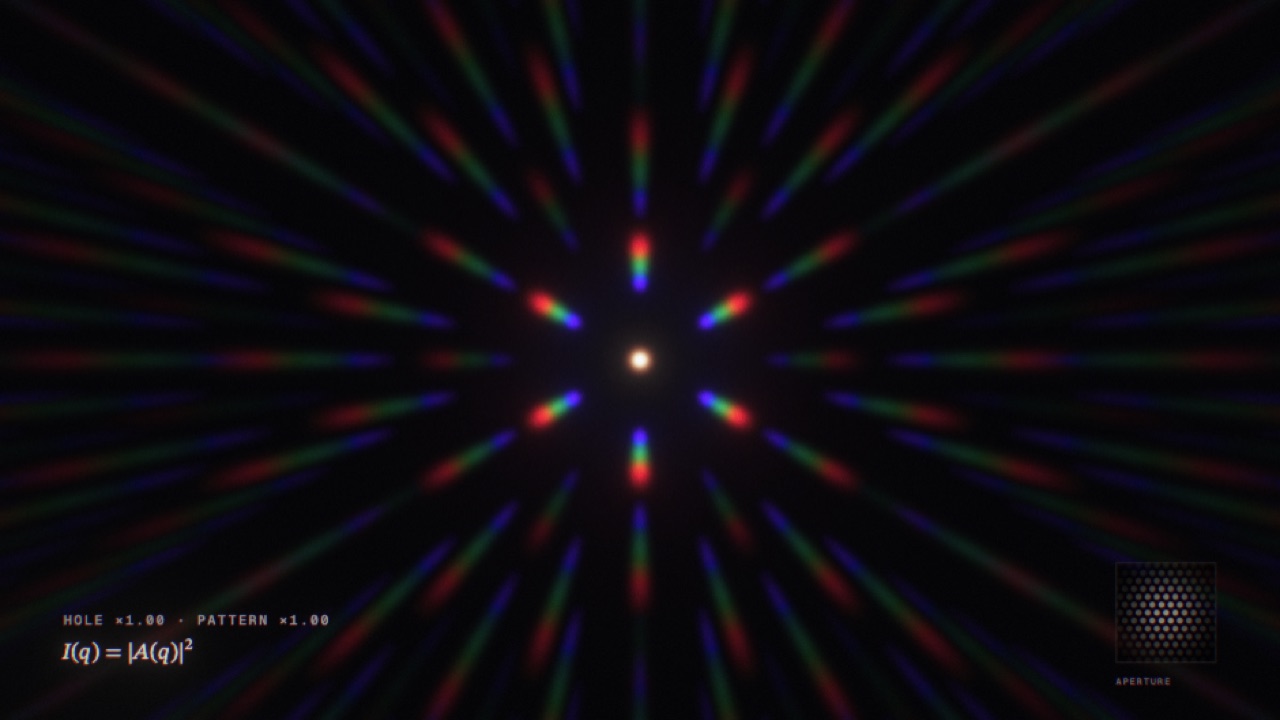 Plate VDiffractionWhat does the shape of a hole have to do with the light it spreads?Open →
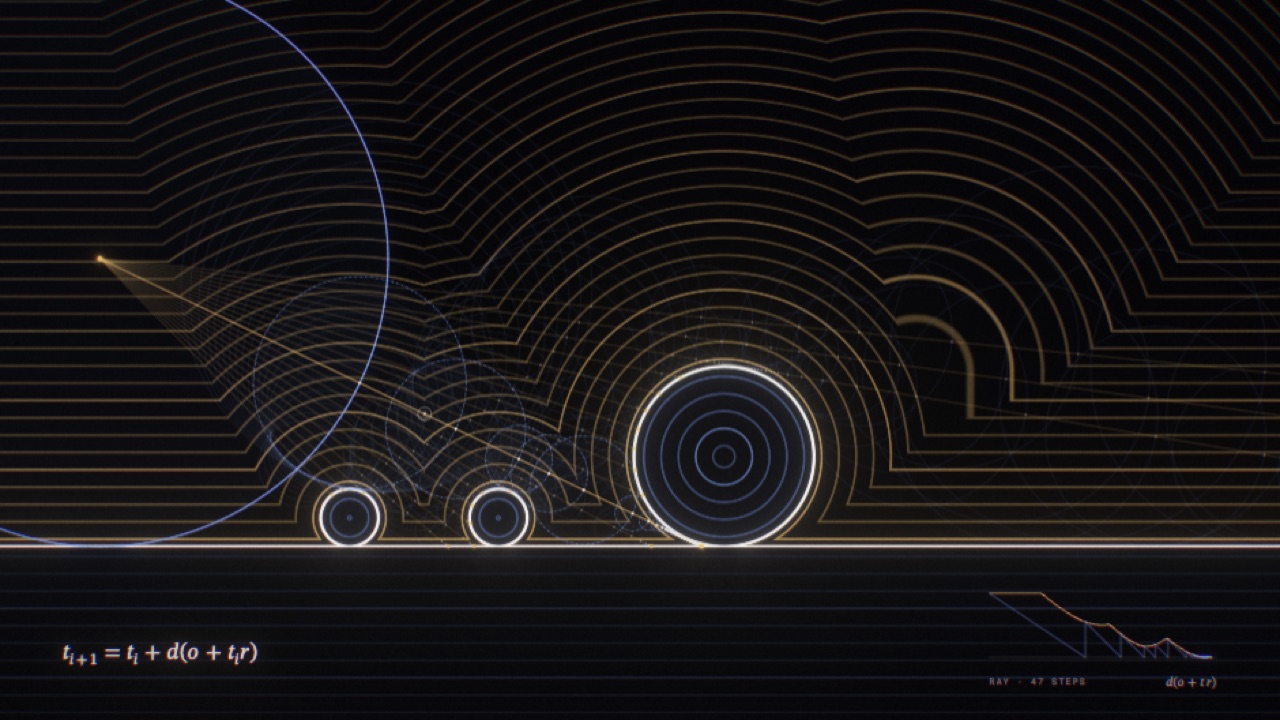
The Order Beneath · No.03ImplicitSigned distance fields
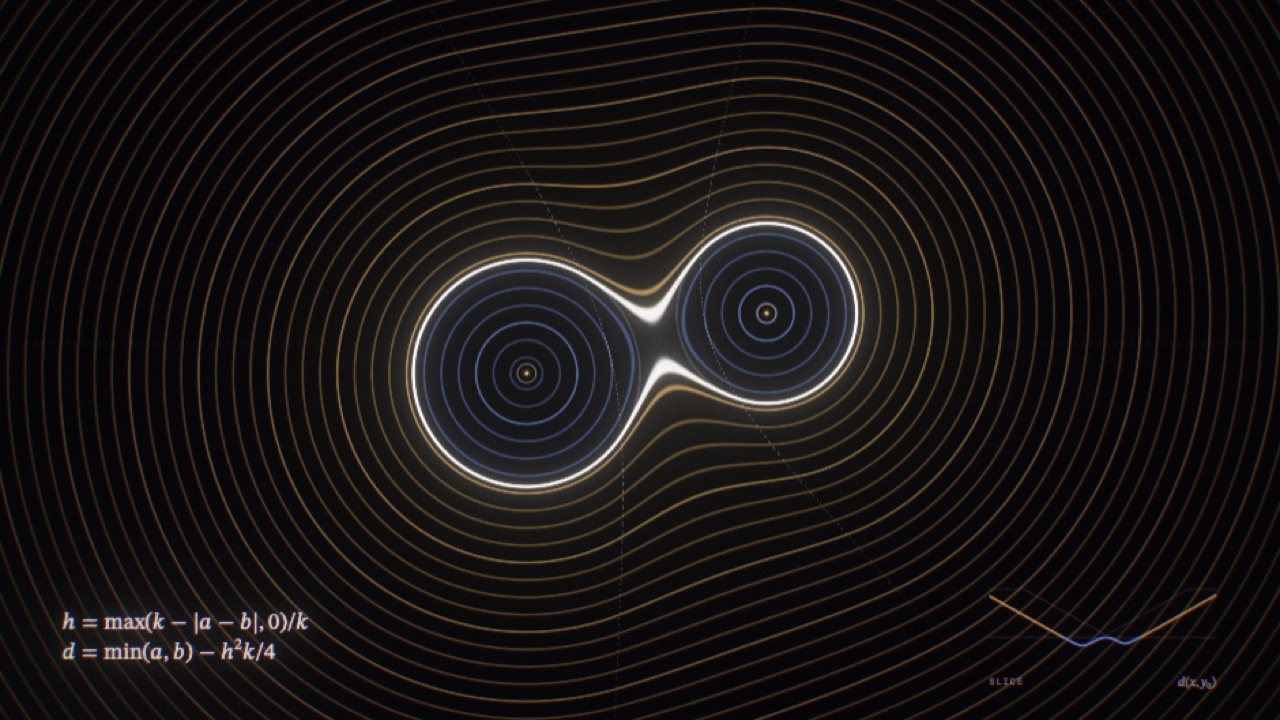
The Order Beneath · No.04FlowDynamical systems
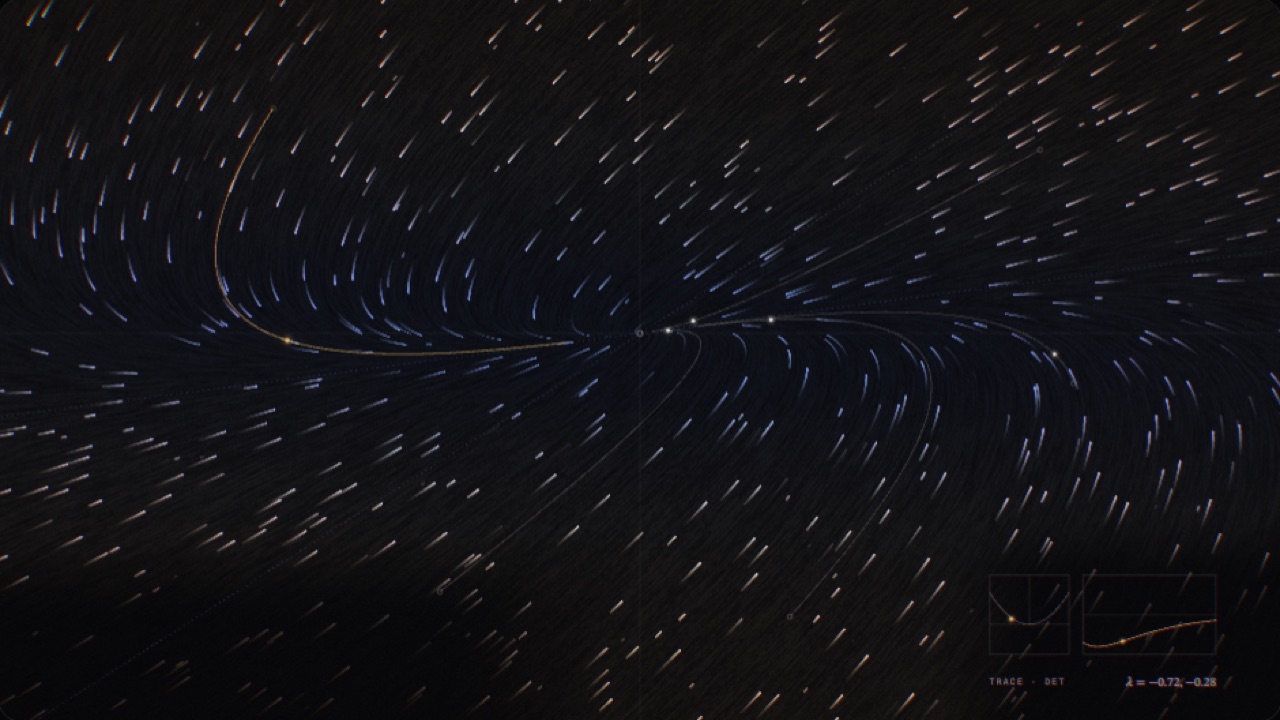 Plate ILinear flowsHow do two numbers, the trace and the determinant, decide the shape of the whole flow?Open →
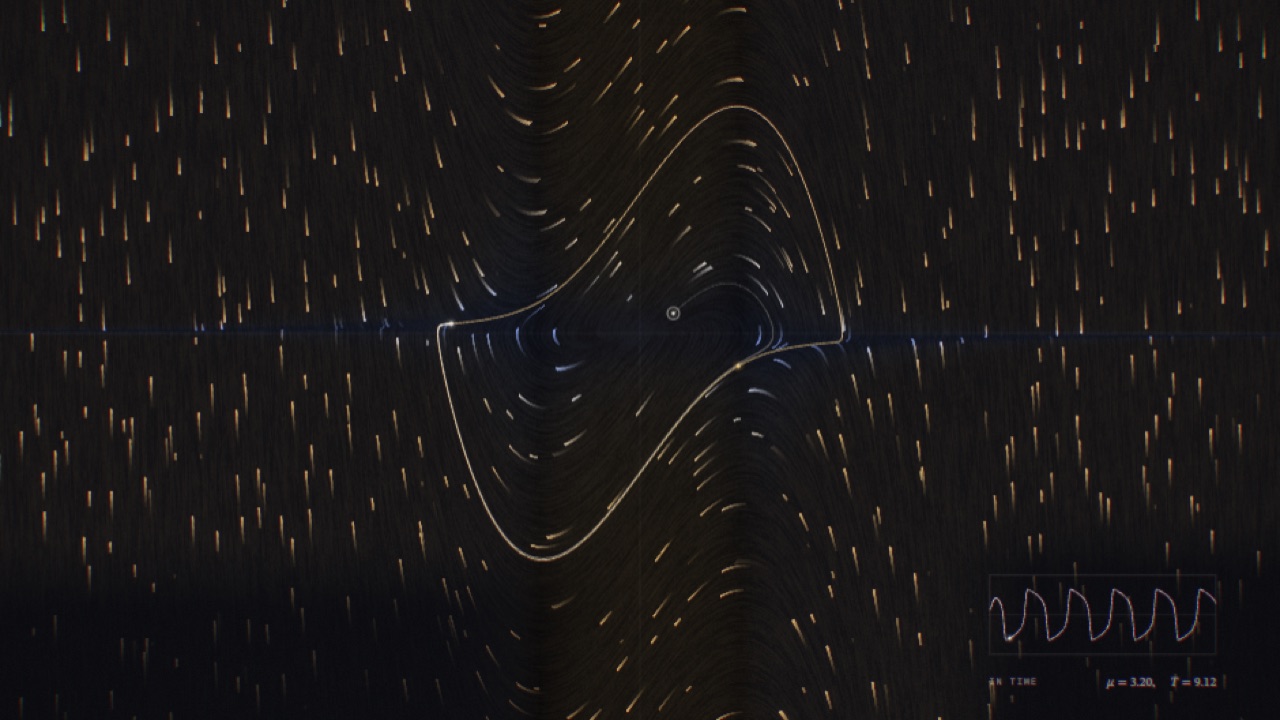 Plate IIThe Van der Pol oscillatorWhy does the swing look more and more like a square wave as μ grows?Open →
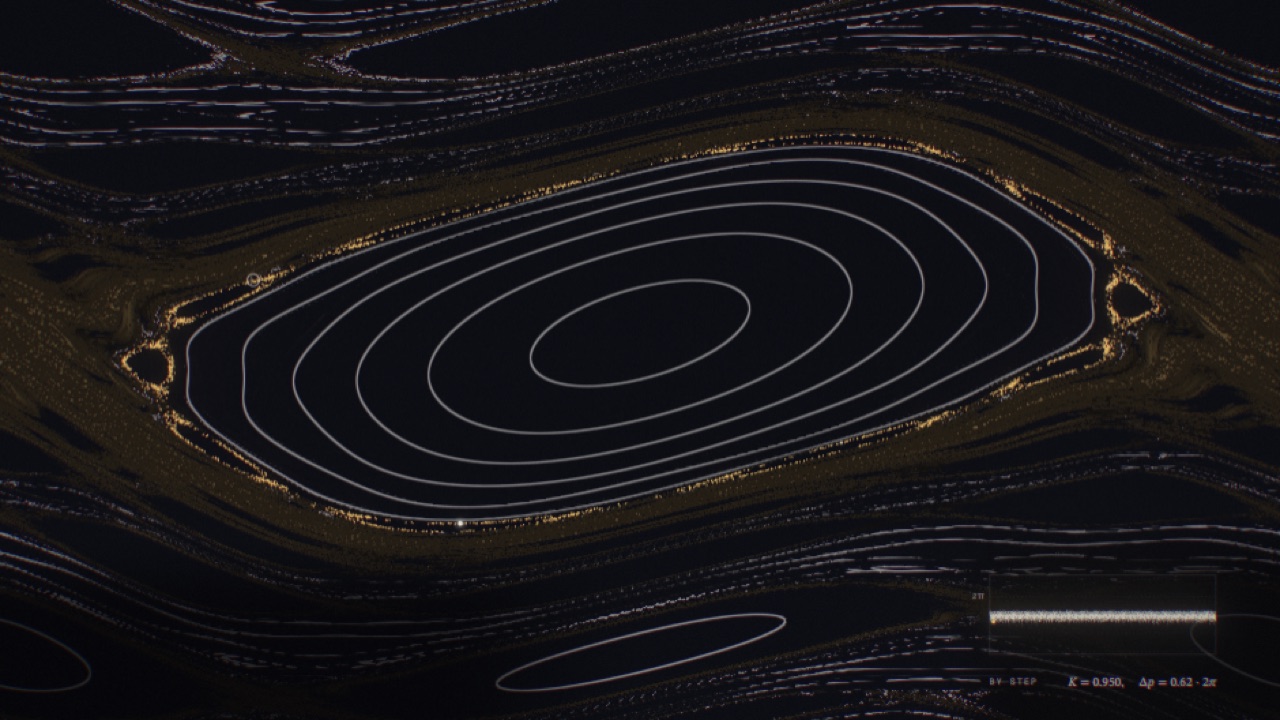 Plate IIIThe standard mapHow hard a kick before the invariant curves break?Open →
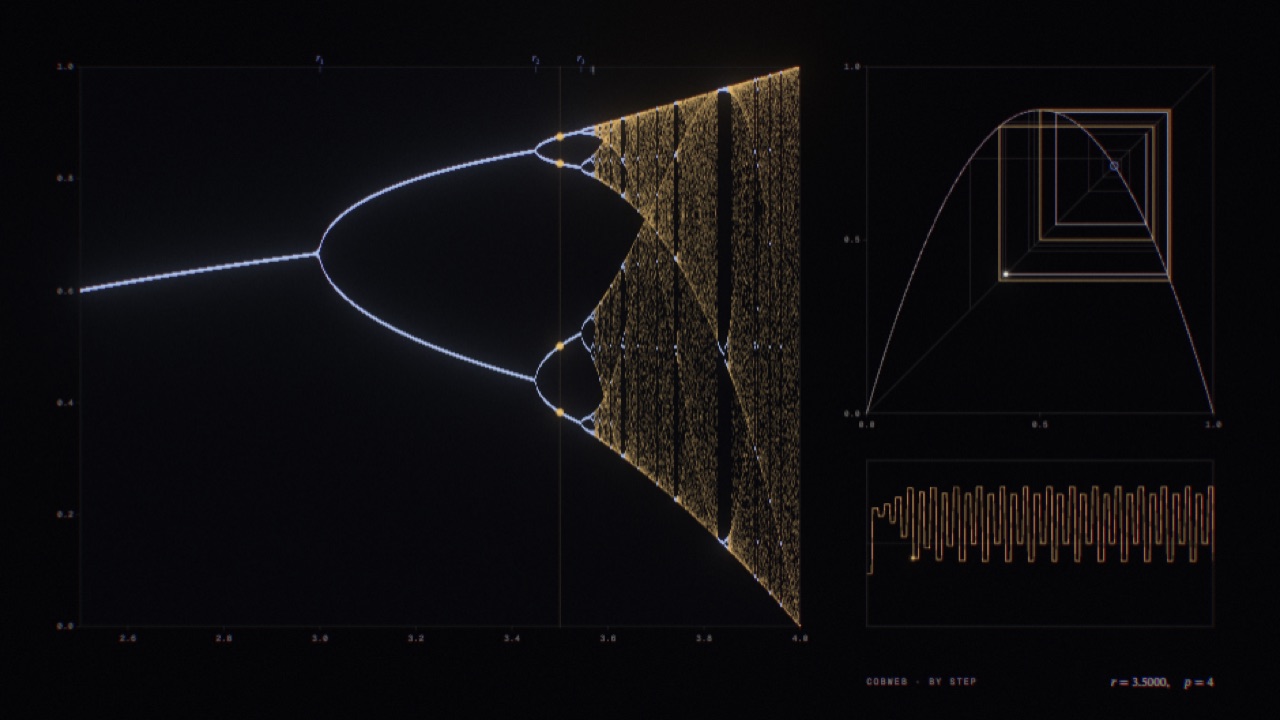 Plate VPeriod doublingWhere along r does the period start to double?Open →
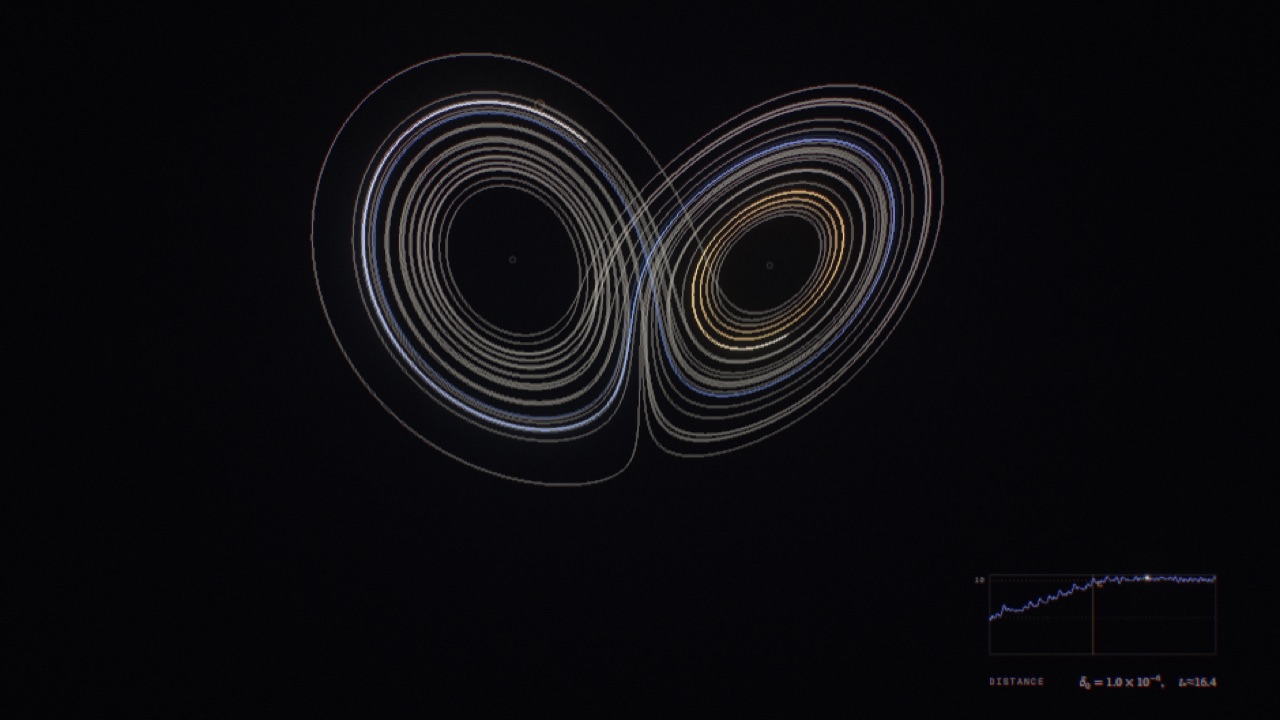 Plate IVThe butterfly effectTwo starts 10⁻⁶ apart: how long until they have nothing in common?Open →
The Order Beneath · No.05ArithmeticNumber theory
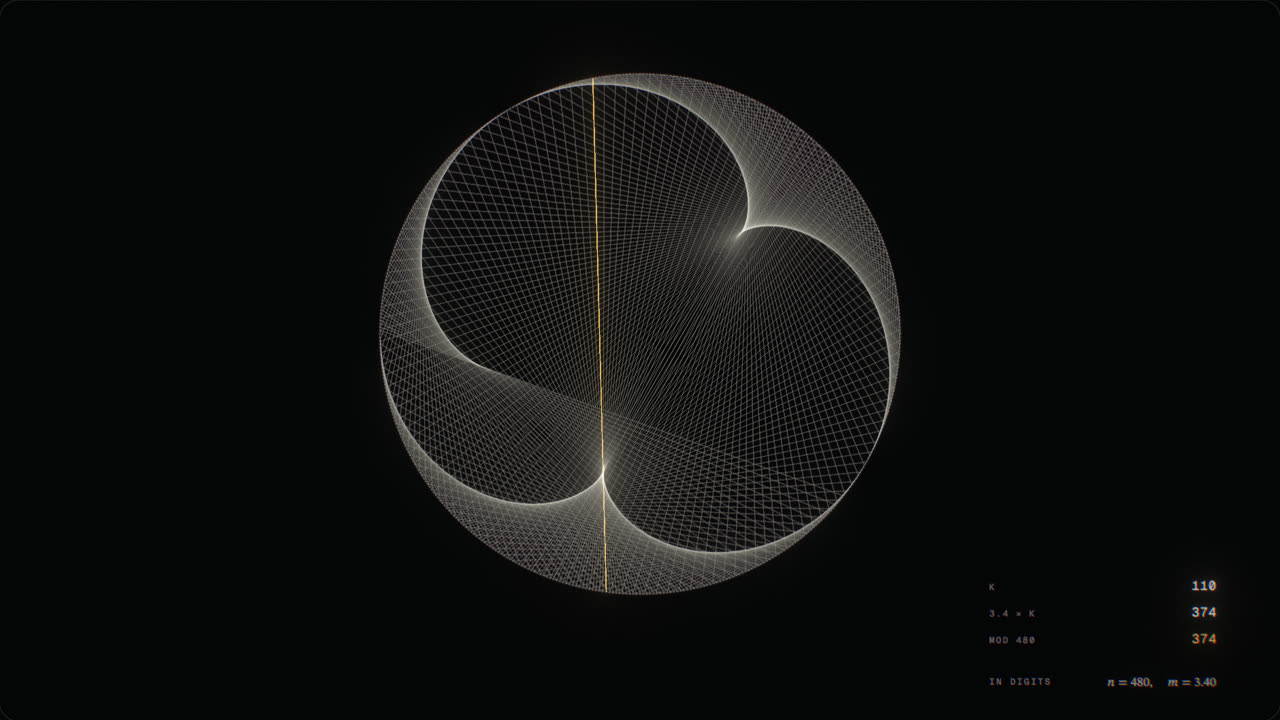 Plate ITimes tablesWhen the multiplier is not a whole number, where does the curve split open?Open →
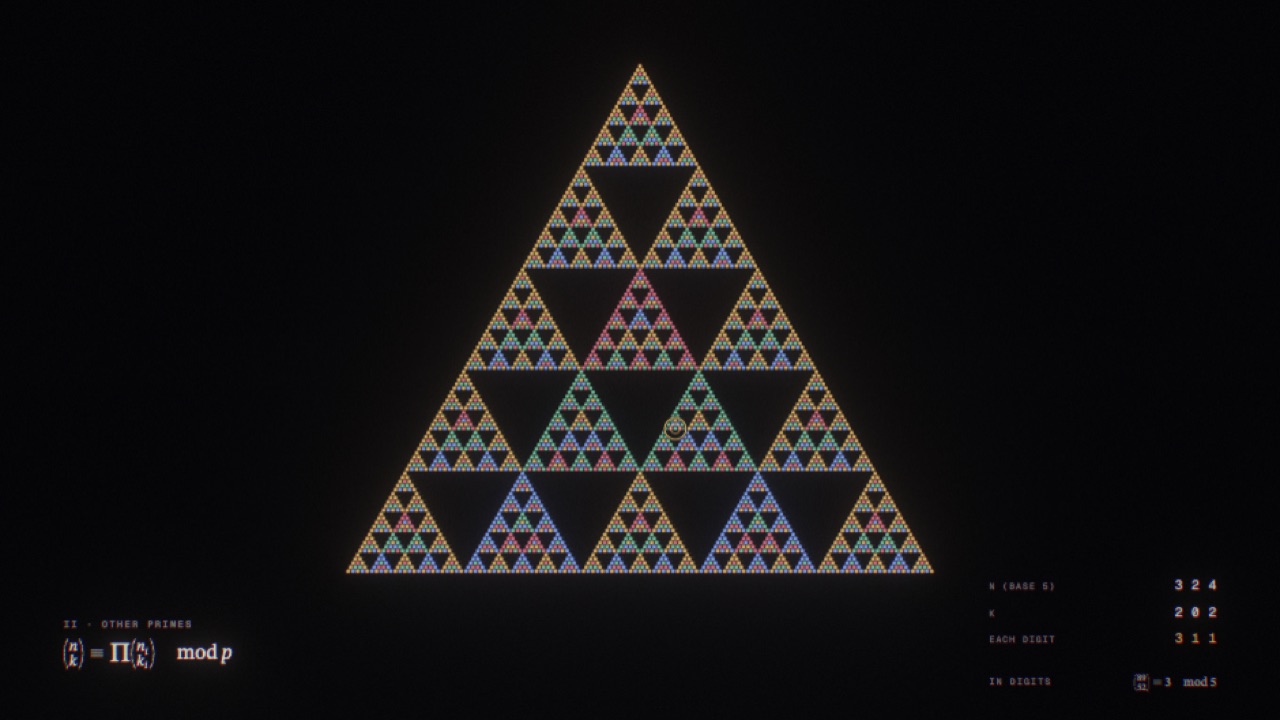 Plate IIPascal's triangle mod pPick another prime: what becomes of the triangles inside the triangle?Open →
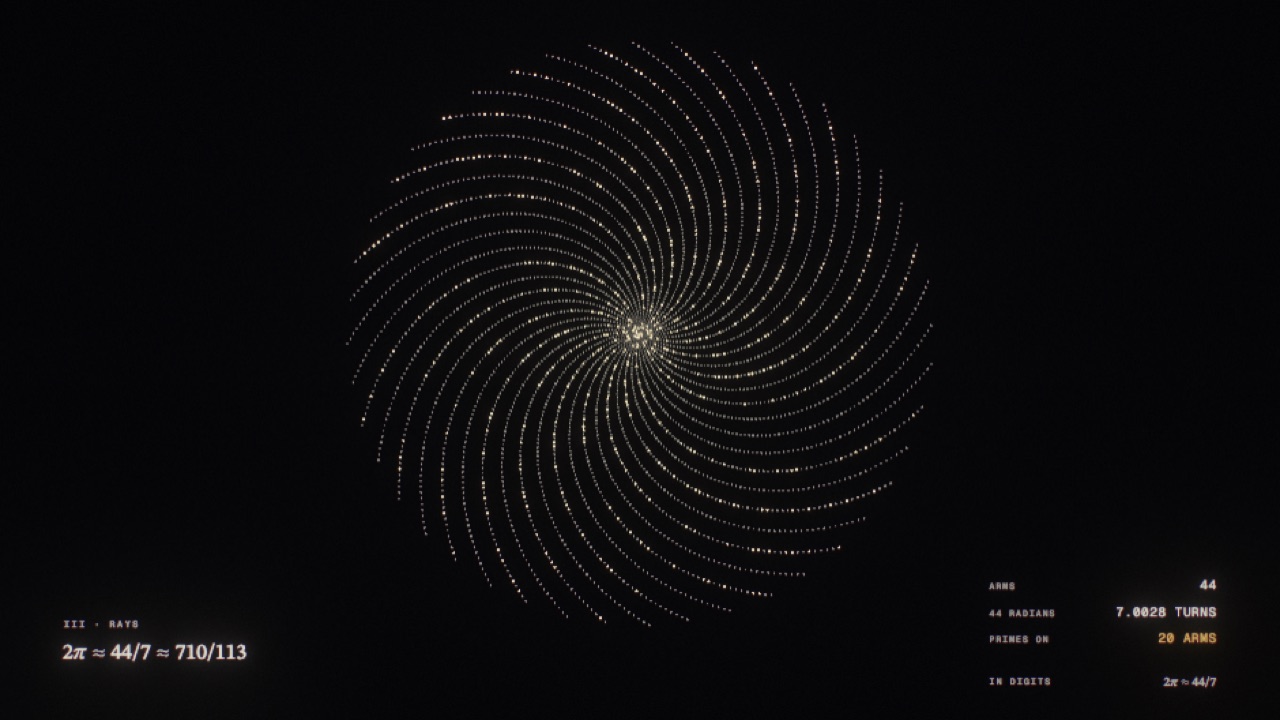 Plate IIIPrime spiralsLay the numbers out another way: do the primes still fall into lines?Open →
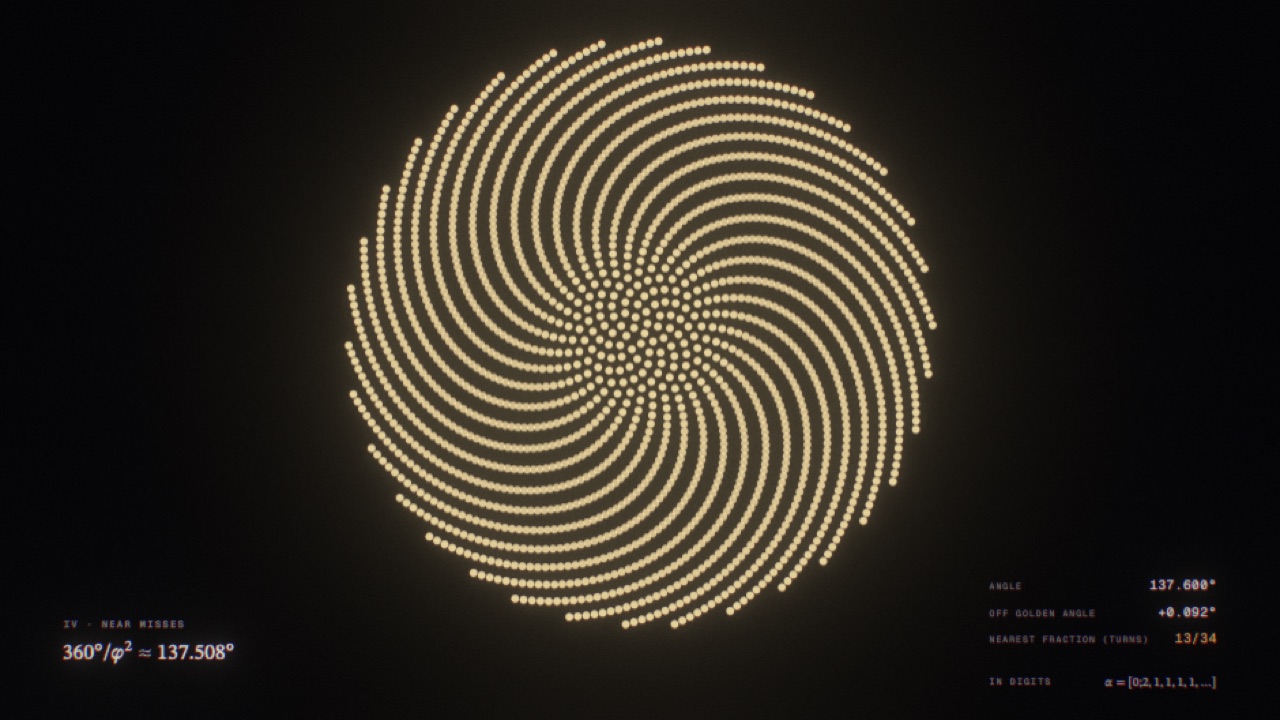 Plate IVThe golden angleTurn each seed a tenth of a degree off: what happens to the sunflower?Open →
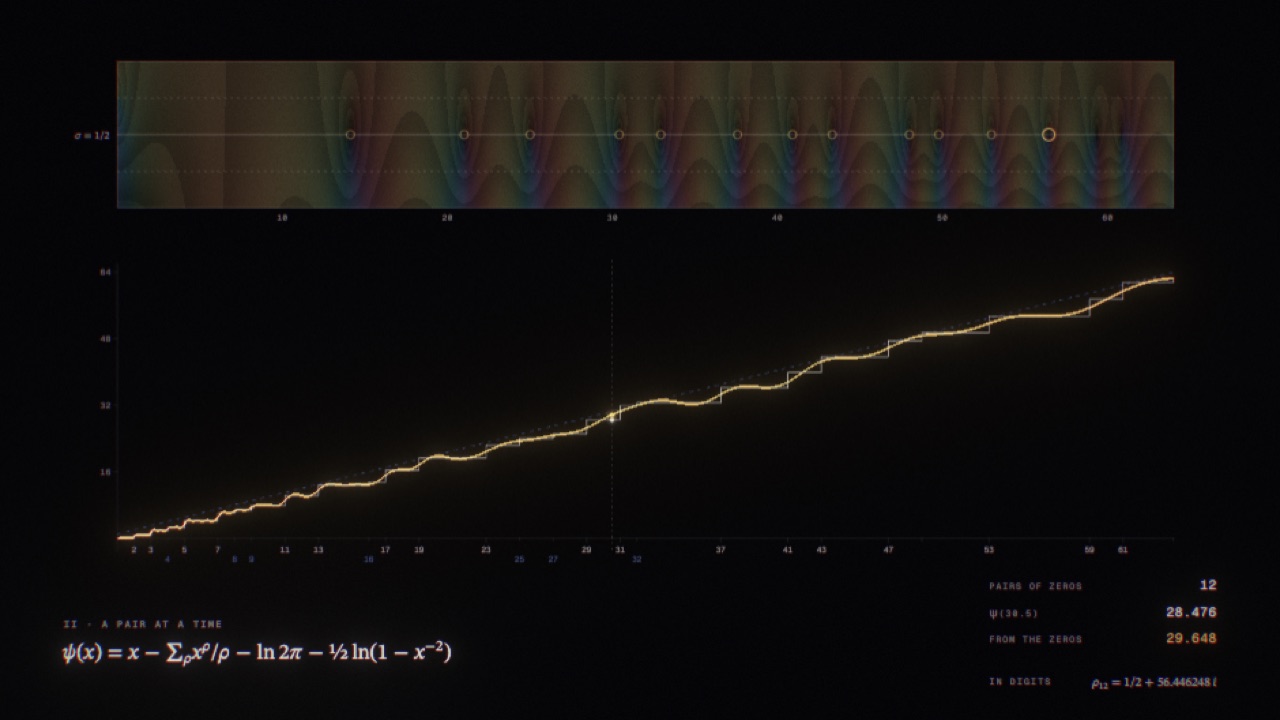 Plate VPrimes from zerosHow many pairs of zeros does it take before the steps show?Open →
The Order Beneath · No.06ChanceProbability
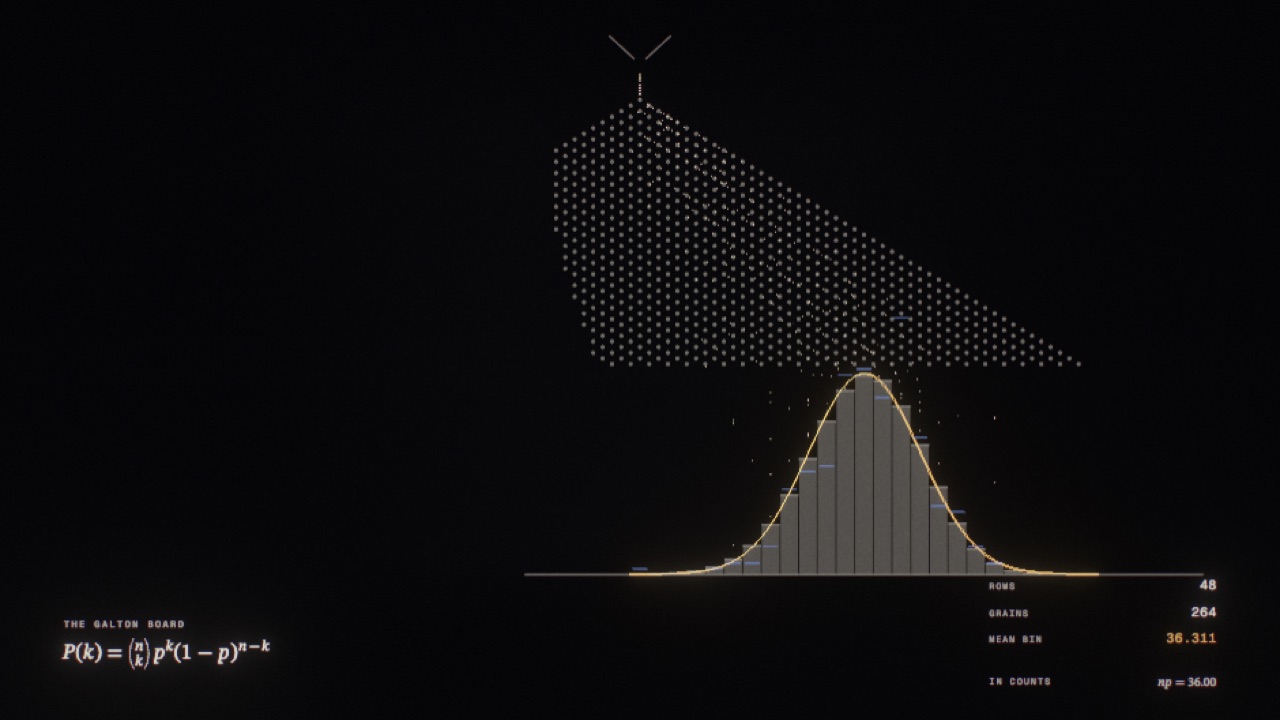 Plate IThe Galton boardIf every peg favours one side, does the bell curve still appear?Open →
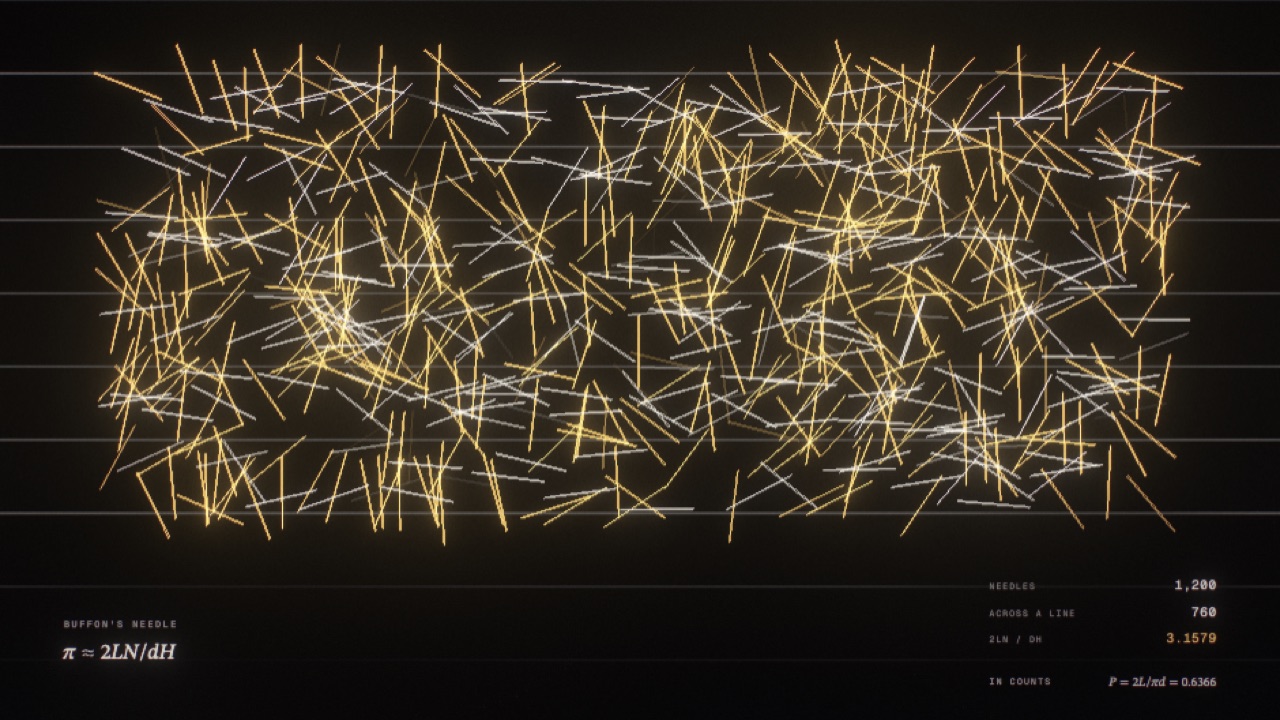 Plate IIBuffon's needleHow many needles before π shows its first few digits?Open →
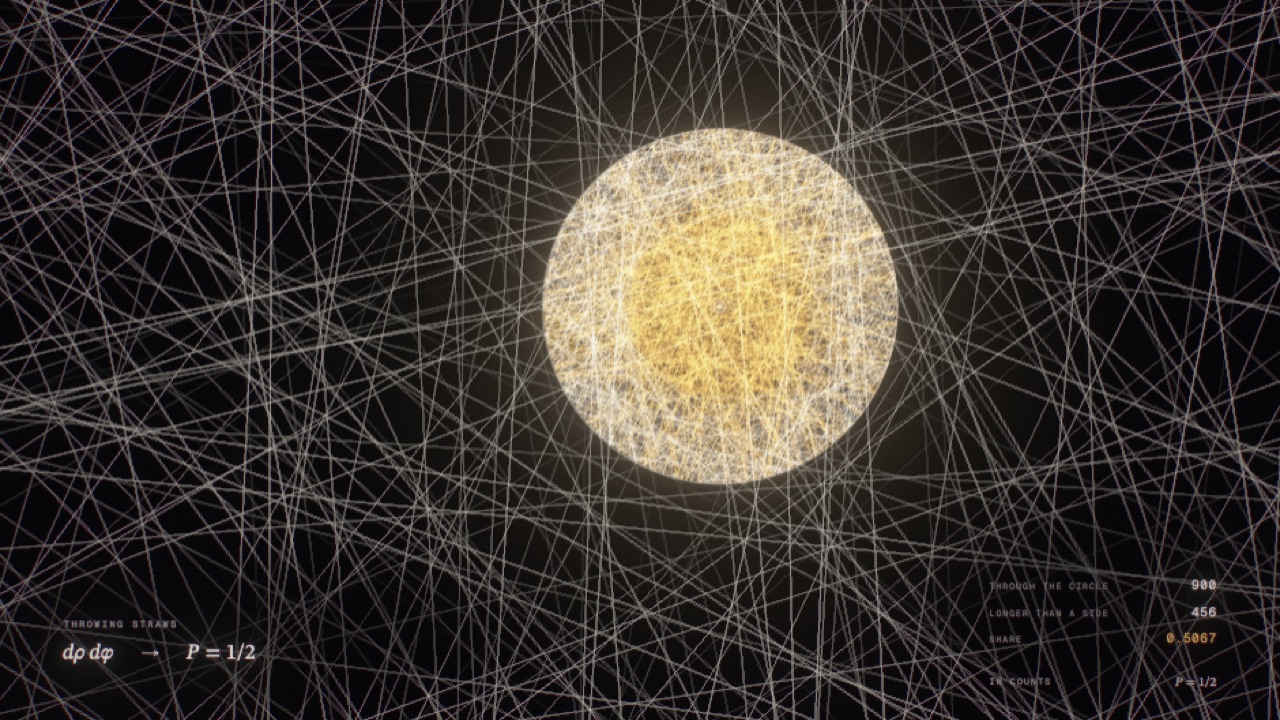 Plate IIIRandom chordsDraw a chord in a circle at random: how likely is it to be longer than a side of the inscribed equilateral triangle?Open →
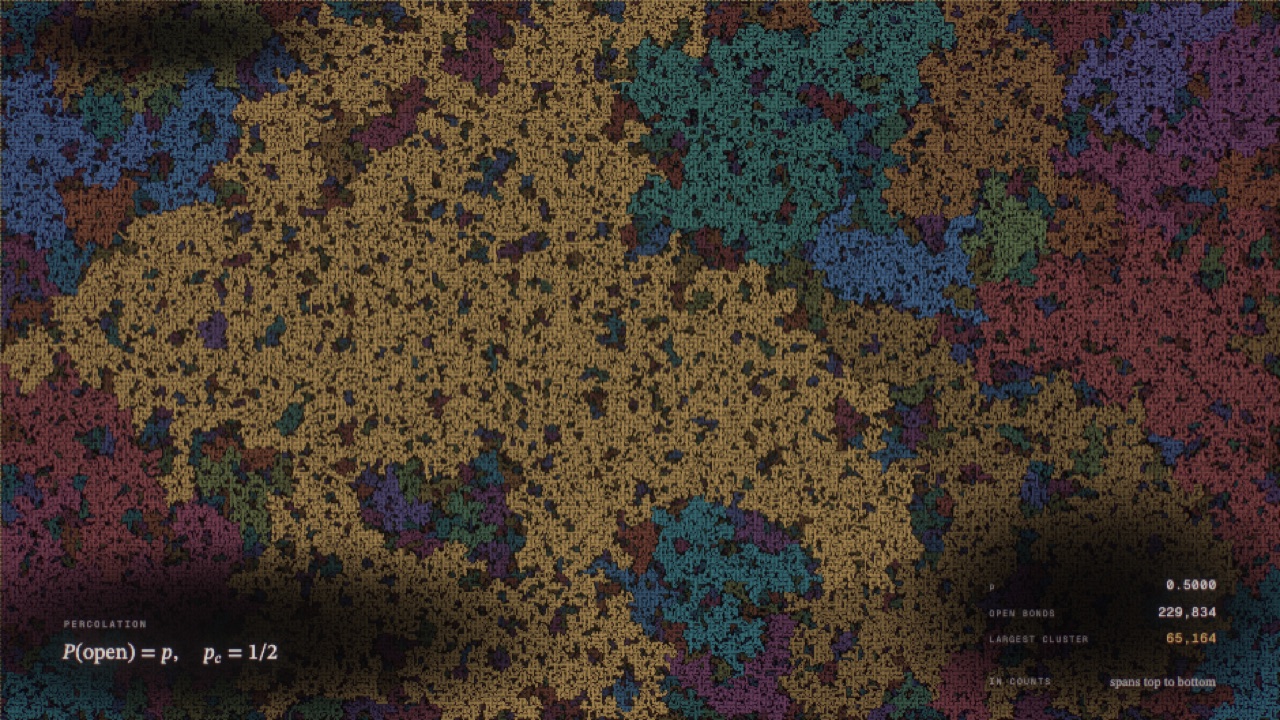 Plate VPercolationHow likely must each bond be to open before water can seep from top to bottom?Open →
The Order Beneath · No.07CurvatureDifferential geometry
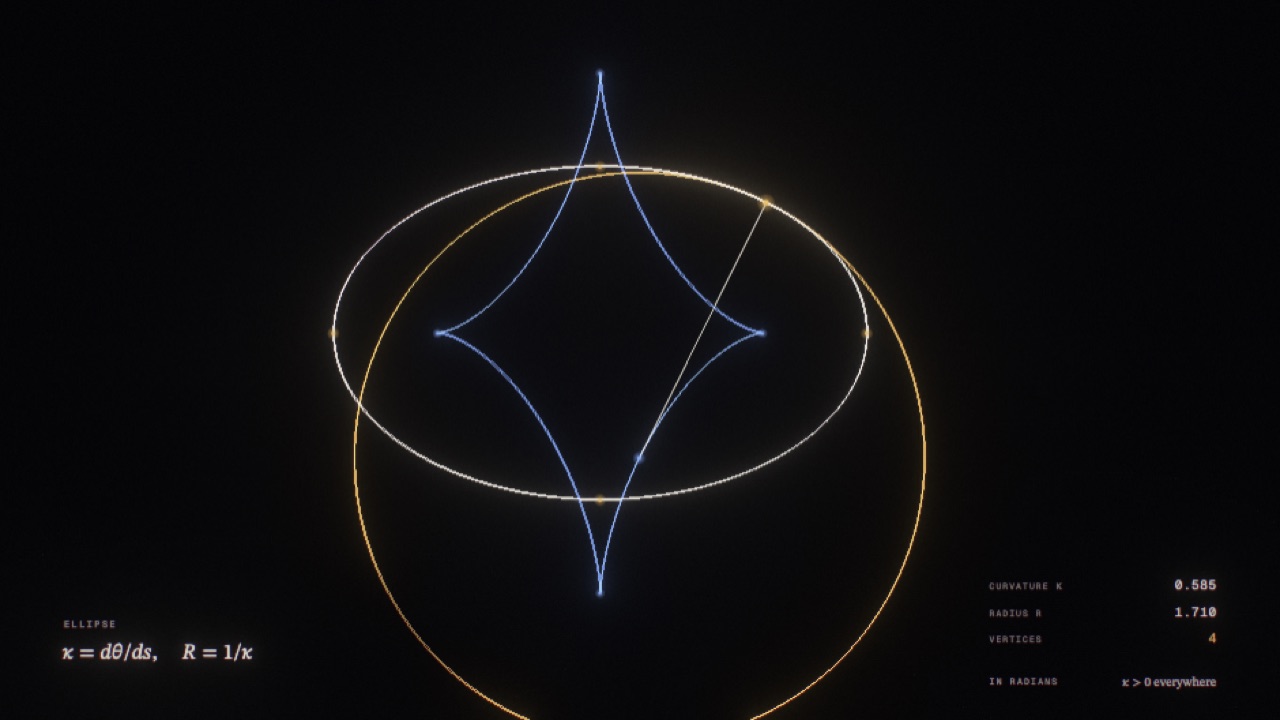 Plate IThe osculating circleAt each point of a curve, which circle hugs it most closely?Open →
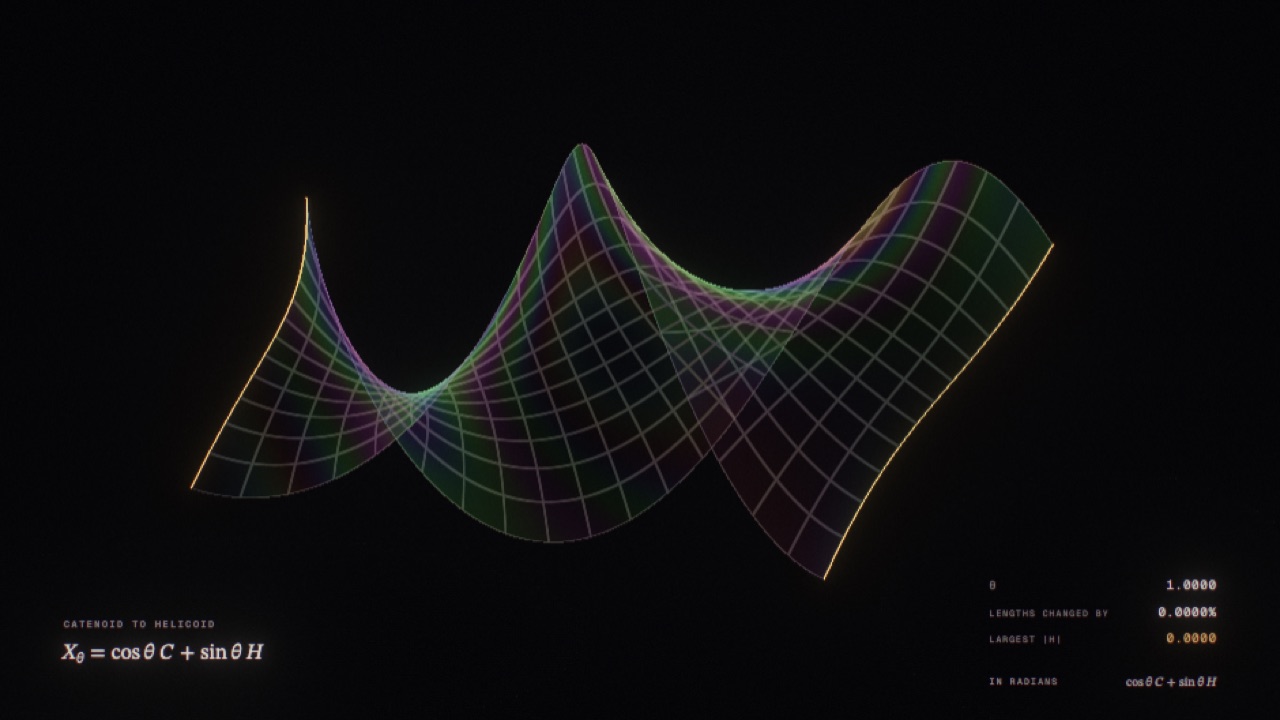 Plate VCatenoid to helicoidBend a catenoid into a helicoid: what stays the same all the way?Open →
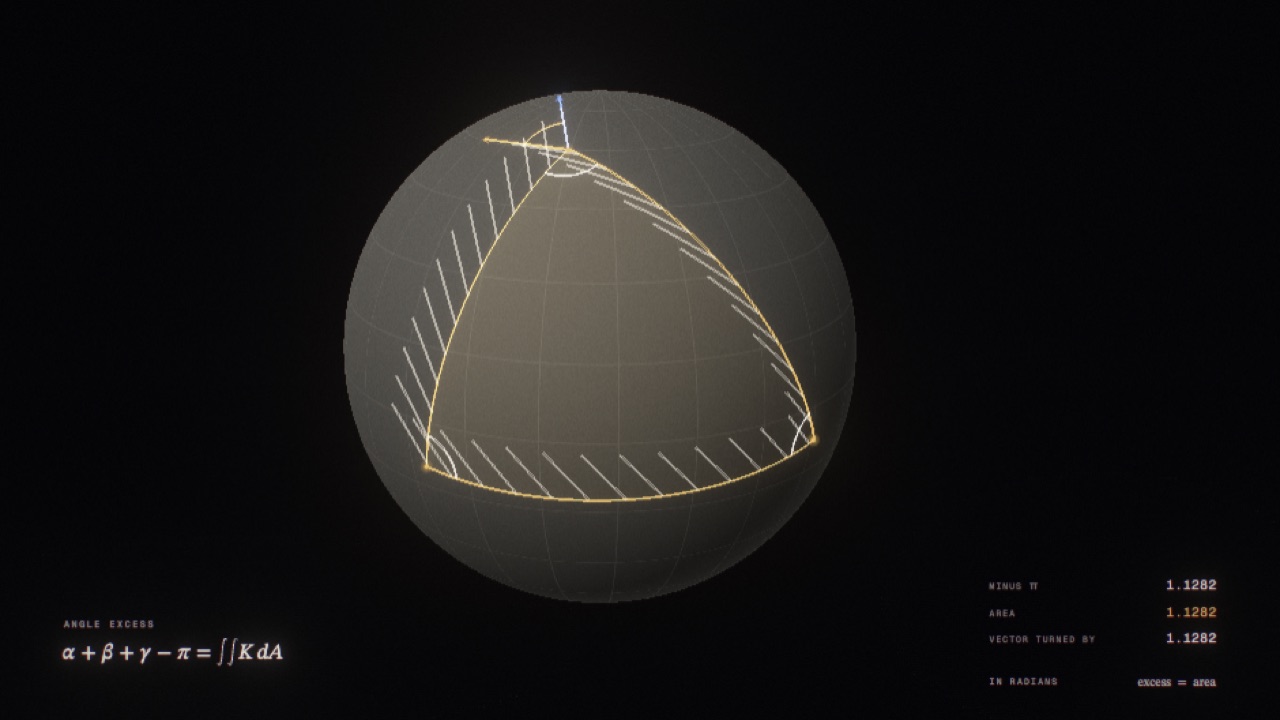 Plate IVA triangle on the sphereOn a sphere, how much more than π do a triangle's angles add up to?Open →
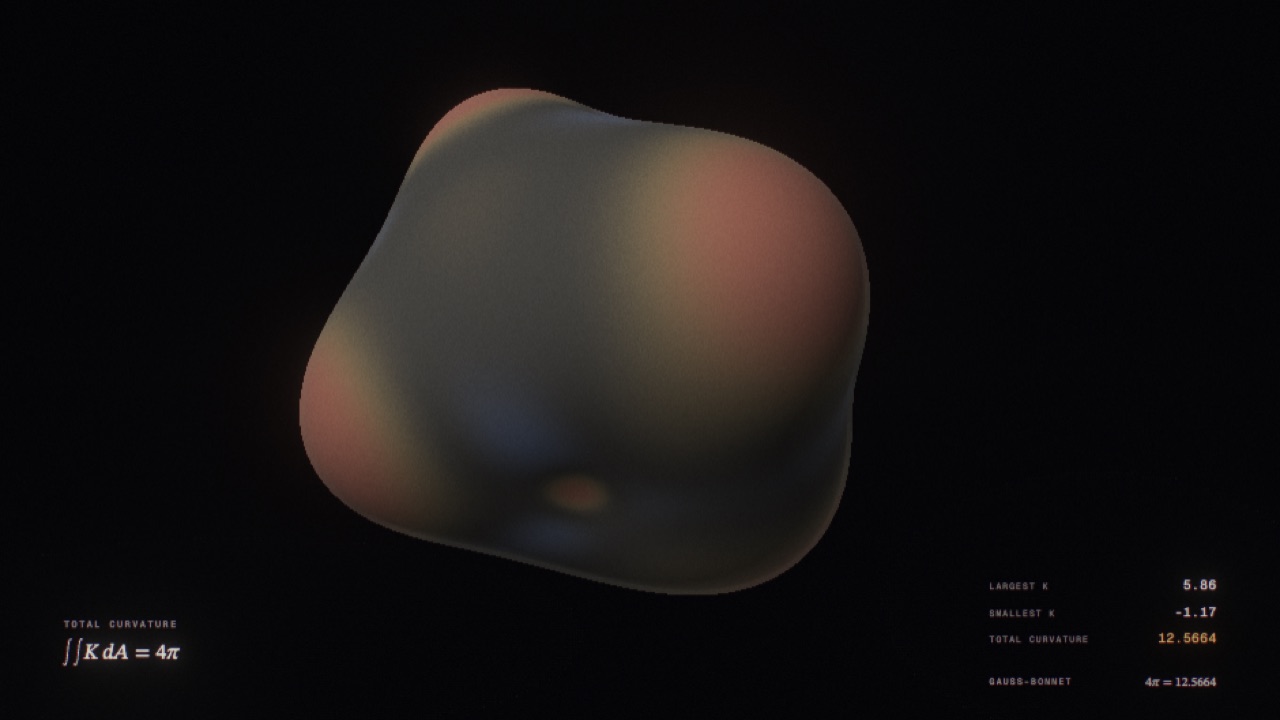 Plate IVA sphere with bumpsKnead a sphere into bumps and dents: does its total curvature change?Open →
The Order Beneath · No.08TopologyTopology
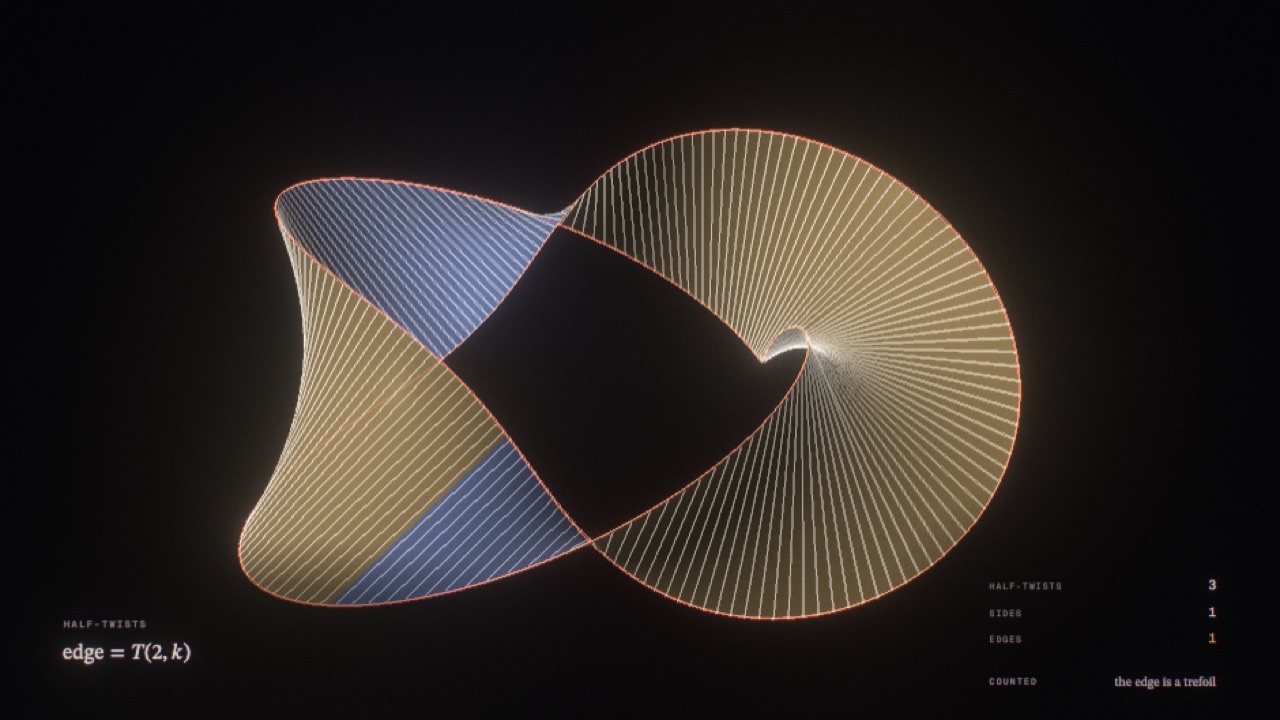 Plate IA band with half-twistsGive a strip some half-twists and join the ends: how many sides and edges does it have?Open →
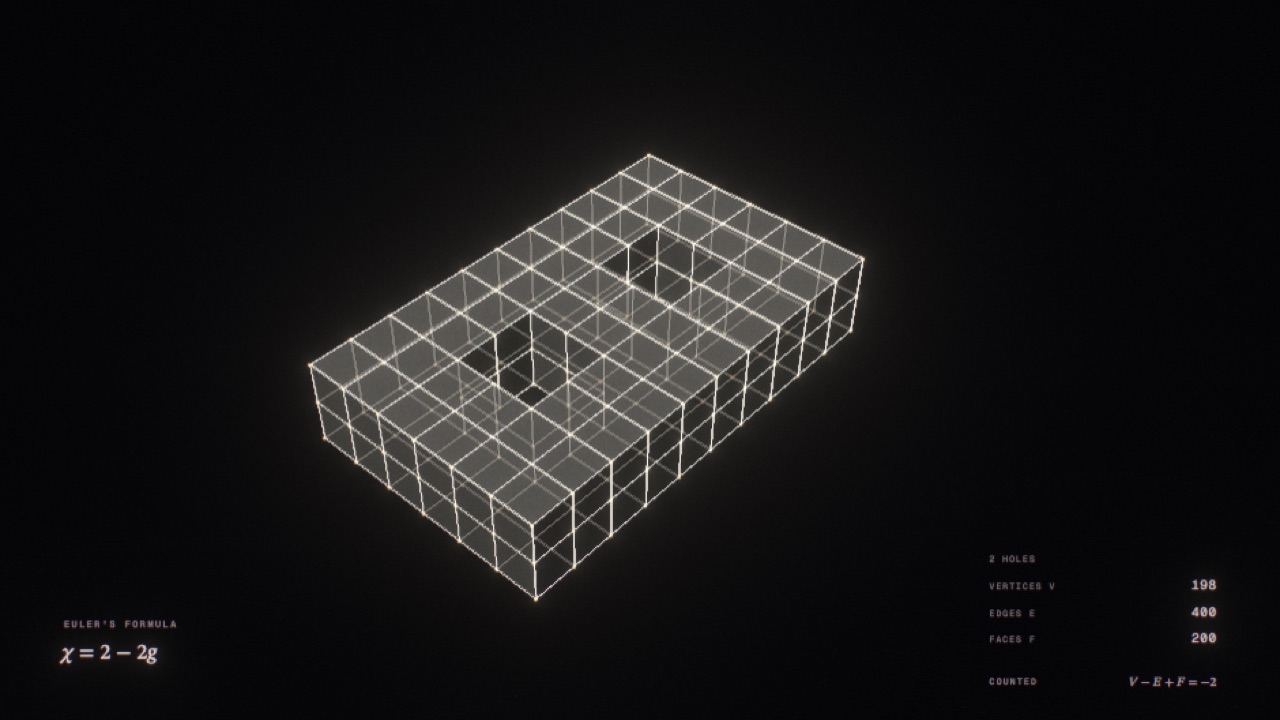 Plate IIVertices minus edges plus facesHowever you draw the grid, V − E + F stays the same. What can change it?Open →
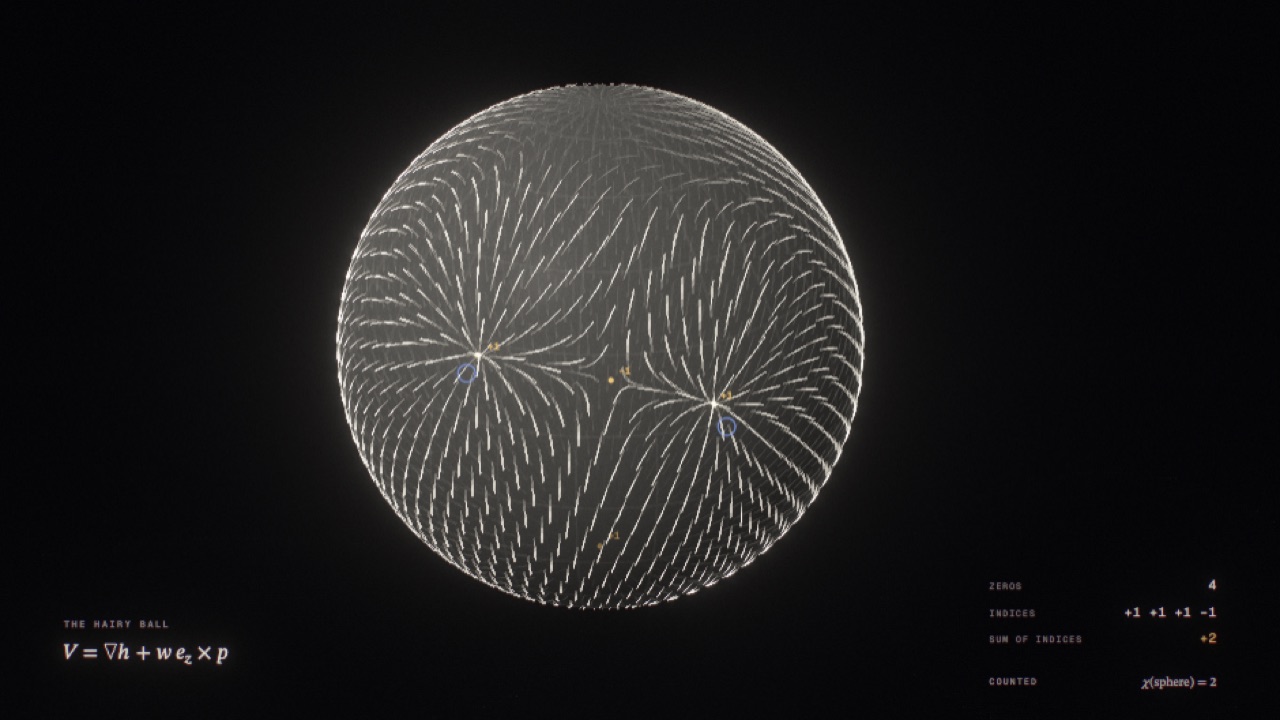 Plate IIICombing a hairy ballHowever you comb a hairy ball, is there always a spot that won't lie flat? And on a torus?Open →
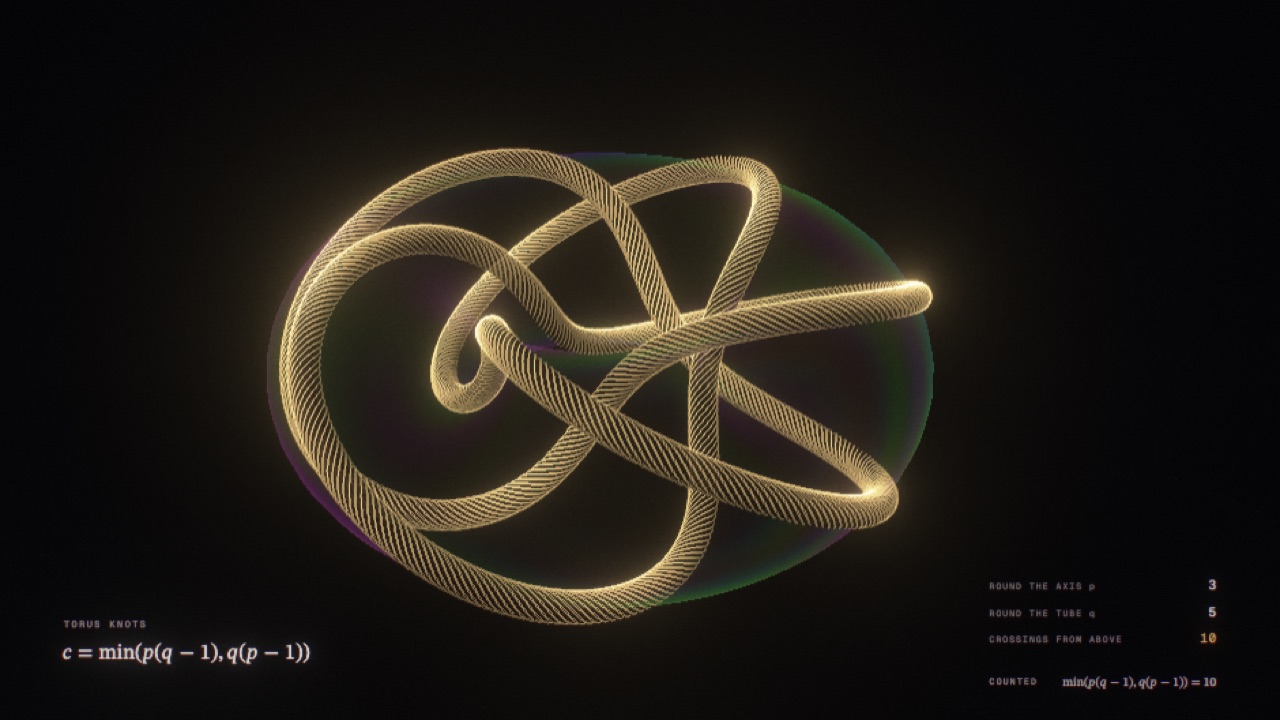 Plate IVTorus knotsRound the axis p times, round the tube q times: when is it a single knot, and when several linked loops?Open →
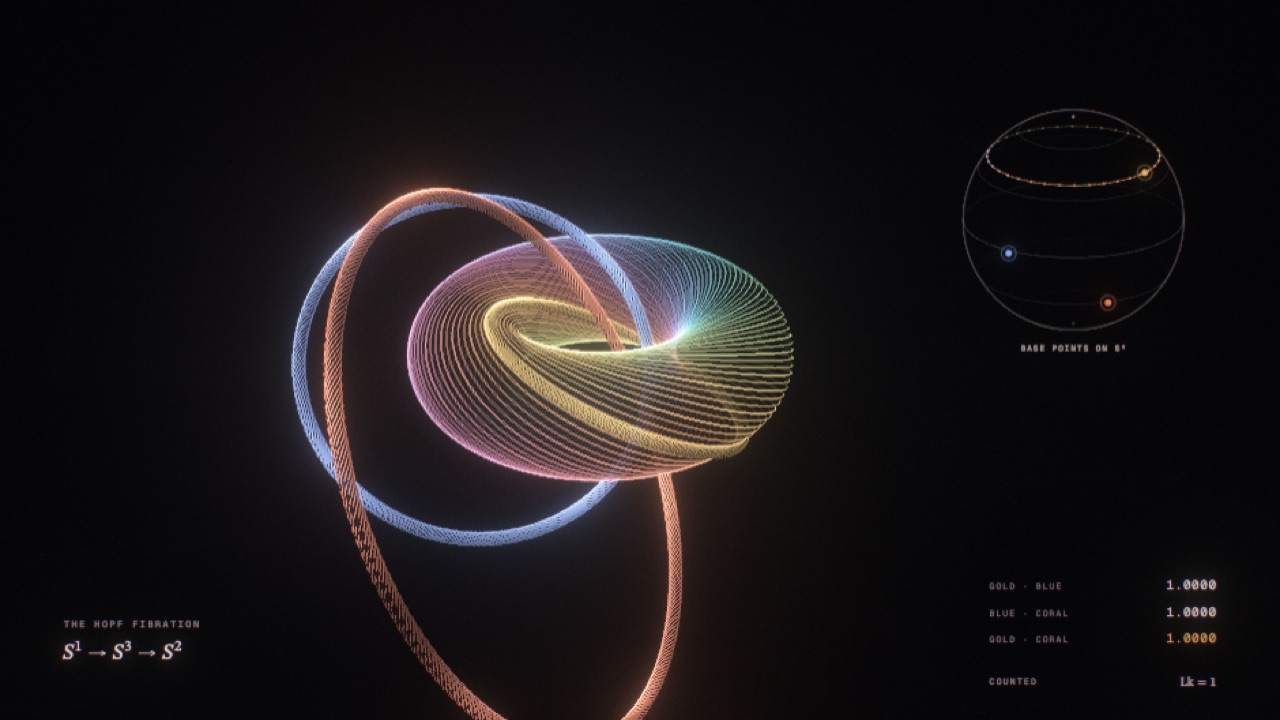 Plate VThe Hopf fibrationPick any three points on the small sphere: does every pair of their circles link?Open →
The Order Beneath · No.09ProjectiveProjective geometry
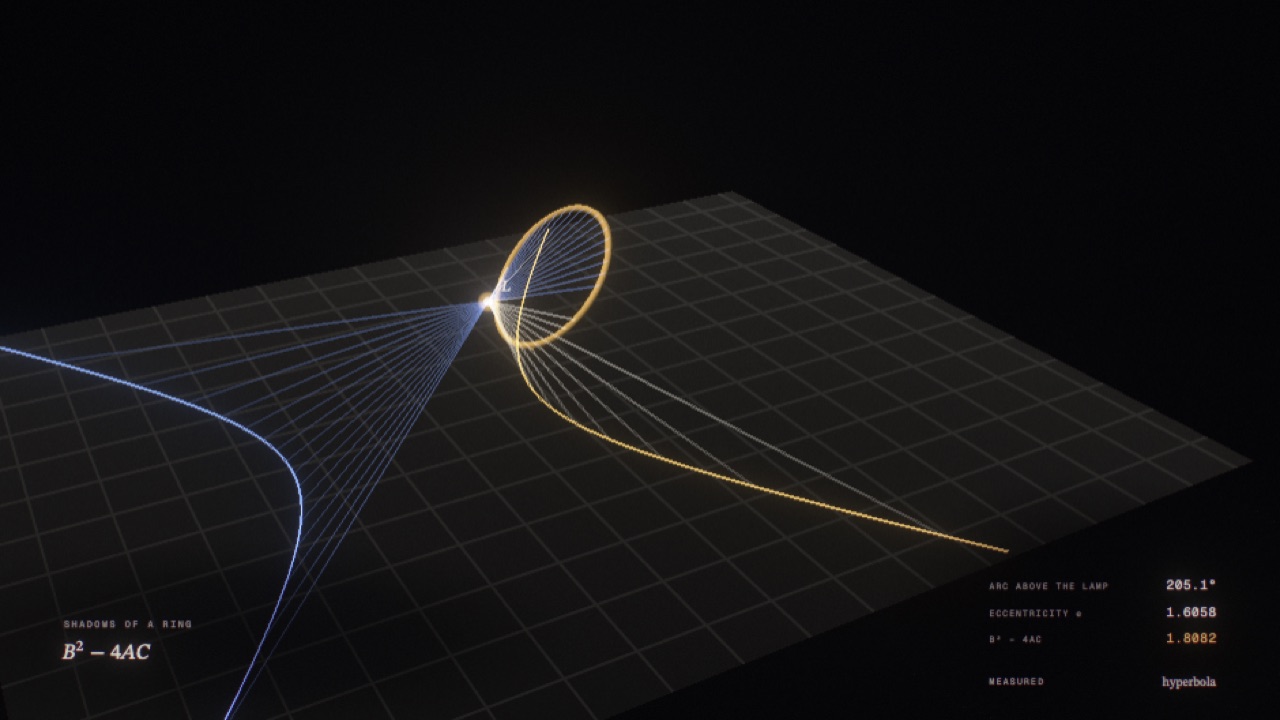 Plate IA ring under a lampWhat decides whether a ring's shadow is an ellipse, a parabola or a hyperbola?Open →
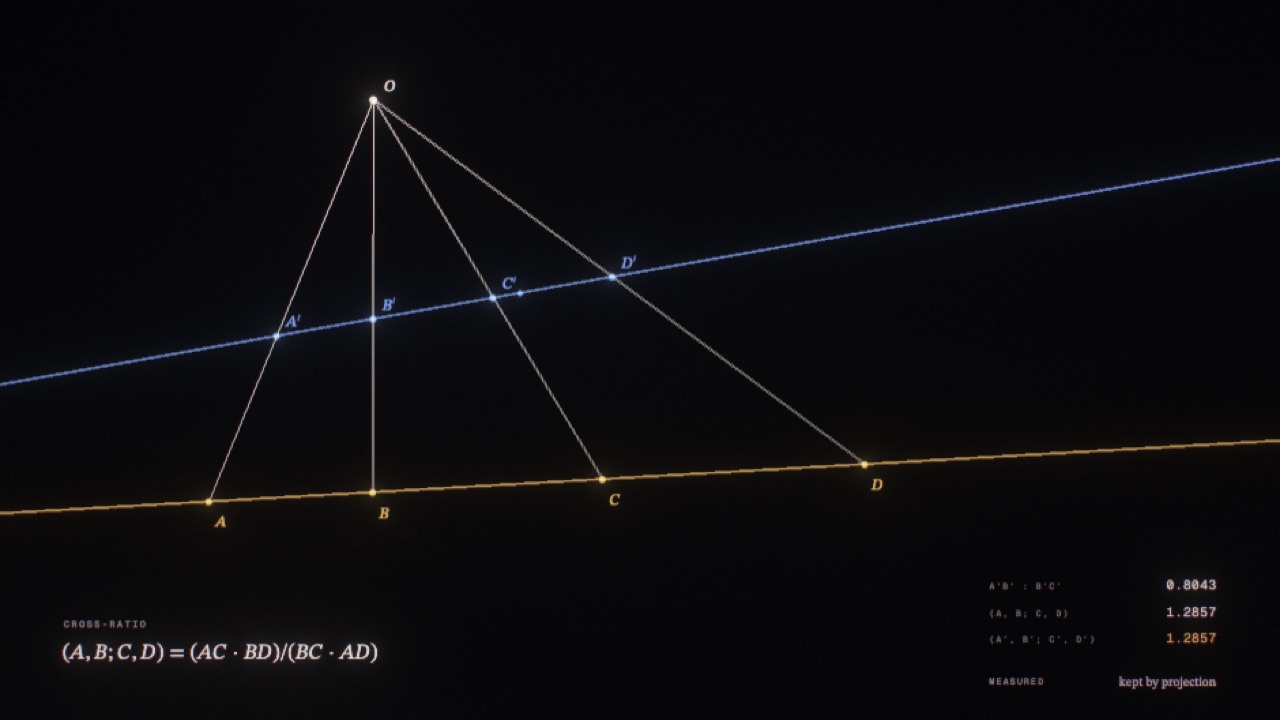 Plate IIThe cross-ratioLook from somewhere else and lengths and ratios all change: which number does not?Open →
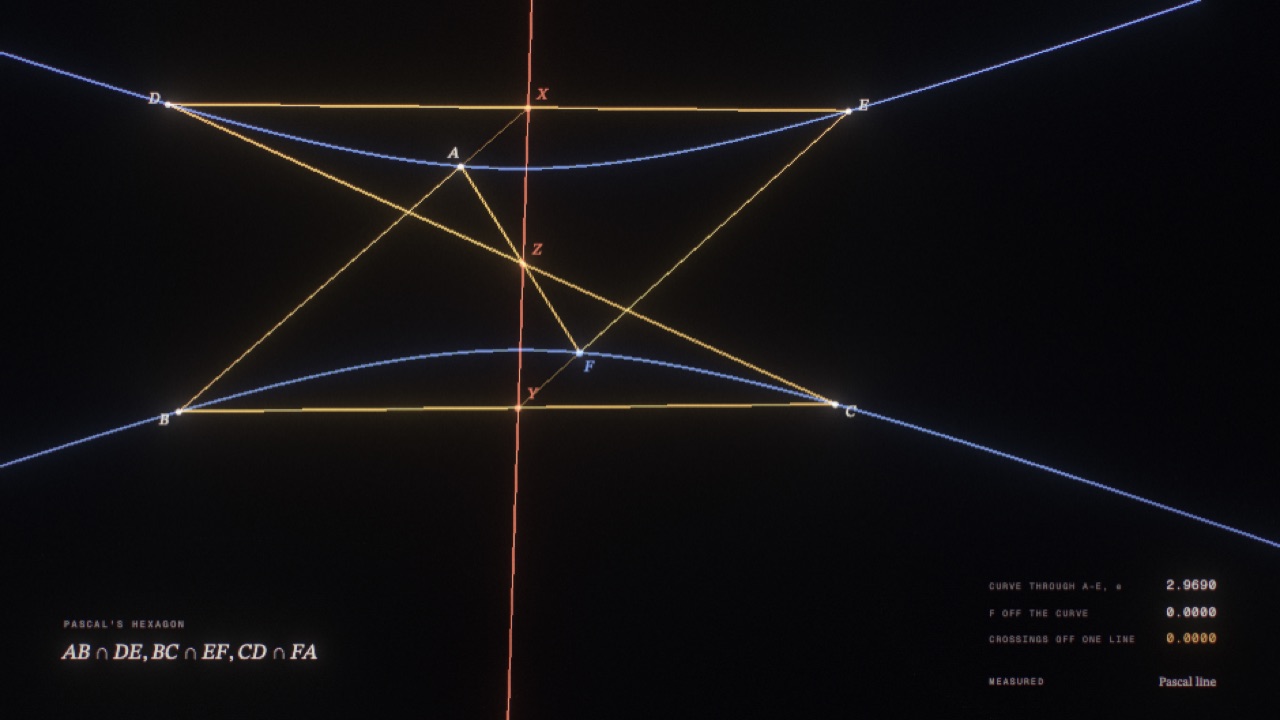 Plate IIIPascal's hexagonWith a hexagon's six corners on one conic, do its three pairs of opposite sides always meet on one line?Open →
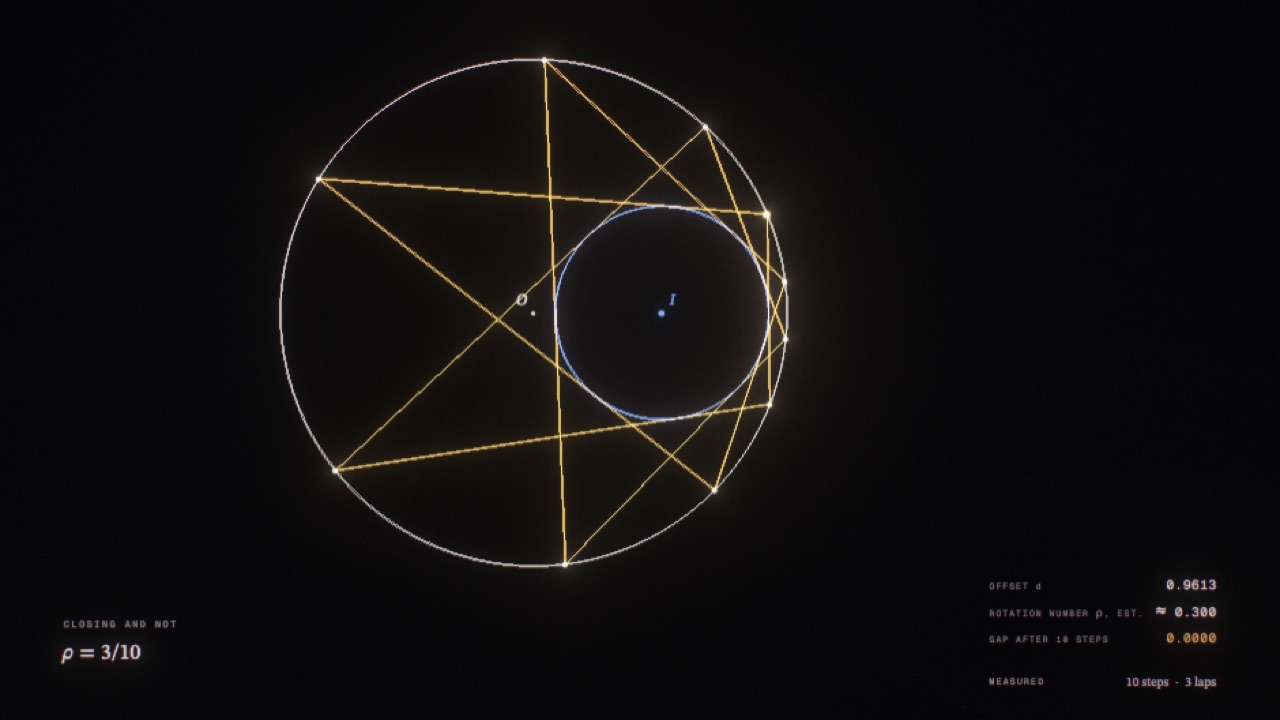 Plate IVPoncelet's porismA path zigzags between two circles, touching the inner one: does the starting point decide whether it closes?Open →
The Order Beneath · No.10SymmetrySymmetry in the plane and in space
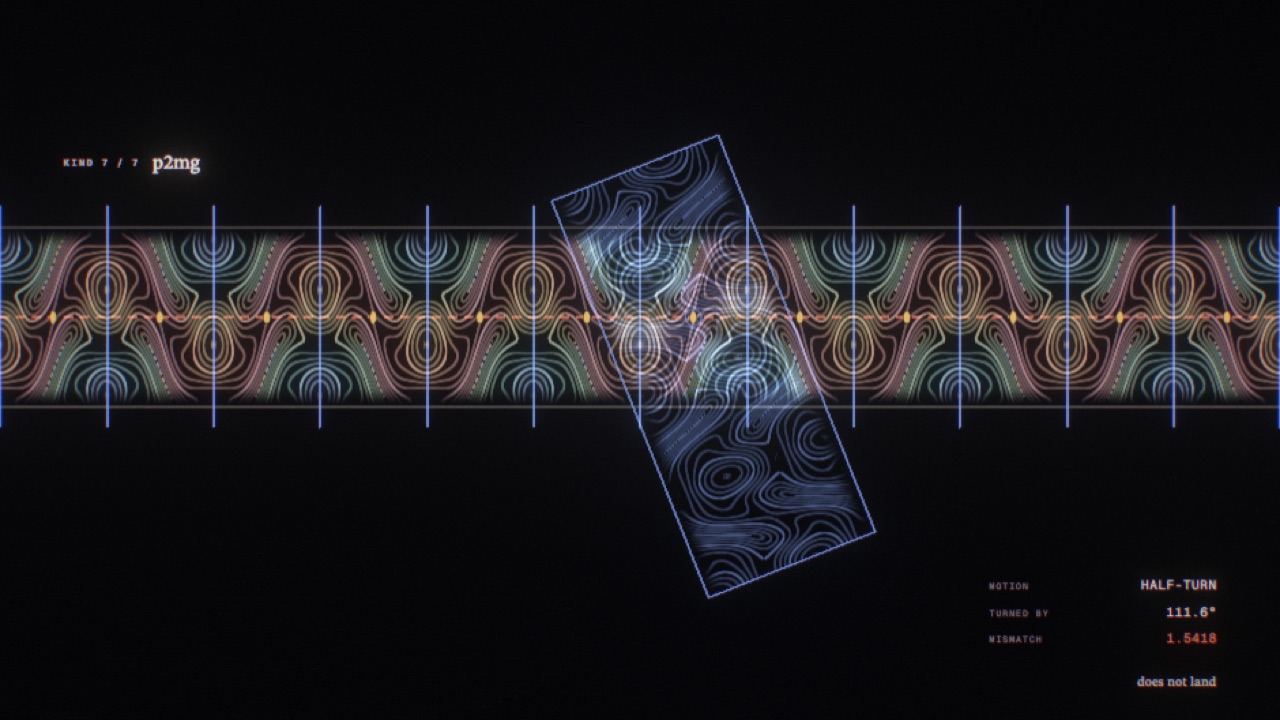 Plate ITrace it, move itWhich motions carry a frieze back onto itself?Open →
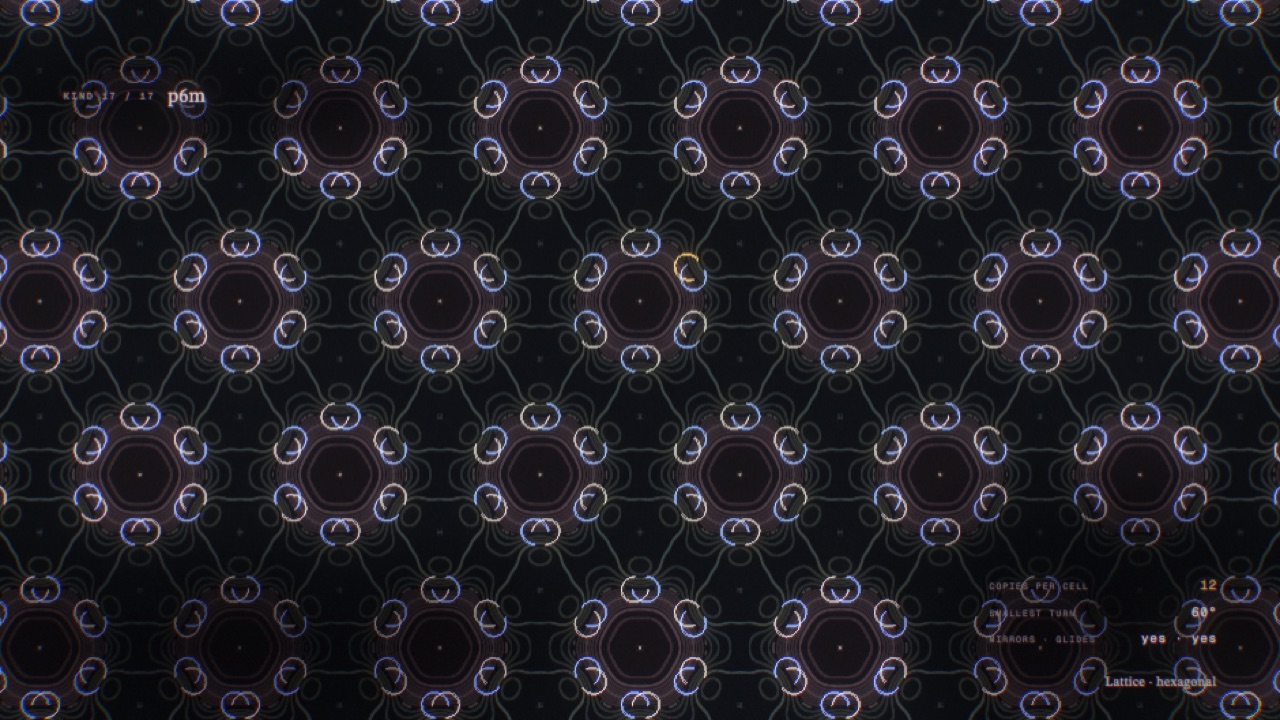 Plate IIOne stroke, a whole wallDraw one stroke: how does each of the seventeen symmetry types repeat it?Open →
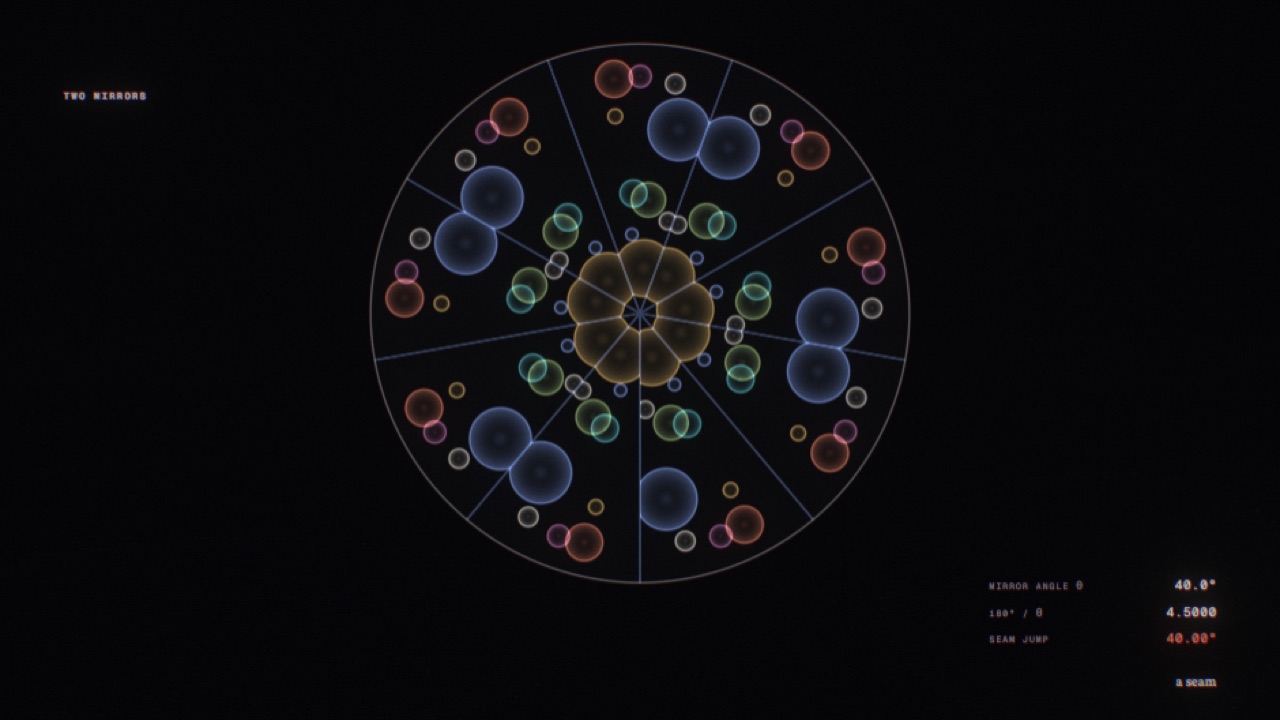 Plate IIITwo mirrorsAt what angle must two mirrors meet for the reflections to close without a seam?Open →
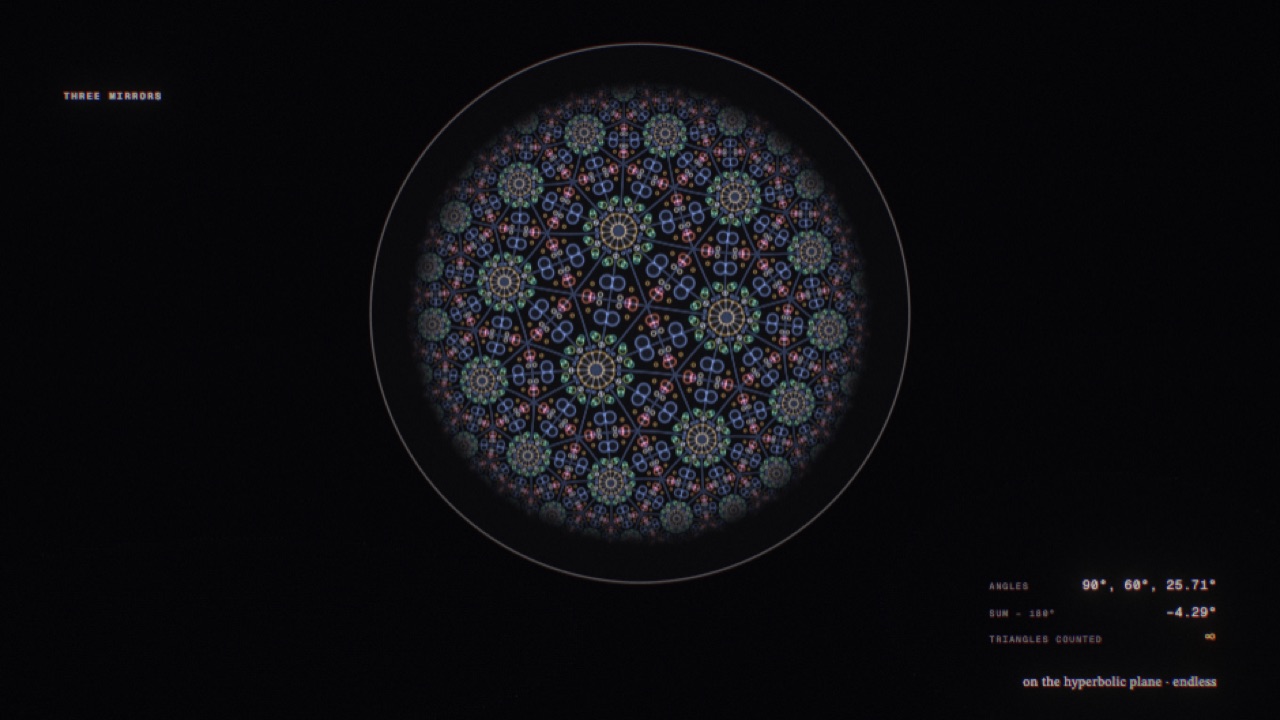 Plate IIIThree mirrorsThree mirrors bound a triangle: when its angles add up to more than, exactly or less than 180°, what do the reflections fill?Open →
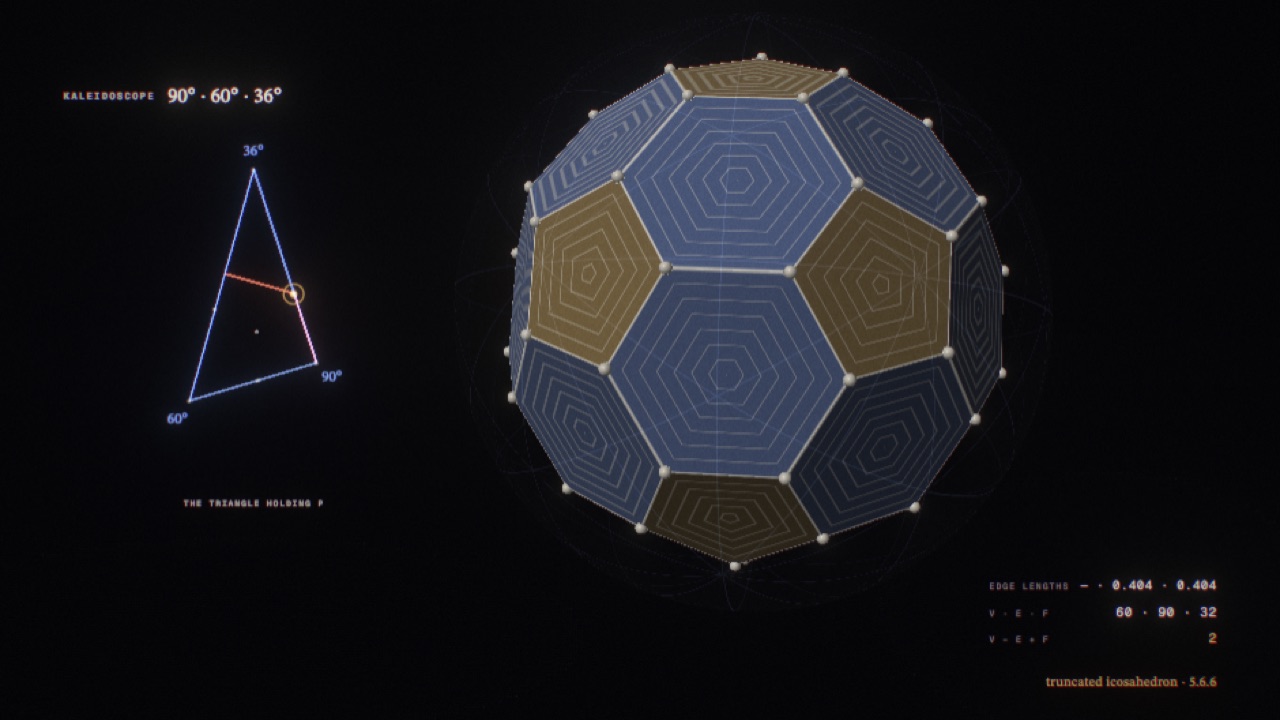 Plate IVPolyhedra in the mirrorsPut a point in one triangle of a kaleidoscope on the sphere: which polyhedron do its images make?Open →
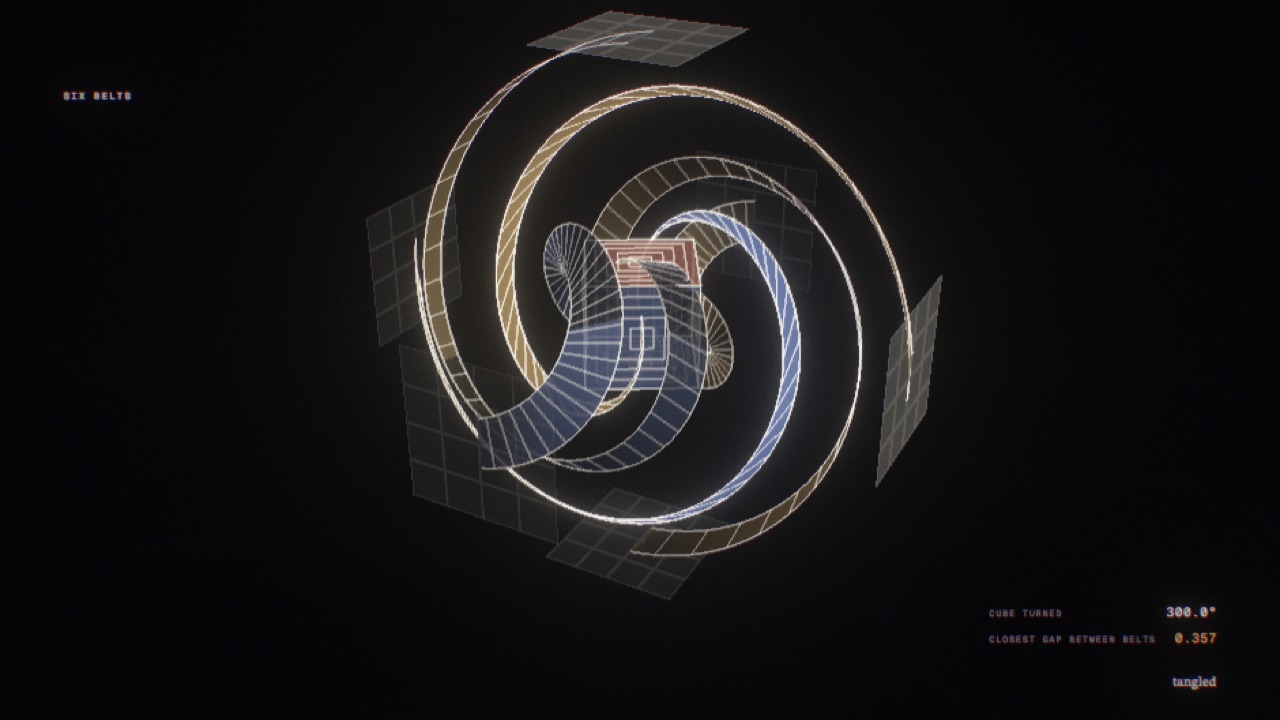 Plate VThe belt trickKeep turning the cube the same way: how far must it turn before every belt is straight again?Open →
The Order Beneath · No.11VariationalCalculus of variations
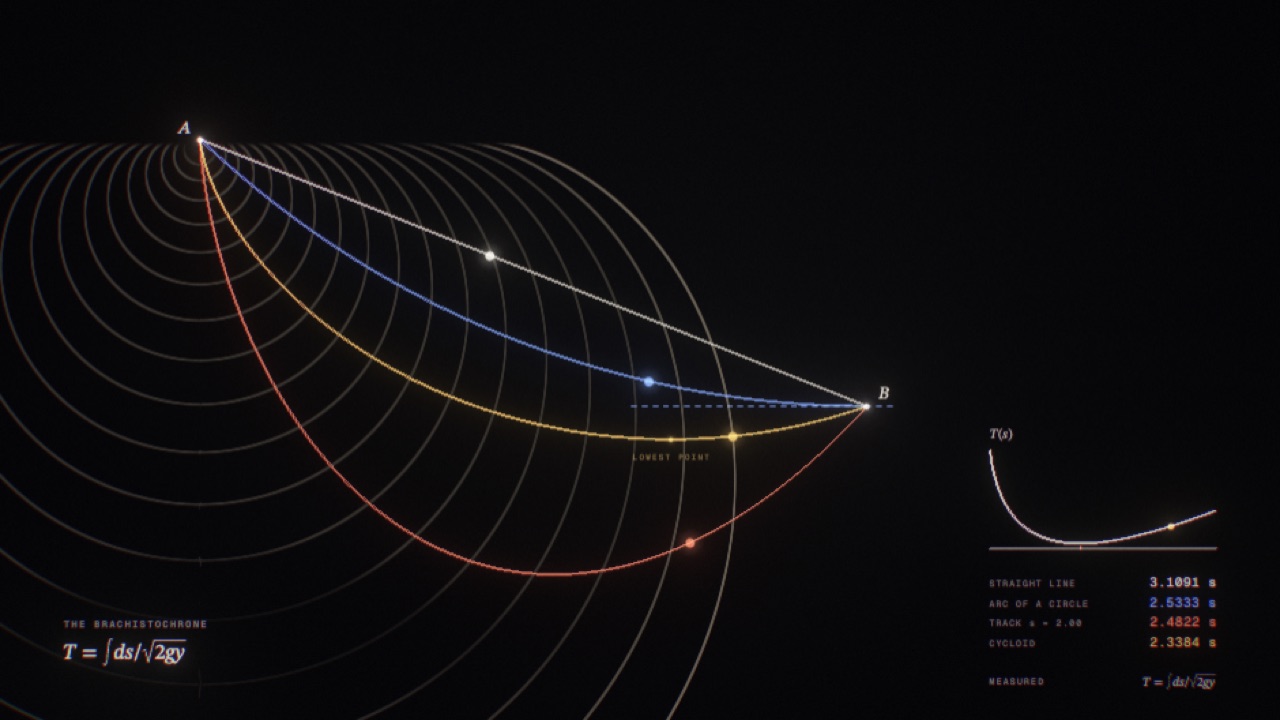 Plate IIThe brachistochroneA bead slides from A to B: which track is quickest?Open →
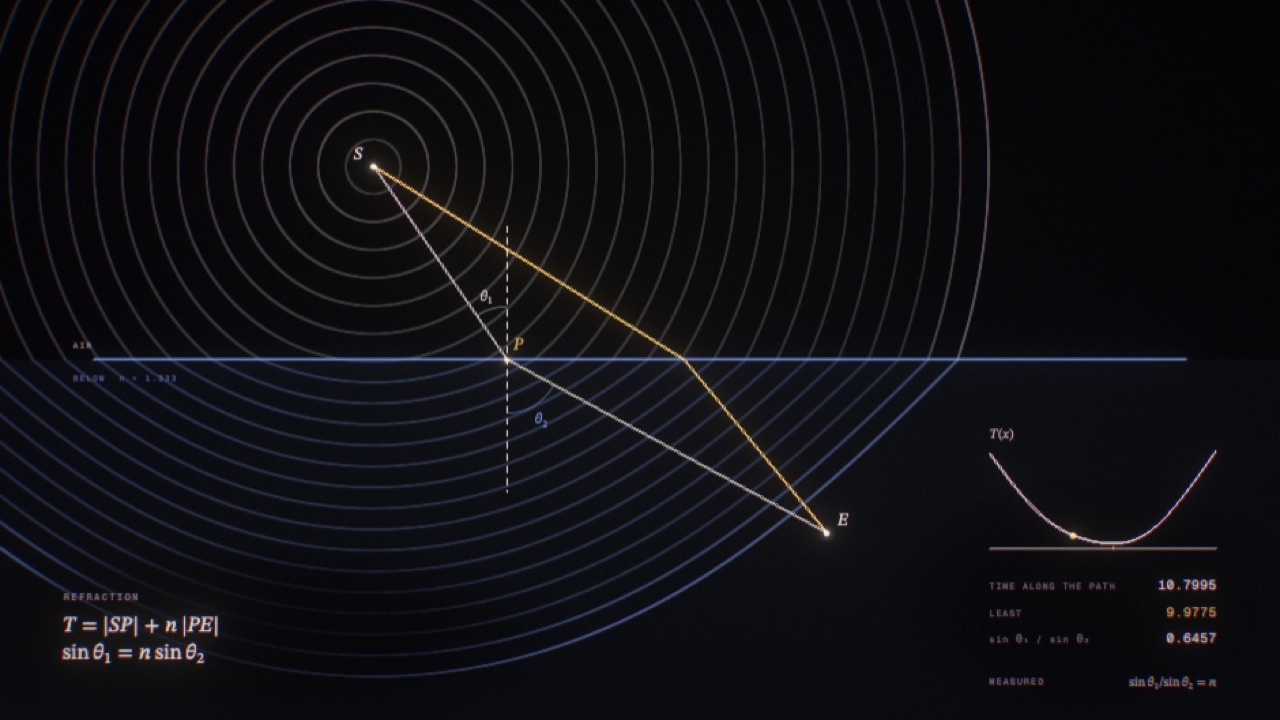 Plate IRefractionLight passes from air into water: where on the surface does it bend?Open →
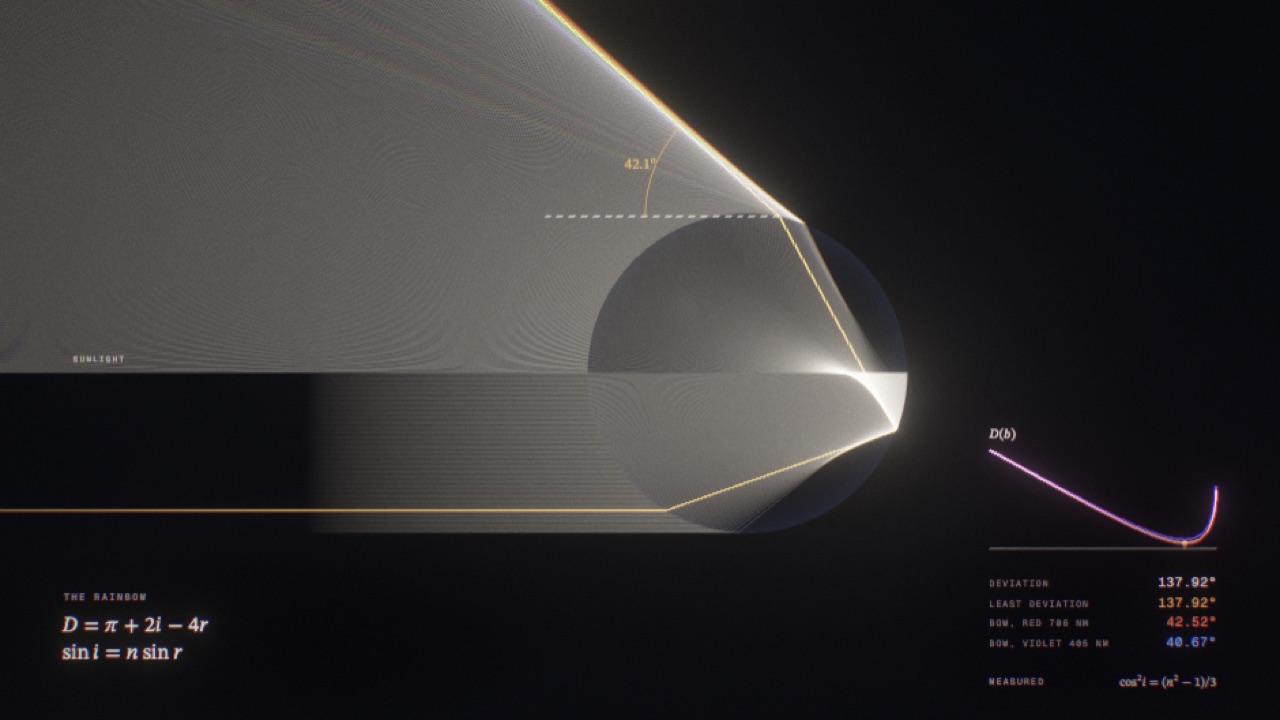 Plate IThe rainbowSunlight passes through a raindrop: where do the rays come out bunched?Open →
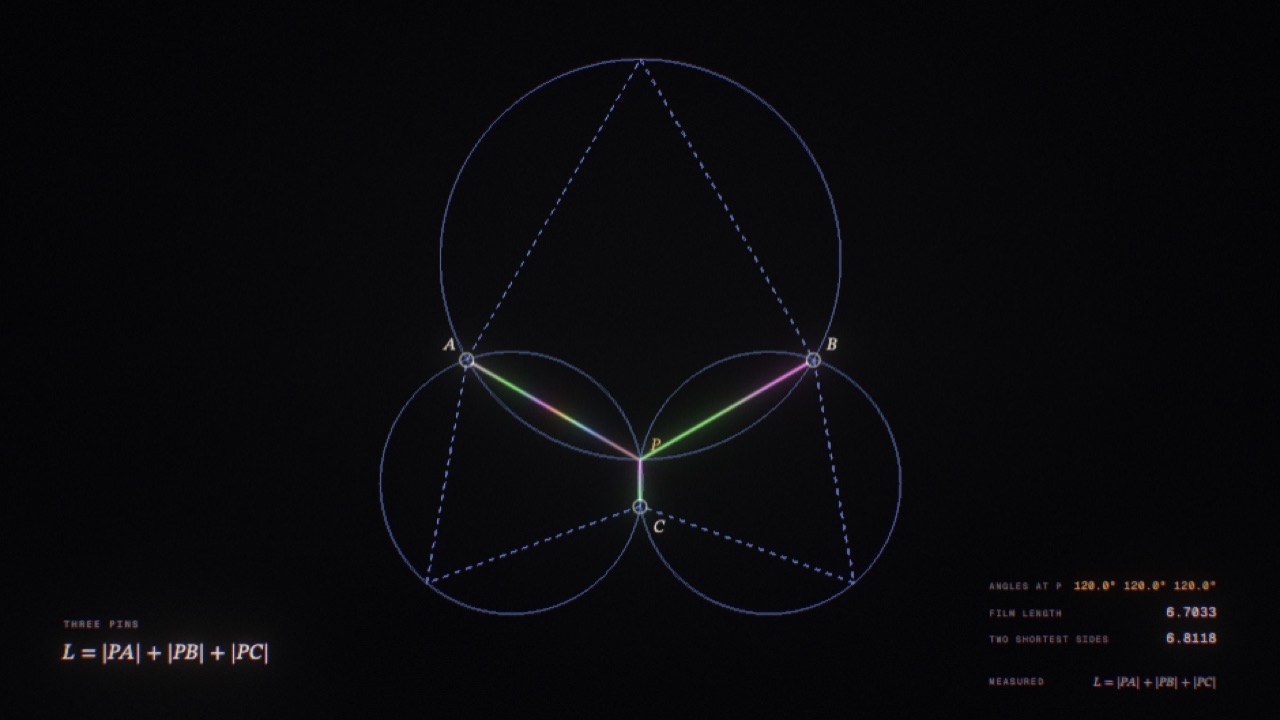 Plate VThree pinsA soap film joins three pins: where do its pieces meet?Open →
The Order Beneath · No.12AperiodicAperiodic tilings
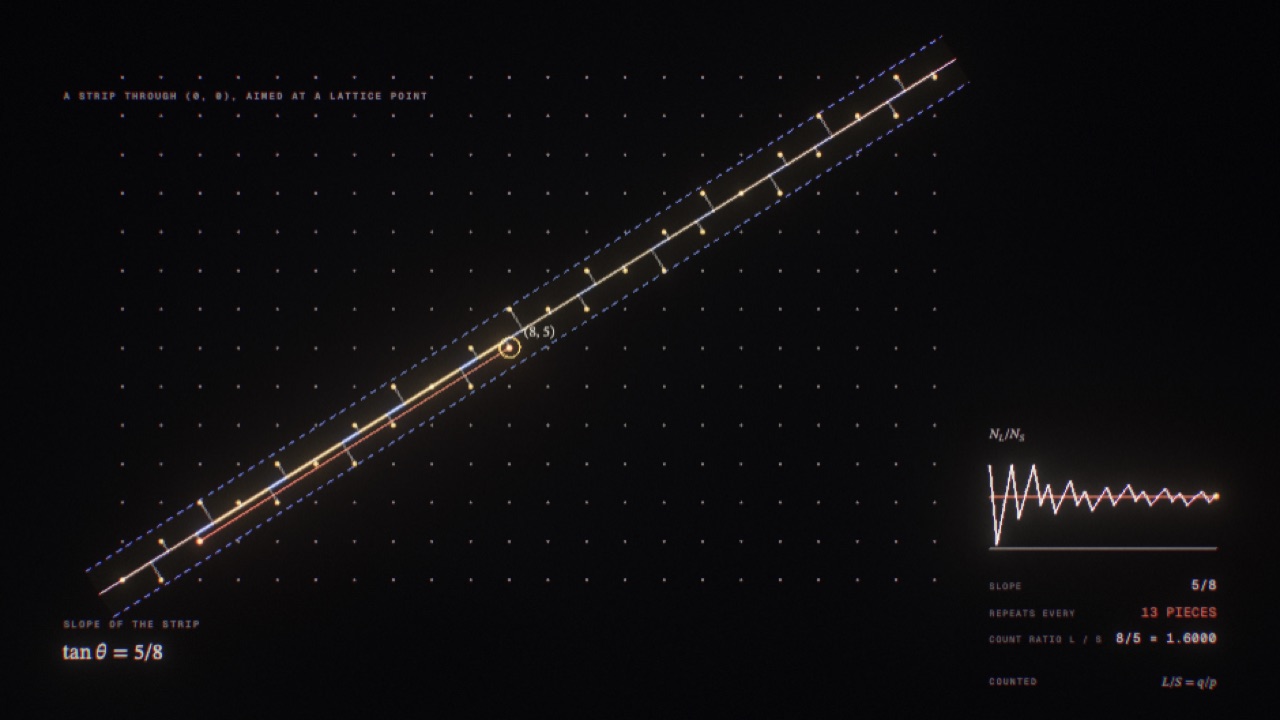 Plate IA strip across the latticeAim the strip at any lattice point: does the row repeat?Open →
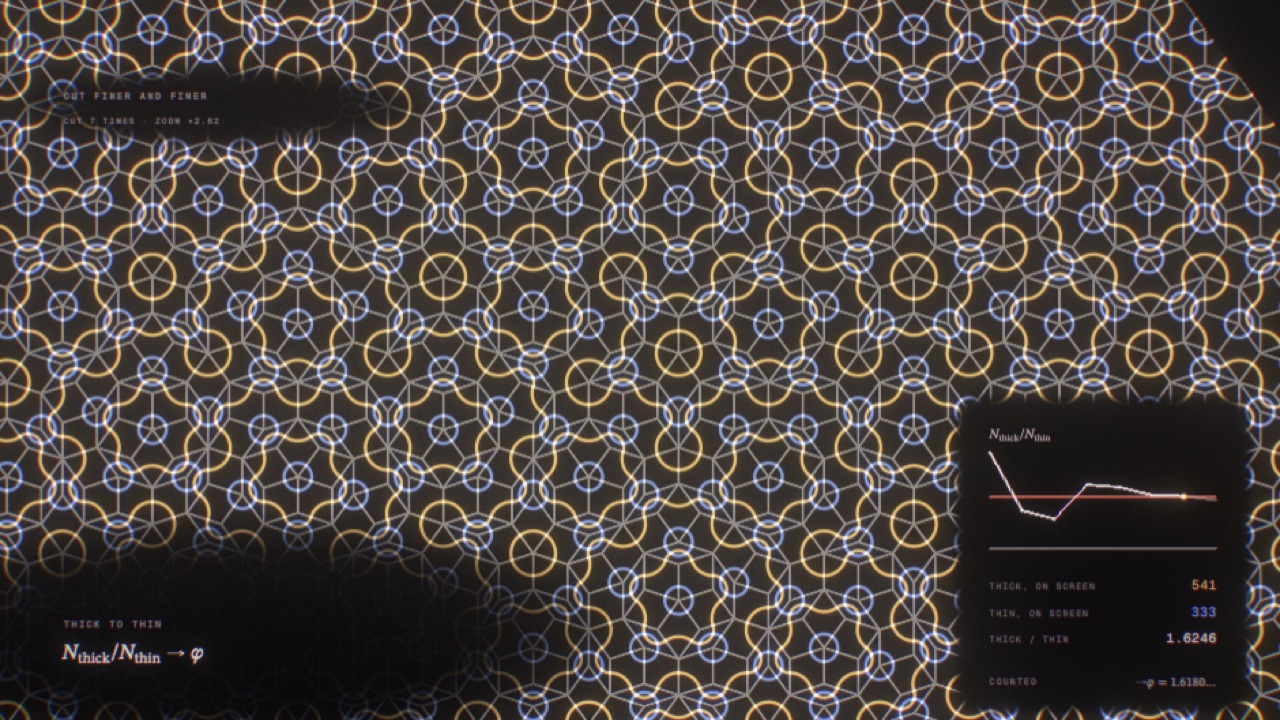 Plate IICutting finerCut the rhombs finer and finer: what does the ratio of thick to thin close in on?Open →
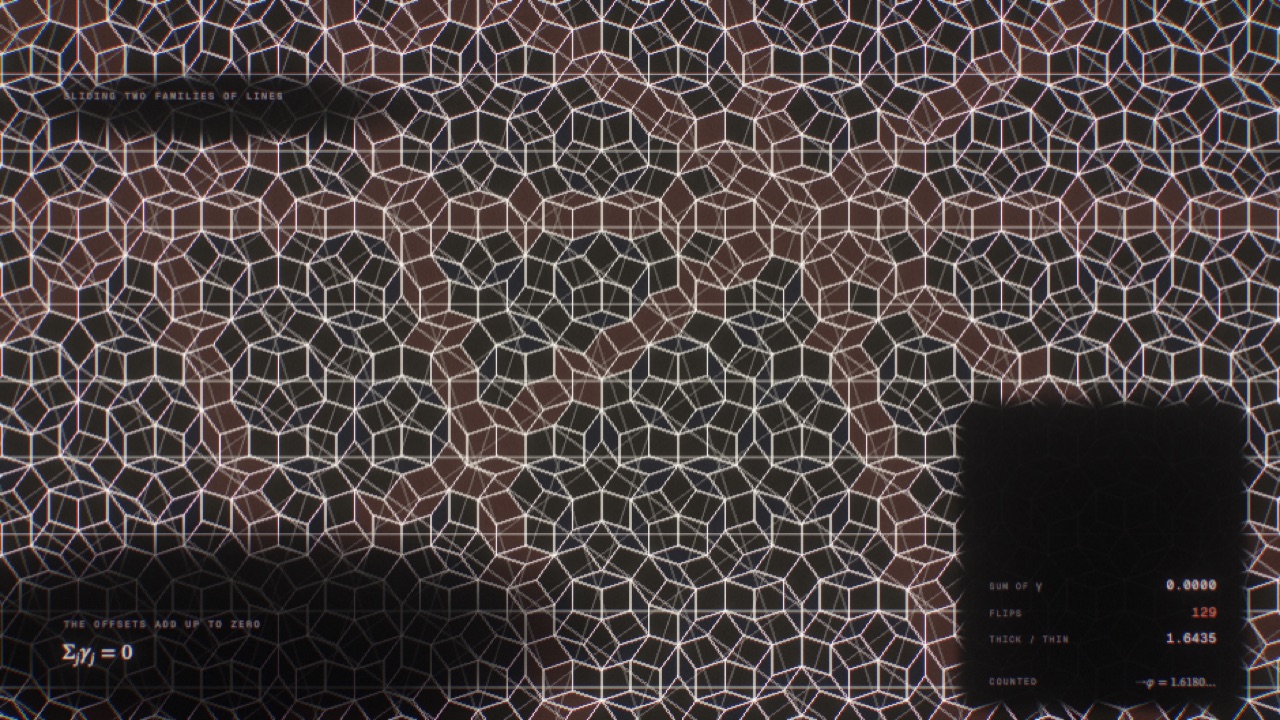 Plate IIIDe Bruijn's pentagridSlide two families of lines: where does the tiling change?Open →
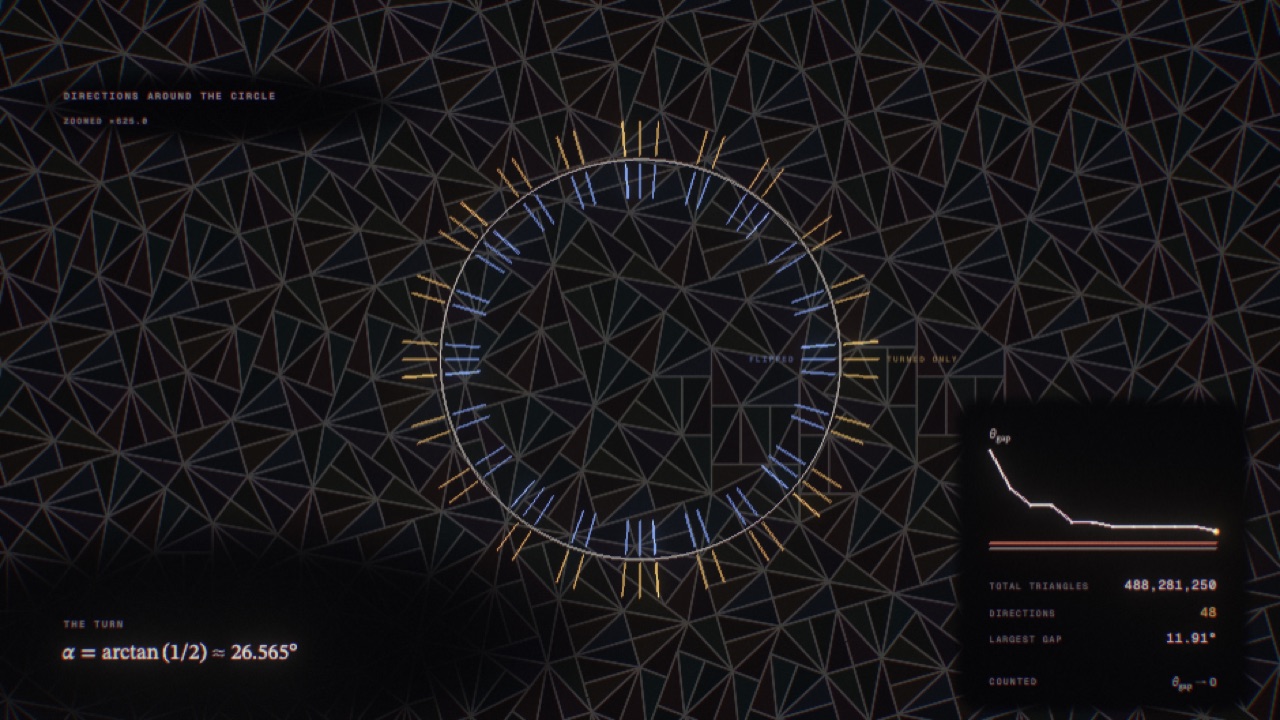 Plate IVThe pinwheelCut after cut, how many directions do the triangles point in?Open →
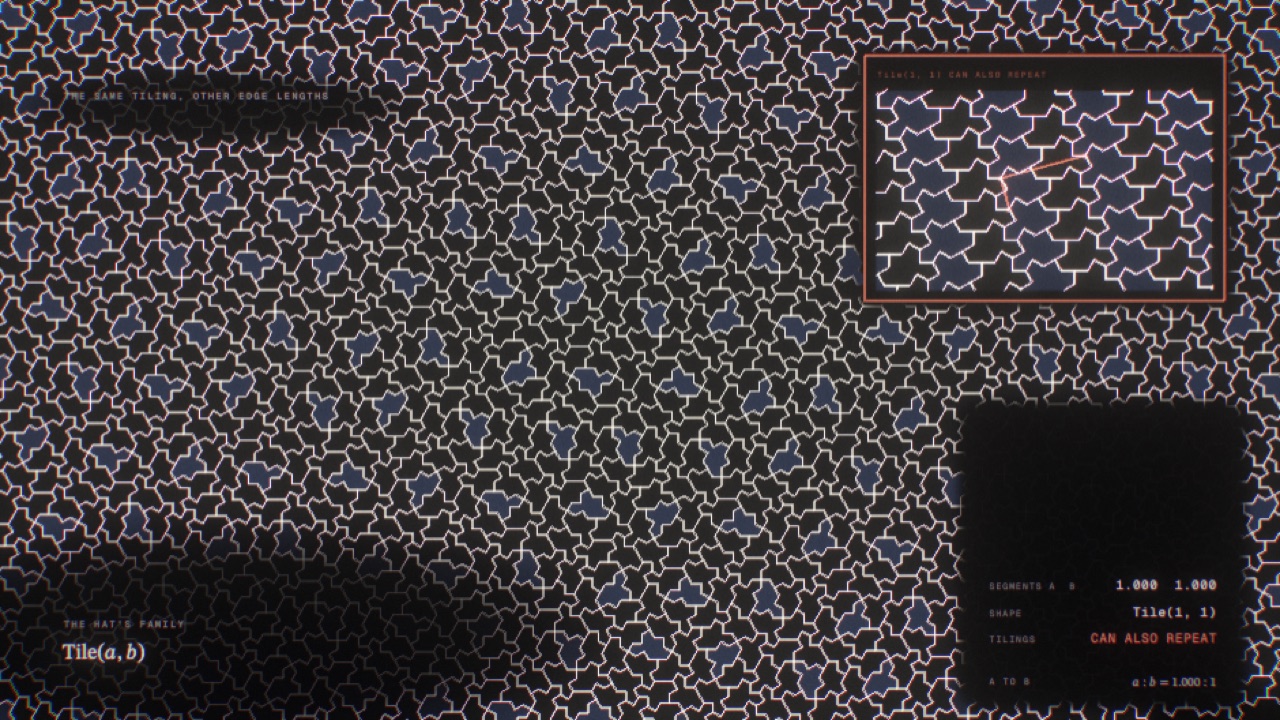 Plate VThe hat's familyIn the family Tile(a, b), which shapes can also tile in a repeating pattern?Open →
The Order Beneath · No.13EuclideanTriangle geometry
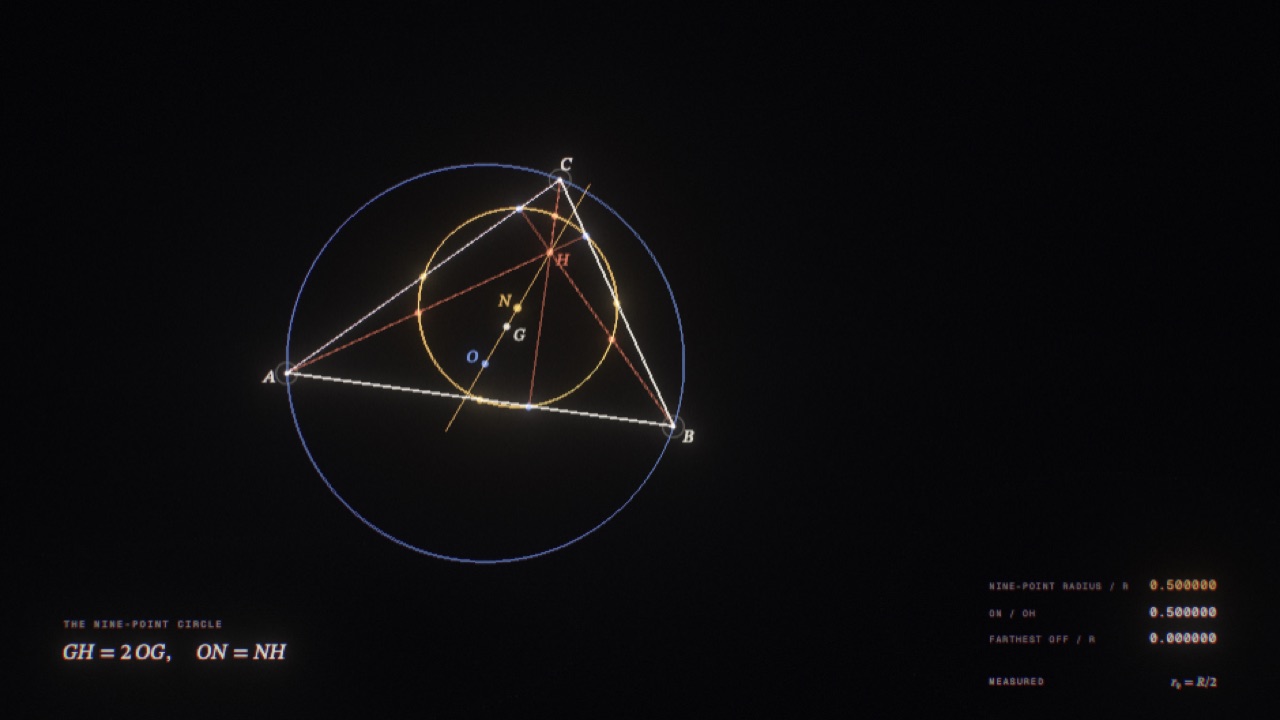 Plate IThe nine-point circleDrag the triangle until it is obtuse or very thin: do the nine points stay on one circle?Open →
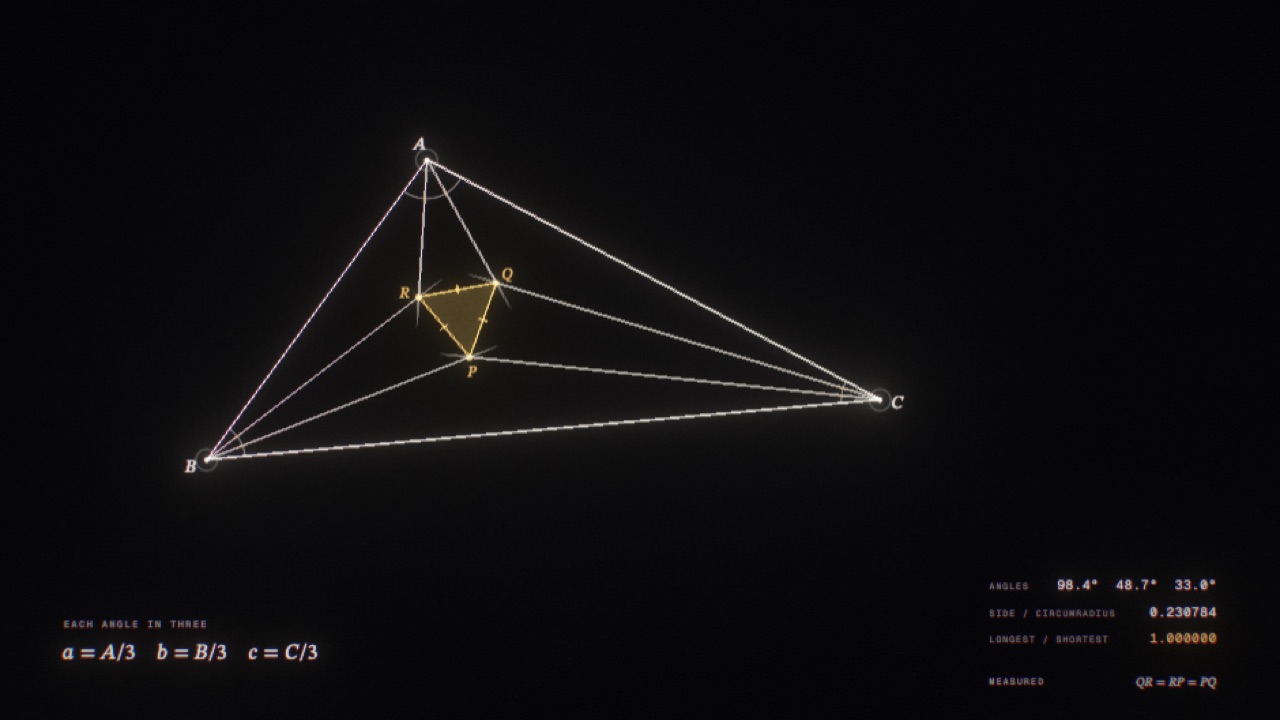 Plate IIMorley's trisectorsDrag a triangle into any shape: do its trisectors still meet in an equilateral triangle?Open →
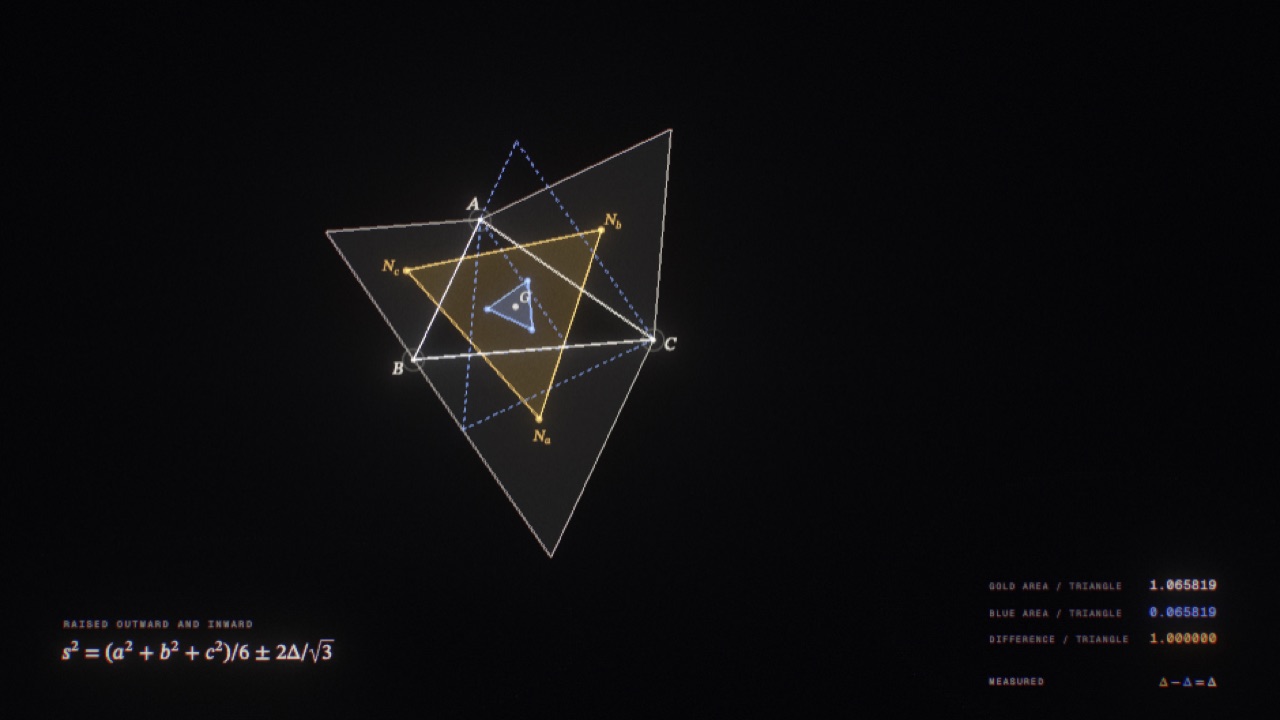 Plate IIINapoleon's theoremRaise an equilateral triangle on each side of a triangle: what do the three centres always make?Open →
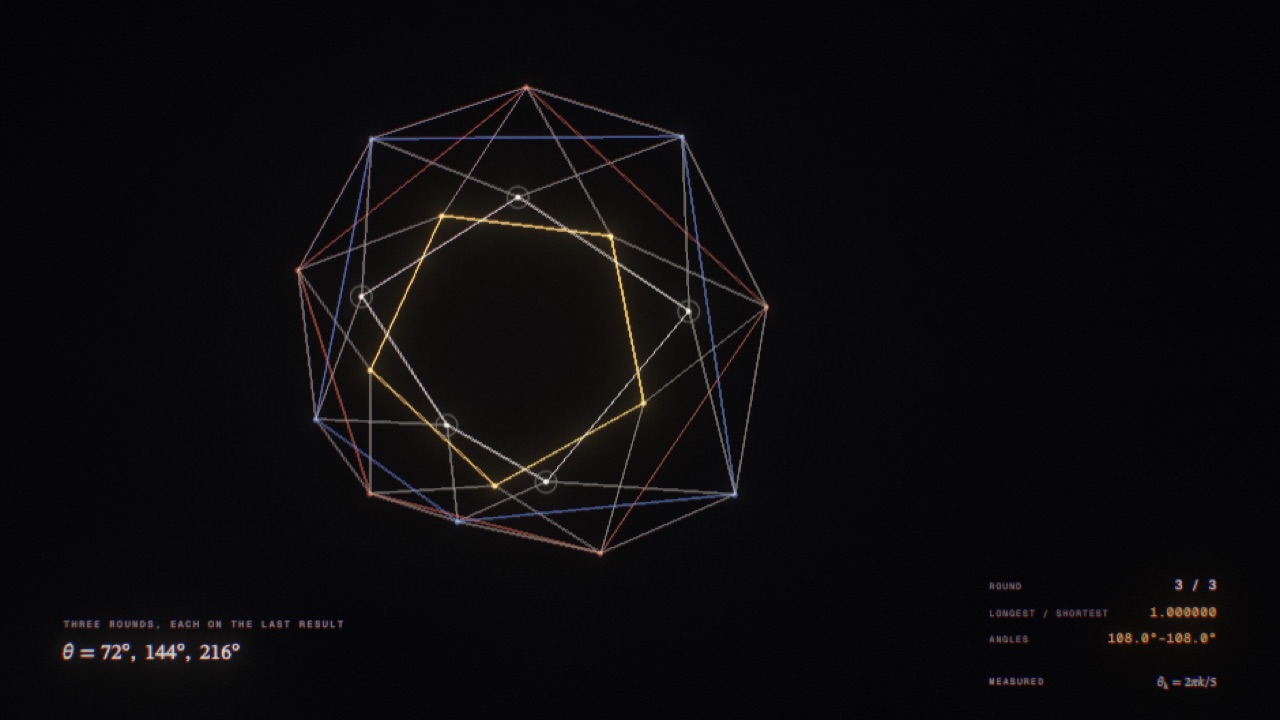 Plate IIIThree rounds on a pentagonTake any lopsided pentagon and repeat one construction three times: what comes out?Open →
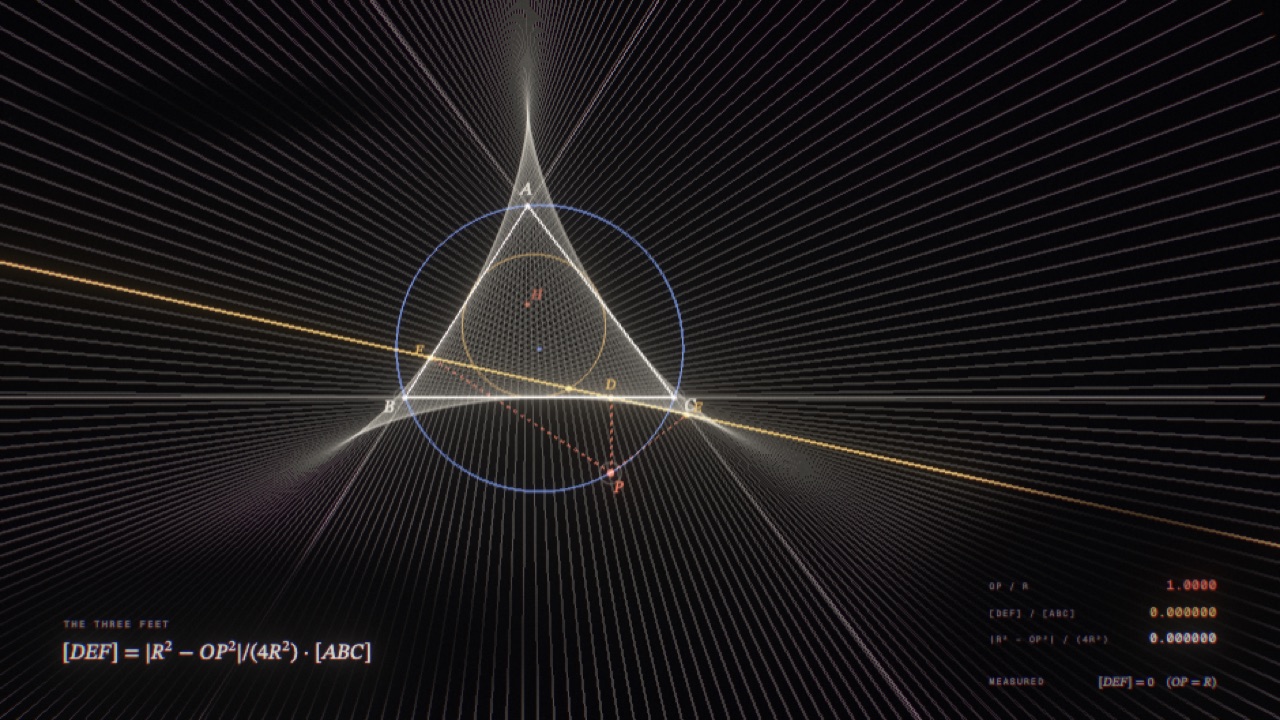 Plate IVThe Simson lineFor which points P do the feet of the perpendiculars to the three sides lie on one line?Open →
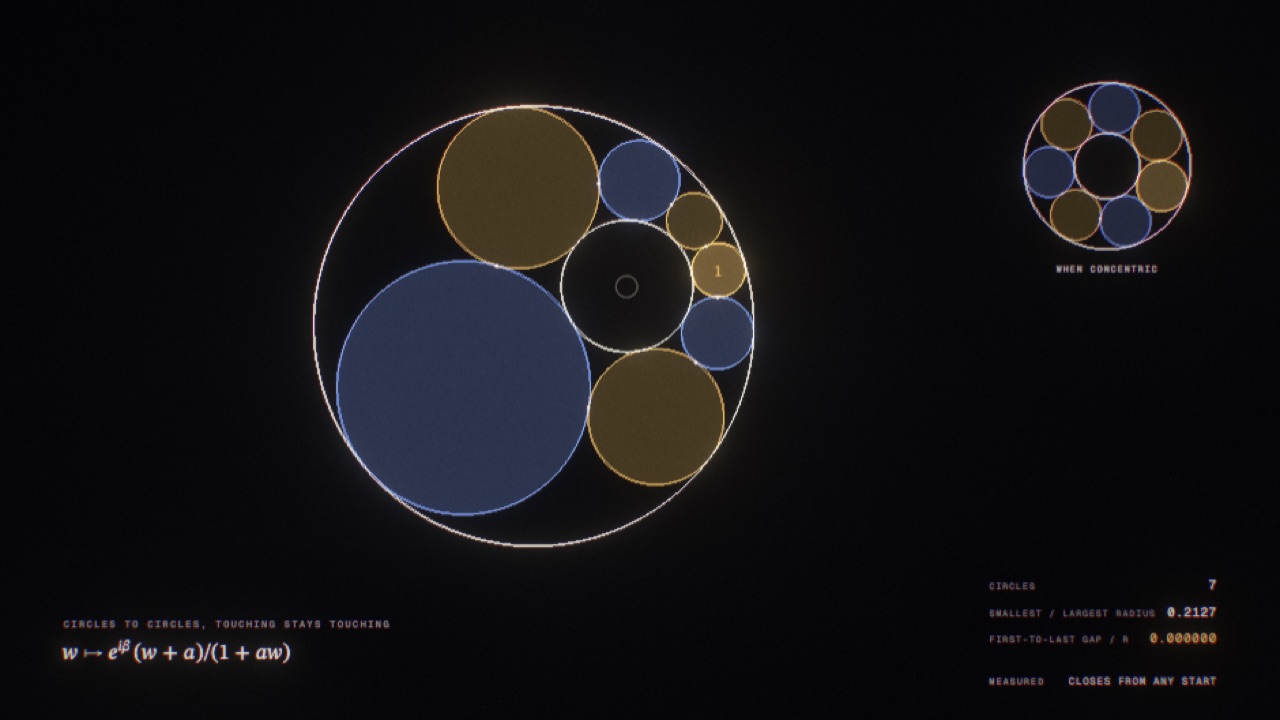 Plate VSteiner's chainFit circles one by one between two circles: does where you start decide whether the chain closes?Open →
The Order Beneath · No.14AlgebraicAlgebraic curves and surfaces
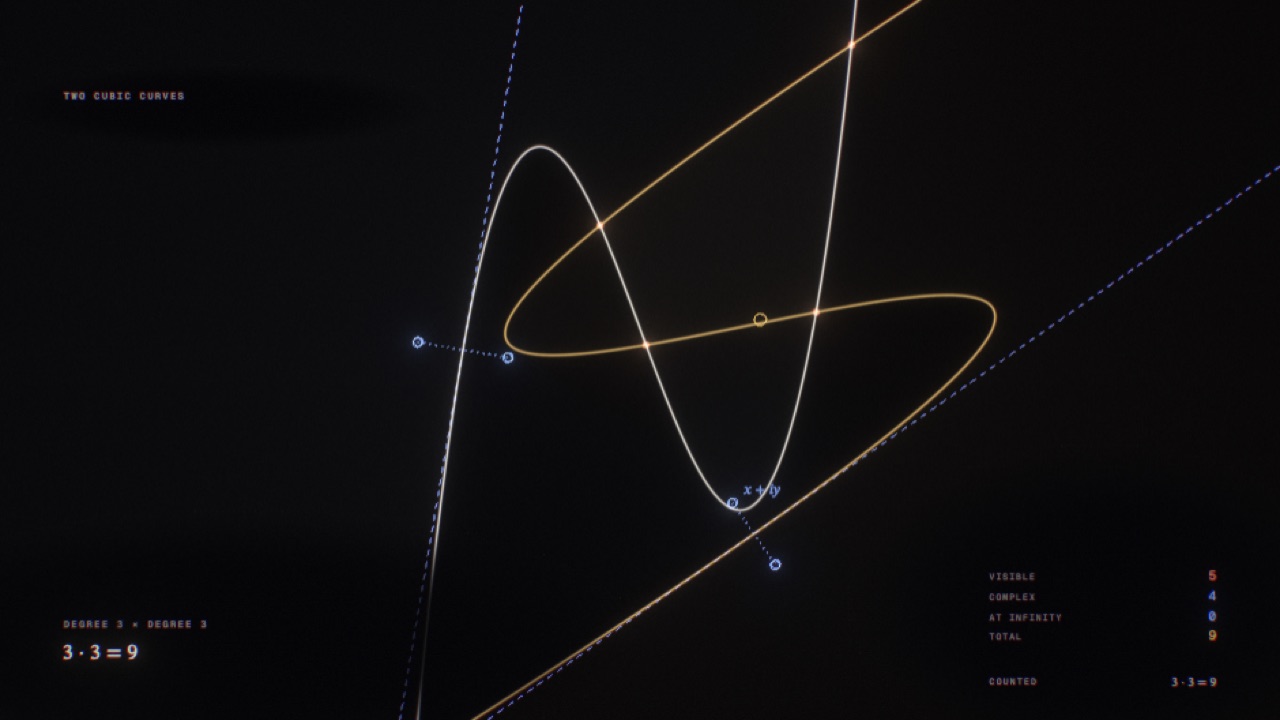 Plate IWhere two curves meetThe intersections you can see come and go: how many are there altogether?Open →
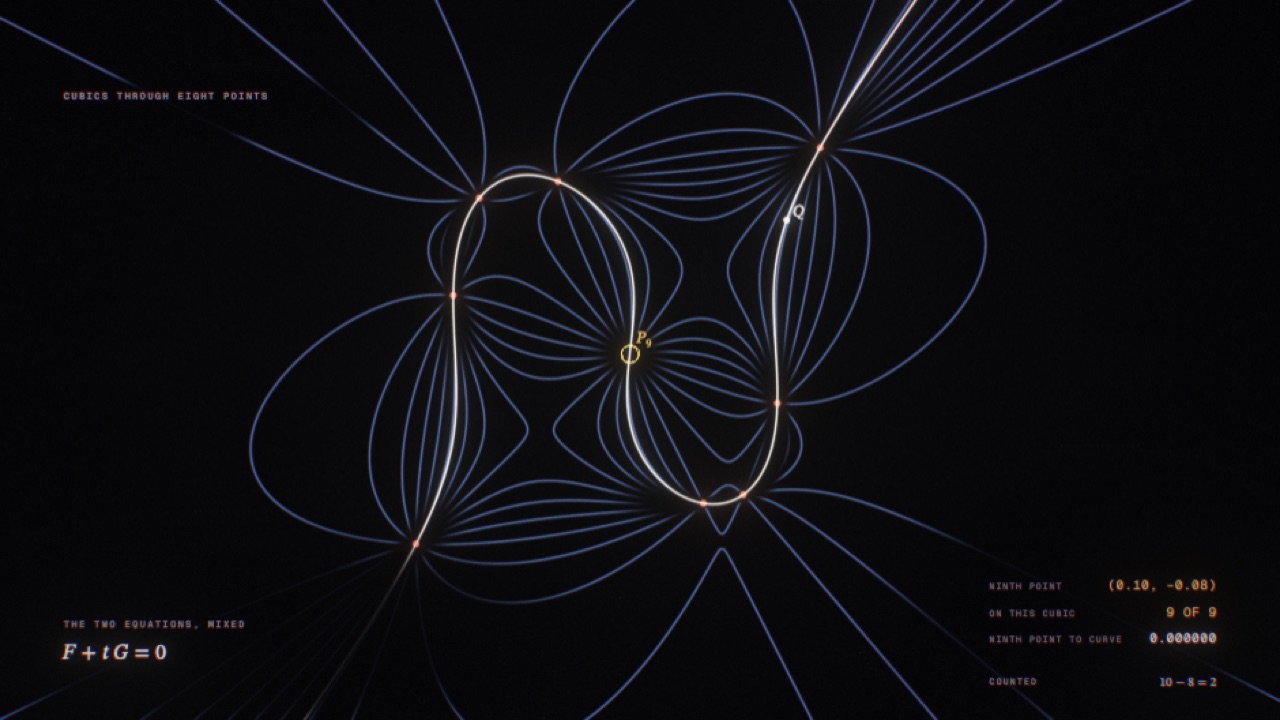 Plate IIThe ninth pointEvery cubic through these eight points passes through one more: which?Open →
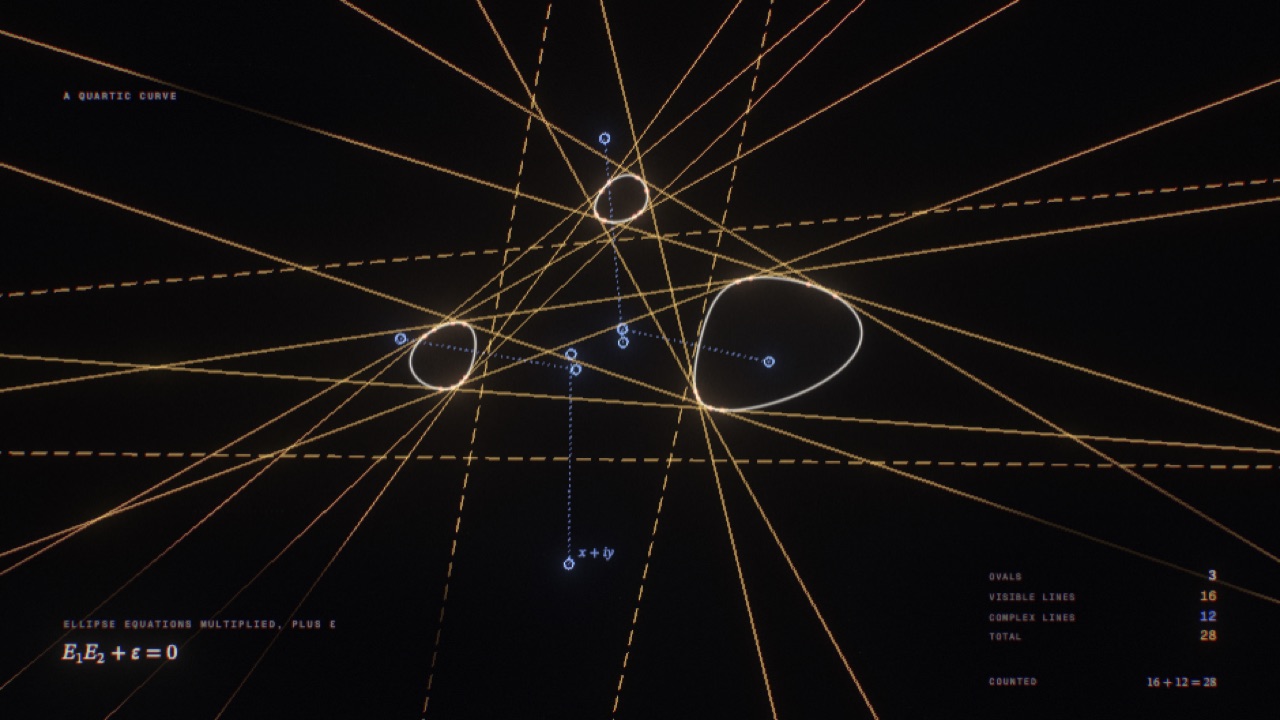 Plate IIIBitangents of a quarticAs the ovals shrink away, how many lines still touch the curve twice?Open →
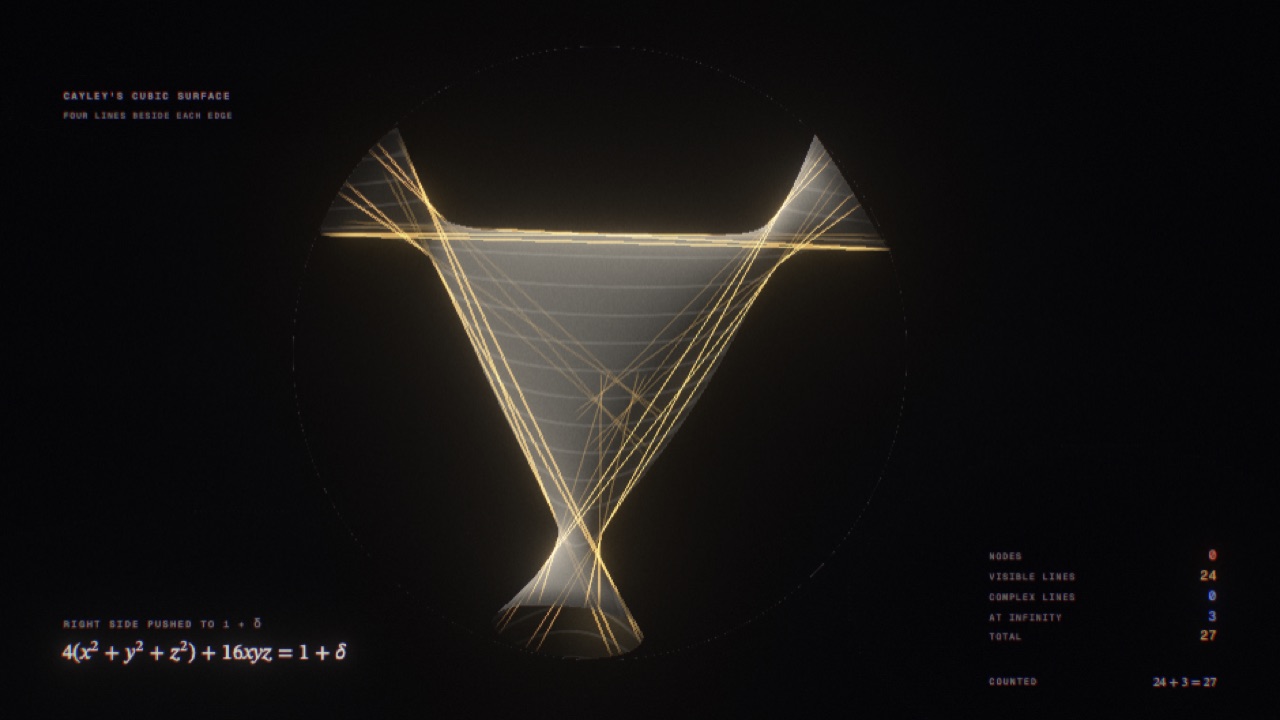 Plate VPushing Cayley's surfaceSmooth away the four nodes: how many lines does the surface hold?Open →
The Order Beneath · No.15LinearLinear algebra
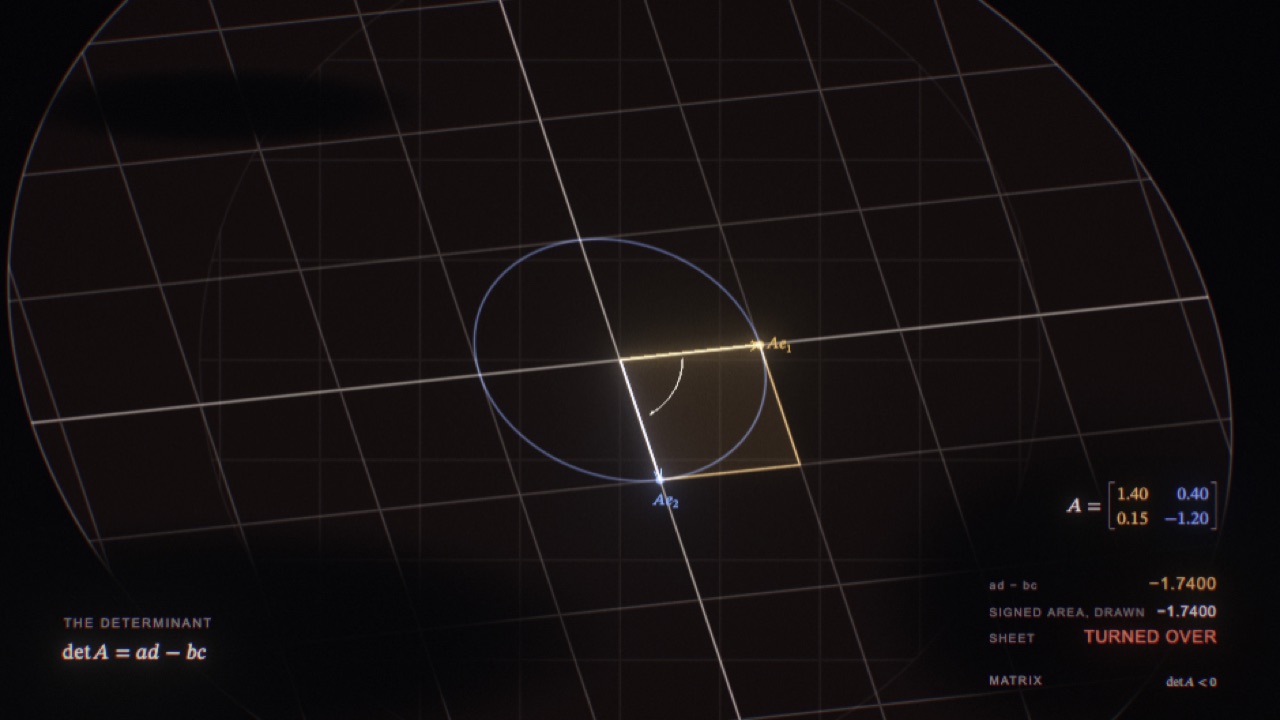 Plate IThe whole sheet at onceWhere must the two columns go for the whole sheet to be pressed onto a line, or turned over?Open →
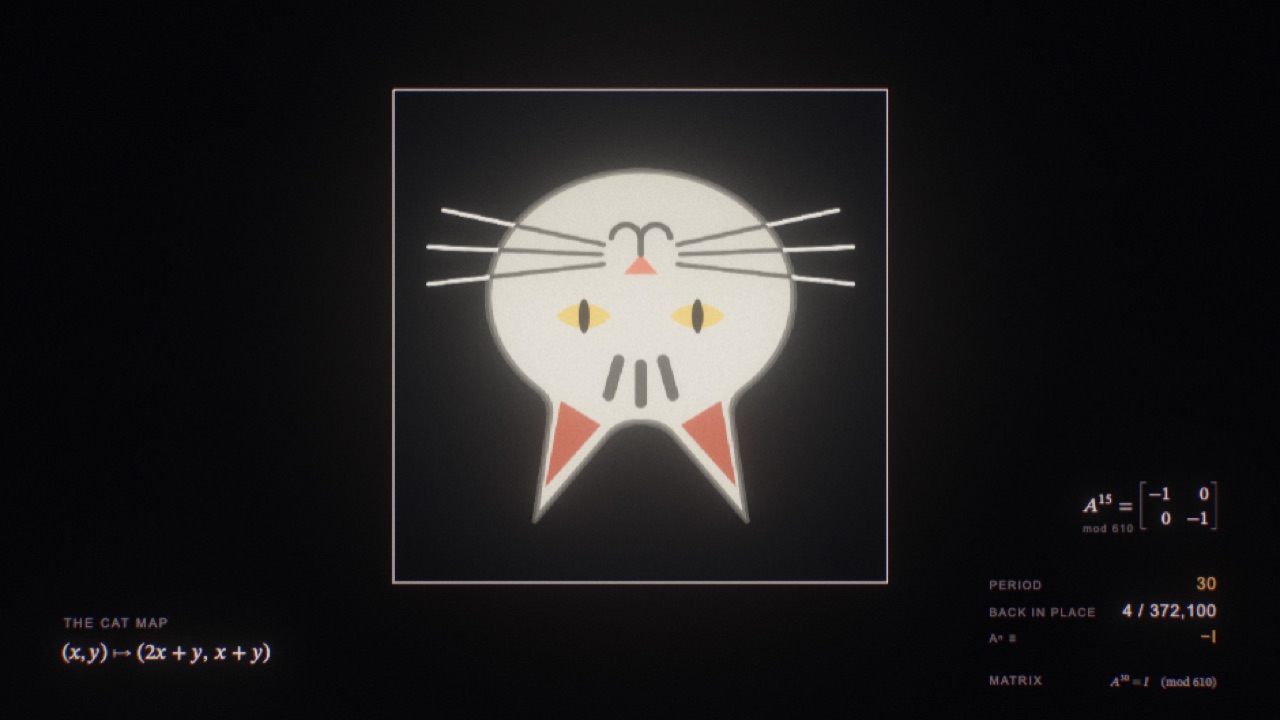 Plate IIA cat stirred into noiseChange the size of the grid: how many steps until the cat comes back?Open →
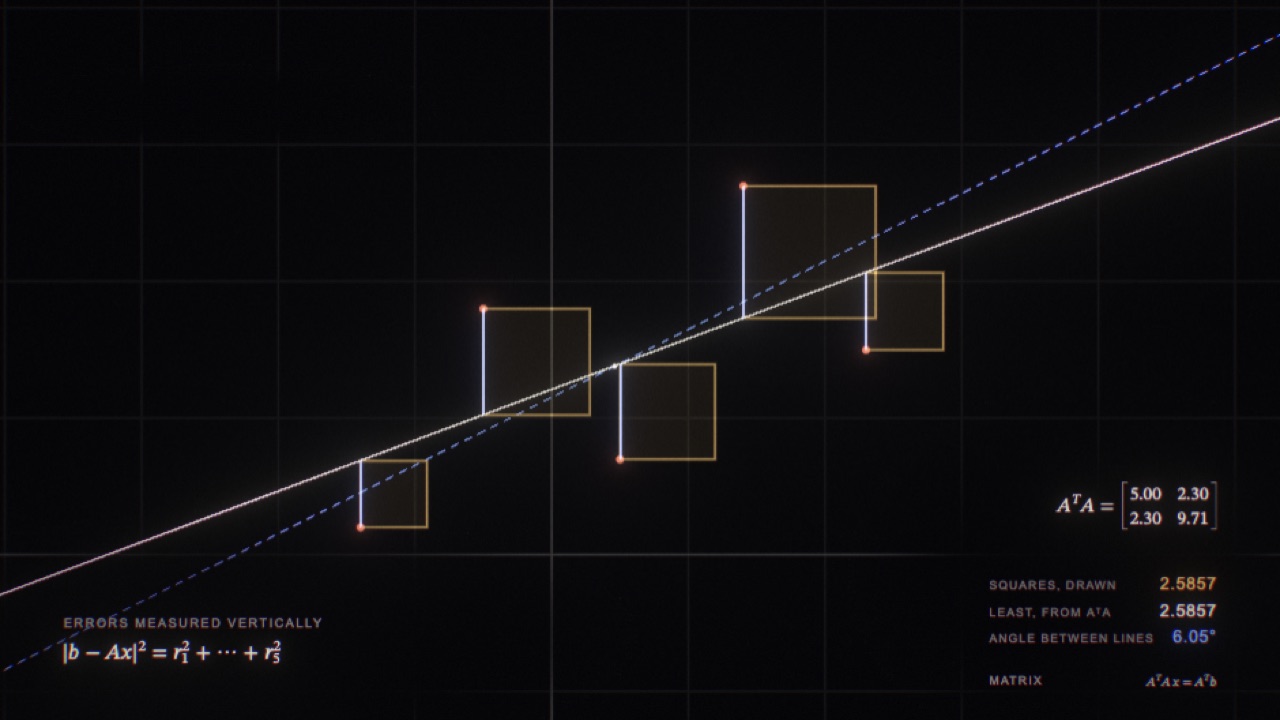 Plate IIIThe nearest lineMeasure the errors vertically or at right angles: is the nearest line the same?Open →
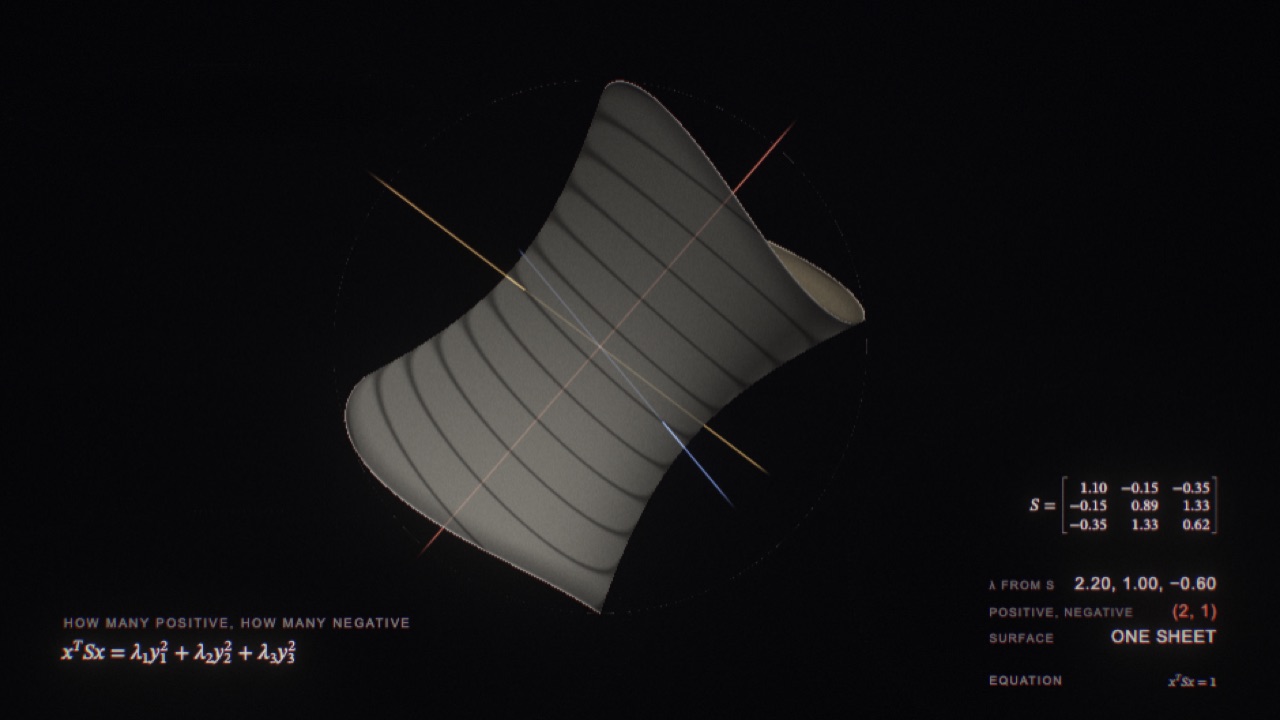 Plate IVEllipsoids and hyperboloidsChange the signs of the three numbers: which surface does xᵀSx = 1 become?Open →
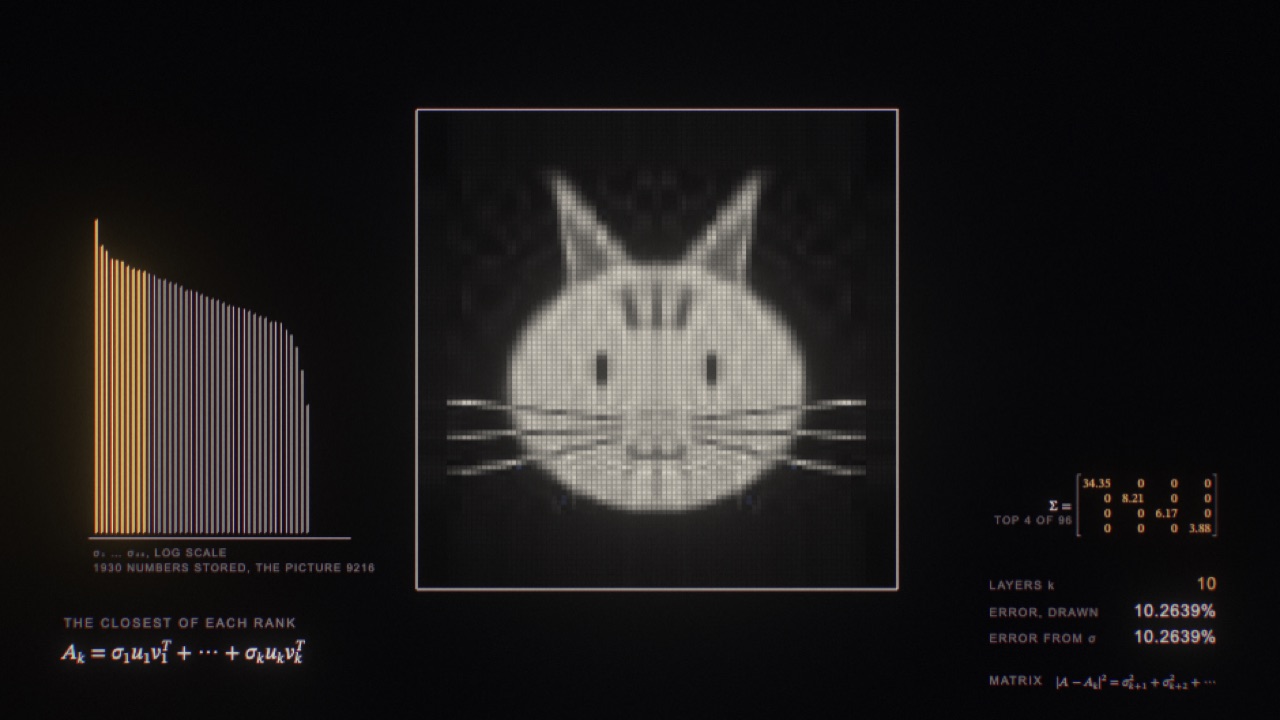 Plate VThe cat, layer by layerHow many layers does it take to recognize the cat?Open →
The Order Beneath · No.16PolytopesRegular polytopes in four dimensions
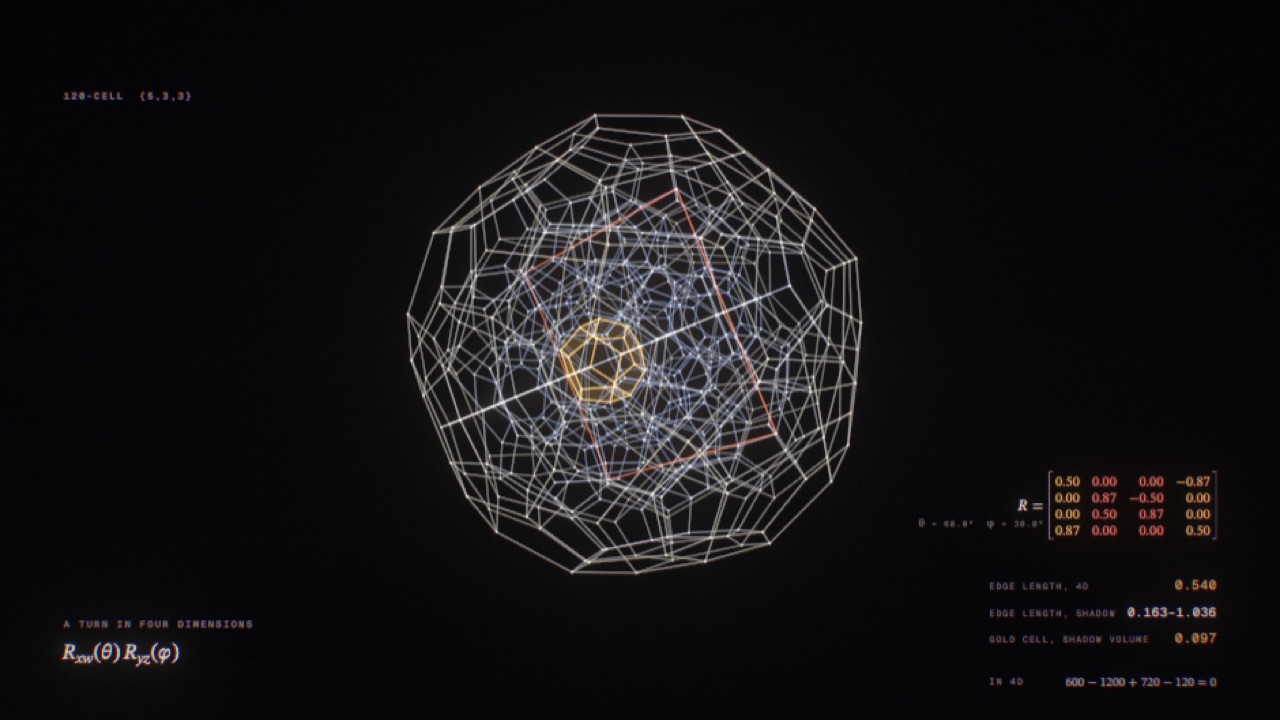 Plate ITurning in four dimensionsTurn it in four dimensions: the shadow changes, so what stays the same?Open →
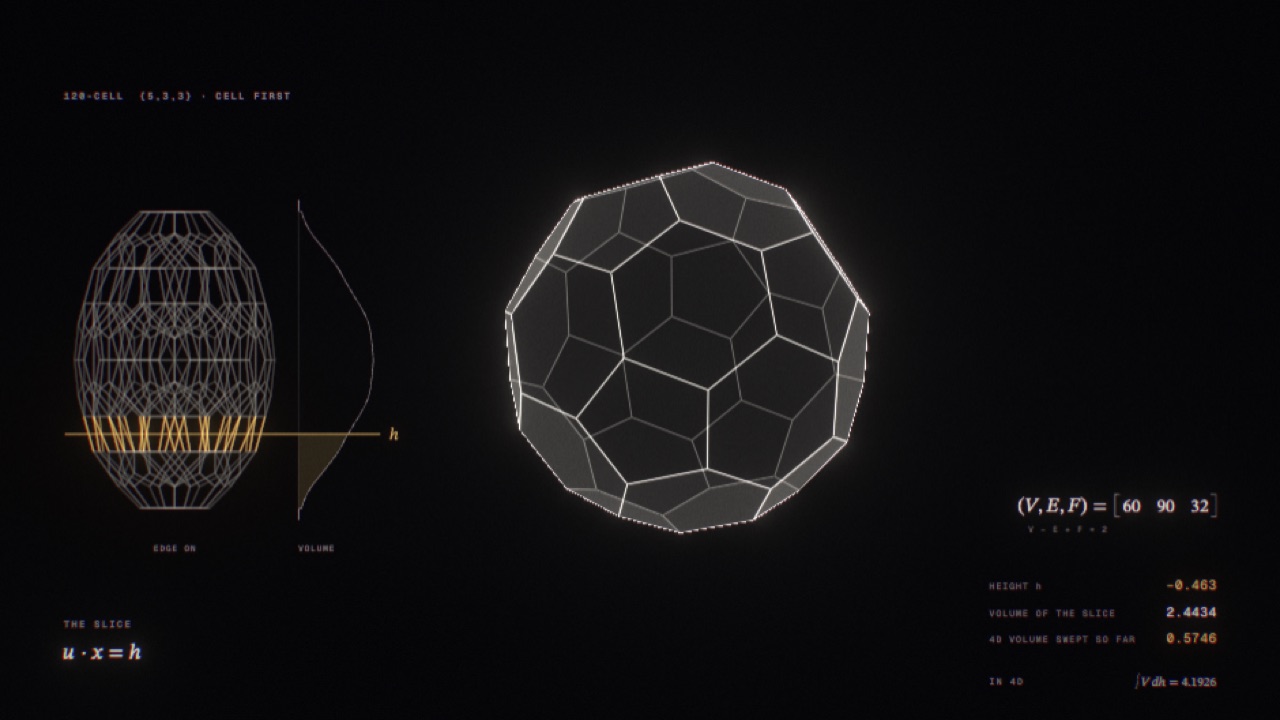 Plate IISlicing a polytopeWhen a four-dimensional polytope passes through our space, what do we see?Open →
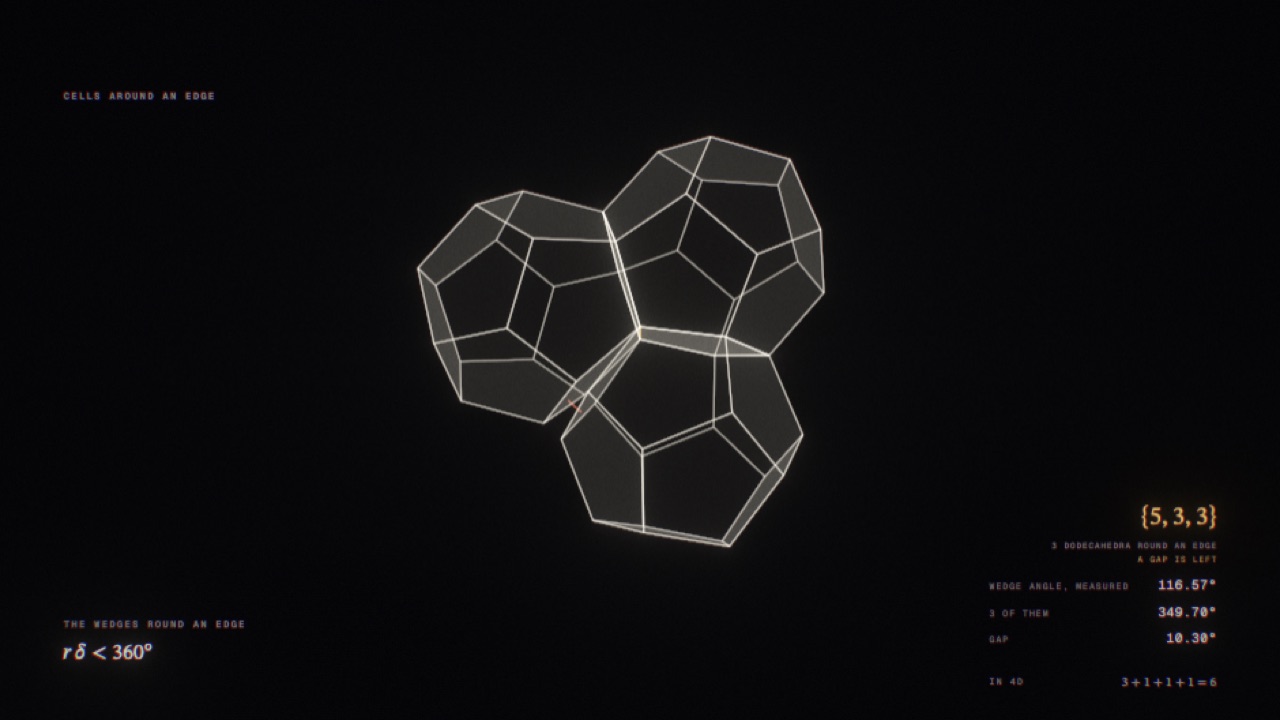 Plate IIIOnly sixHow many cells fit round an edge and still leave a gap?Open →
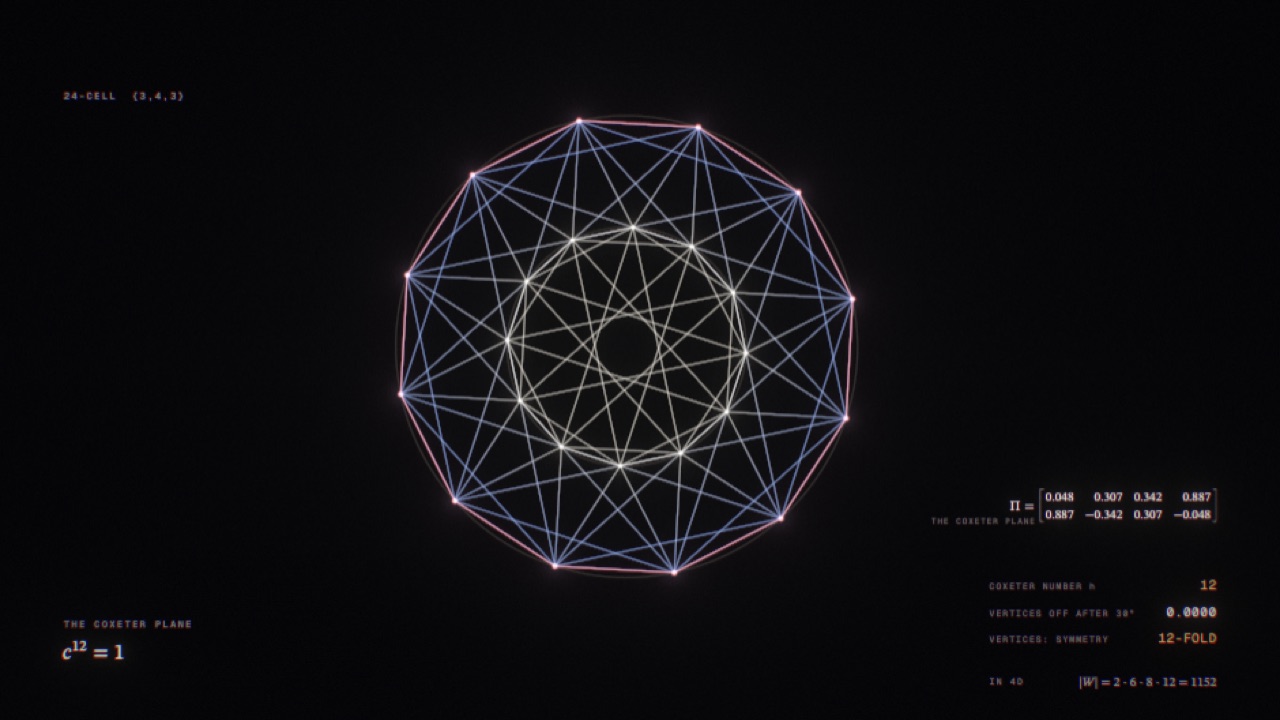 Plate VThe Coxeter planeIs there a direction in which the shadow shows more symmetry?Open →
The Order Beneath · No.17ApproximationApproximation of functions
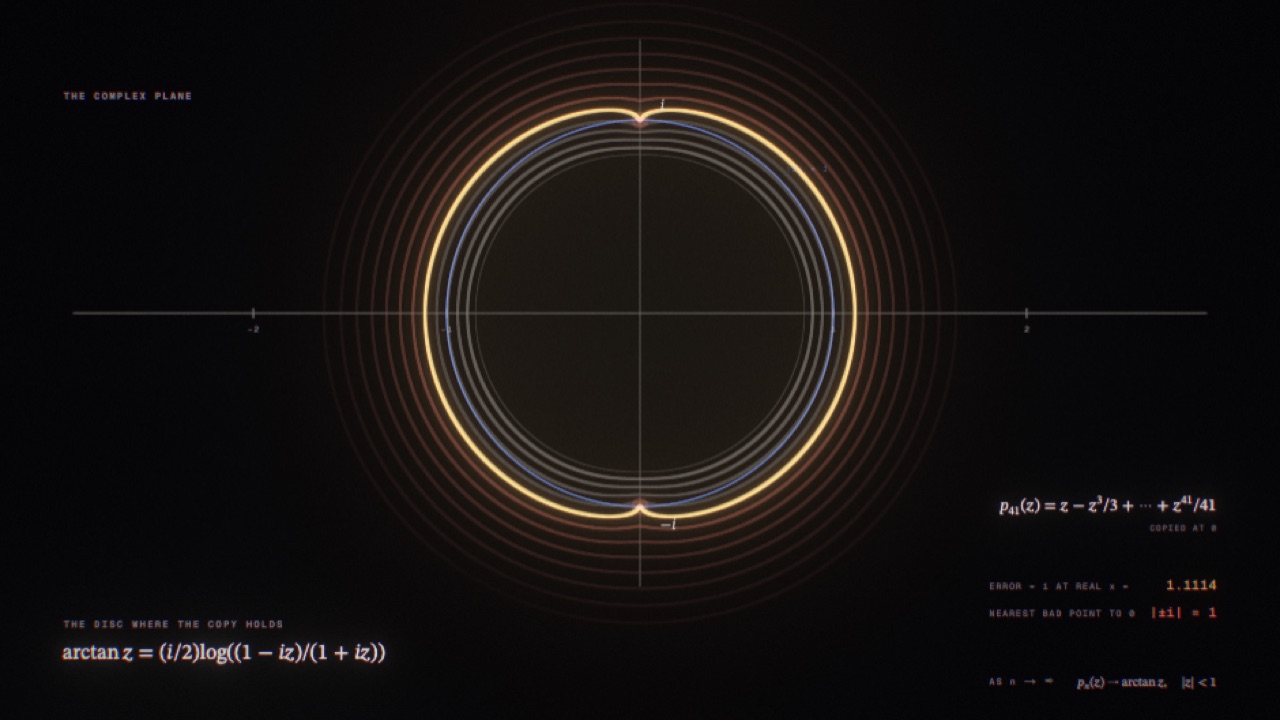 Plate IA series hits a wallCopy a curve at one point, term by term: how far out does the copy hold?Open →
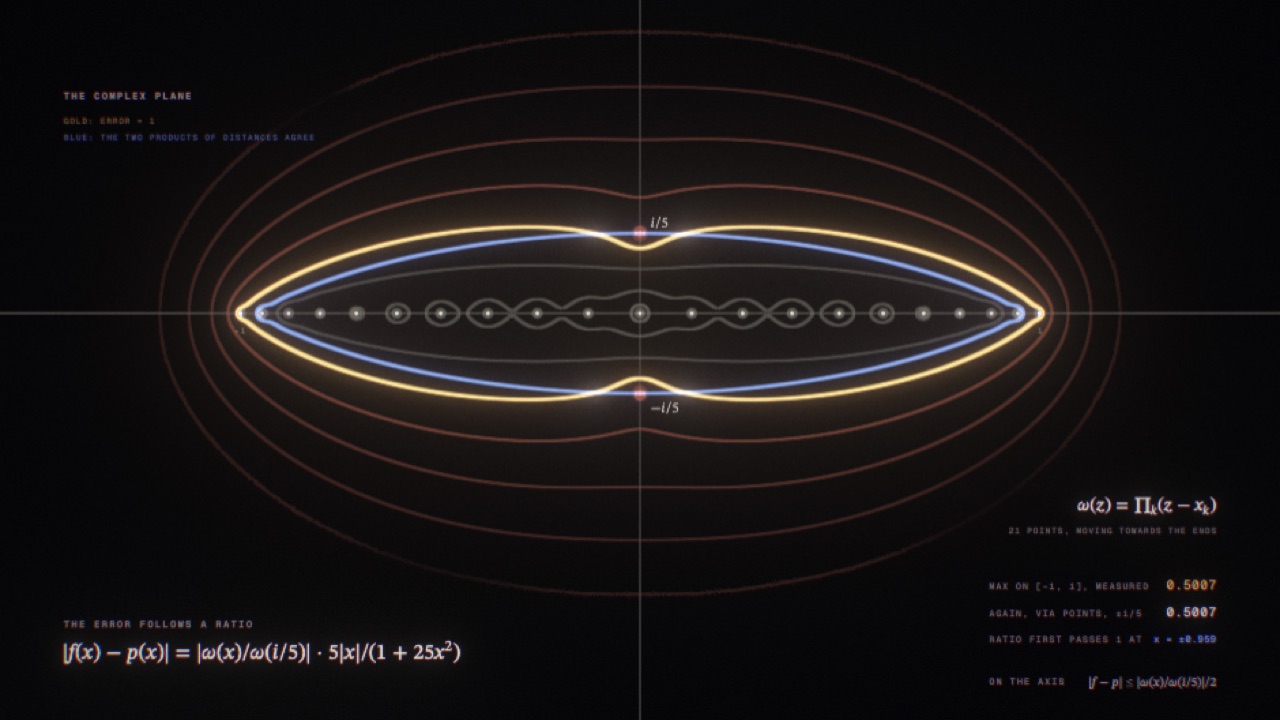 Plate IIWhere the points goWith the same number of points, where must they go for the polynomial through them to stop thrashing?Open →
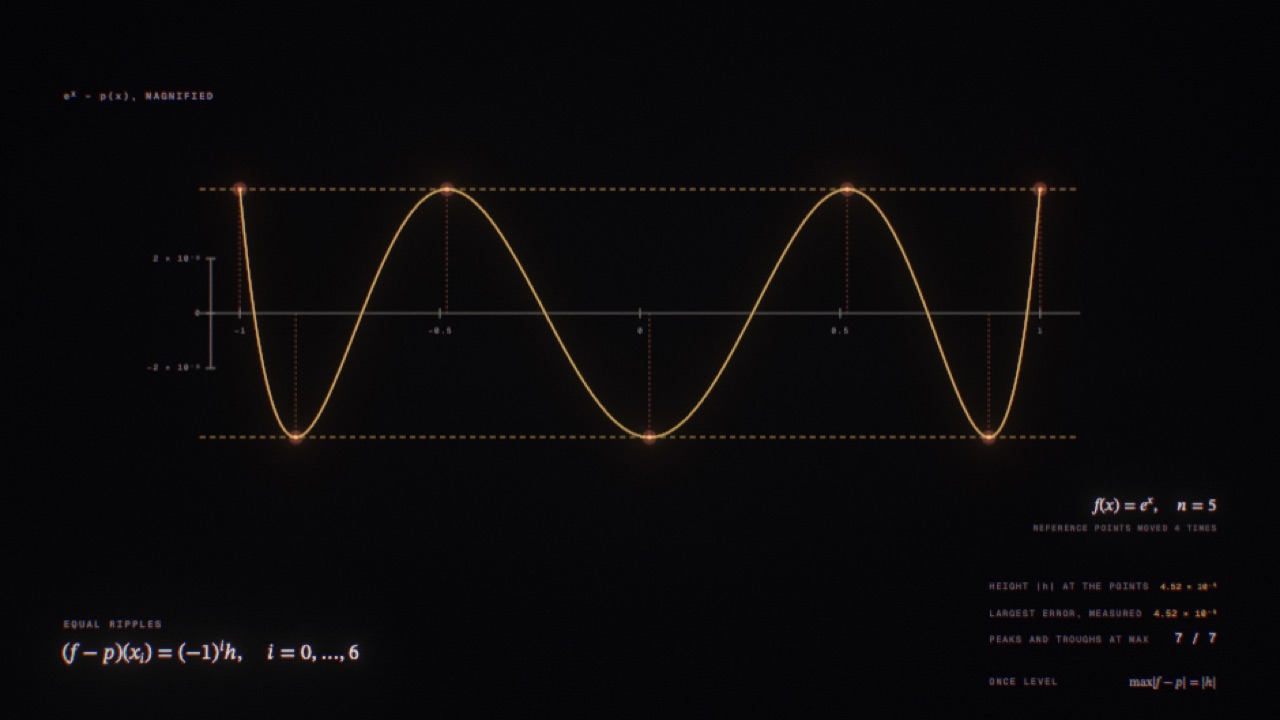 Plate IIIEqual ripplesOf all polynomials of degree at most n, what does the error look like for the one whose largest error is smallest?Open →
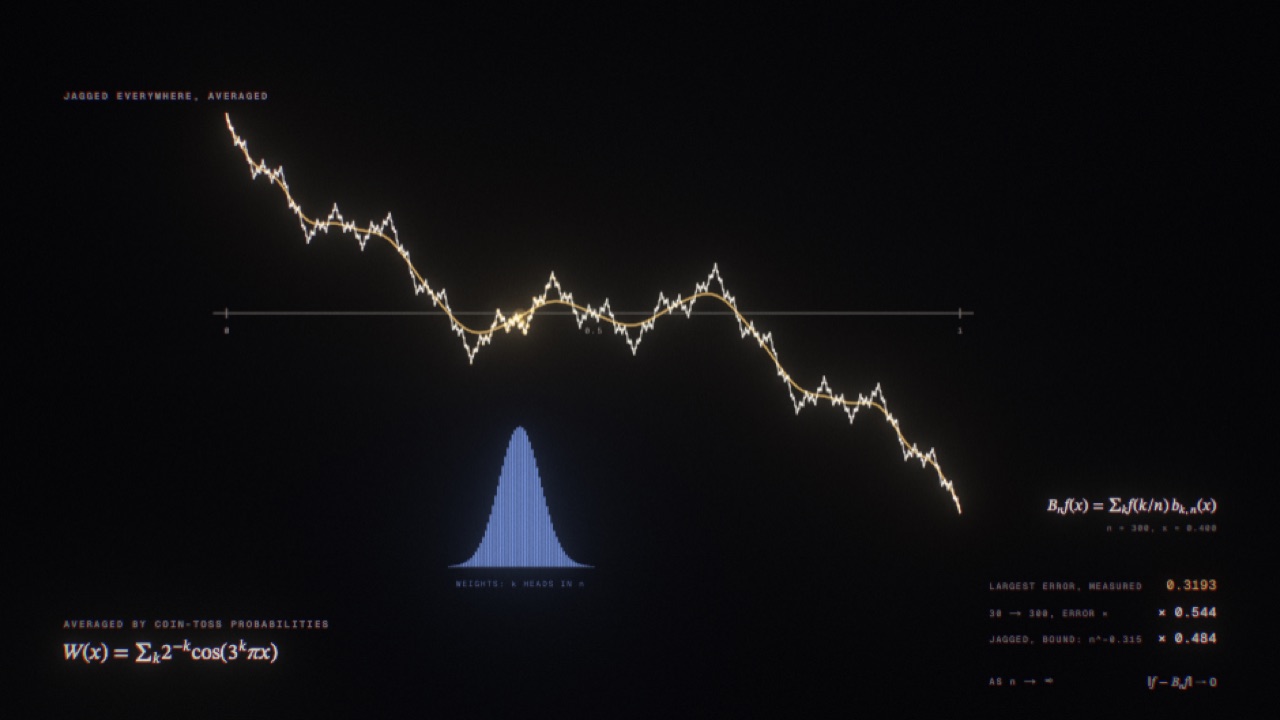 Plate IVAny continuous curveCan averaging with coin-toss probabilities copy even a curve that is jagged everywhere?Open →
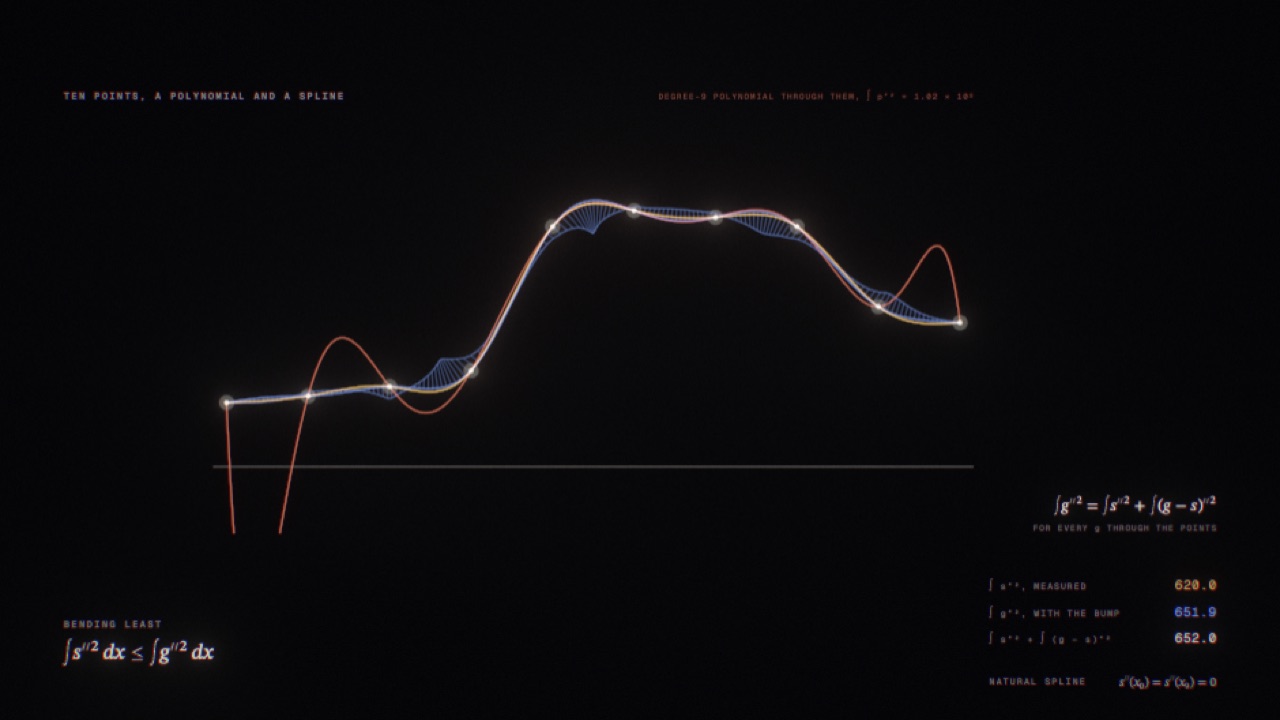 Plate VThe draughtsman's splineThrough the same points, which curve bends least?Open →
The Order Beneath · No.18FeedbackFeedback control
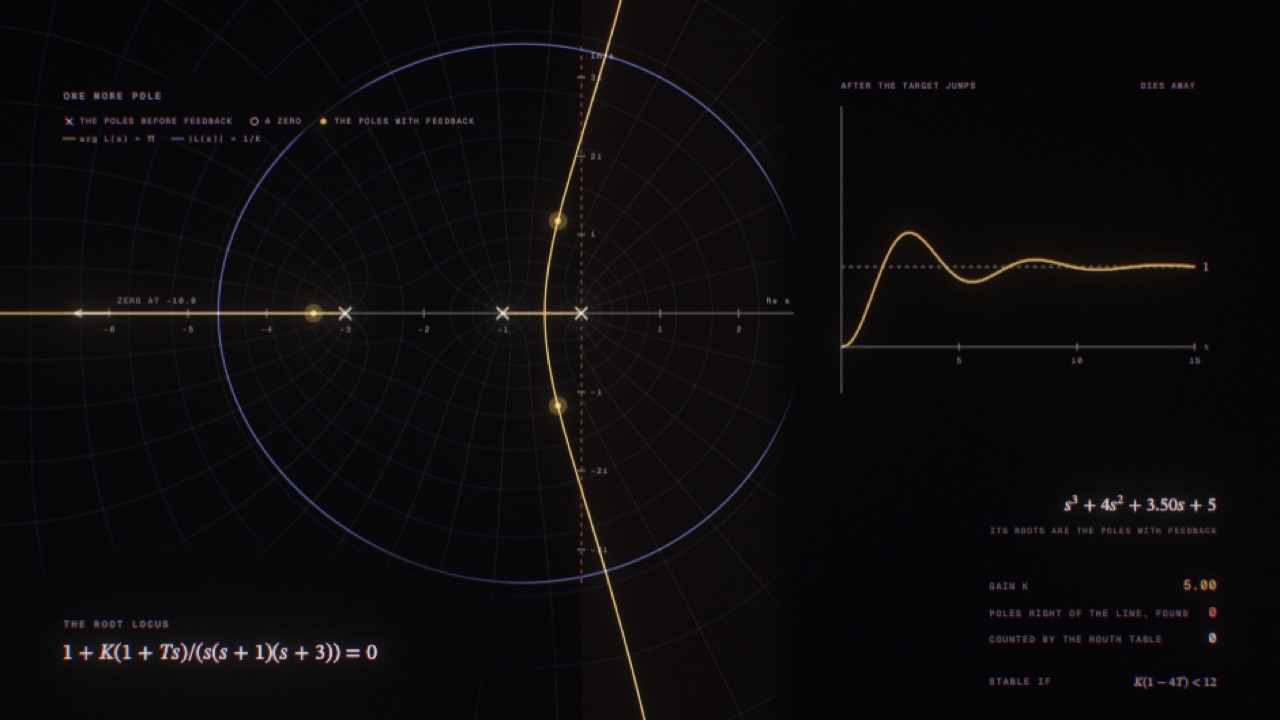 Plate IThe root locusTurn up the gain K: where do the poles go?Open →
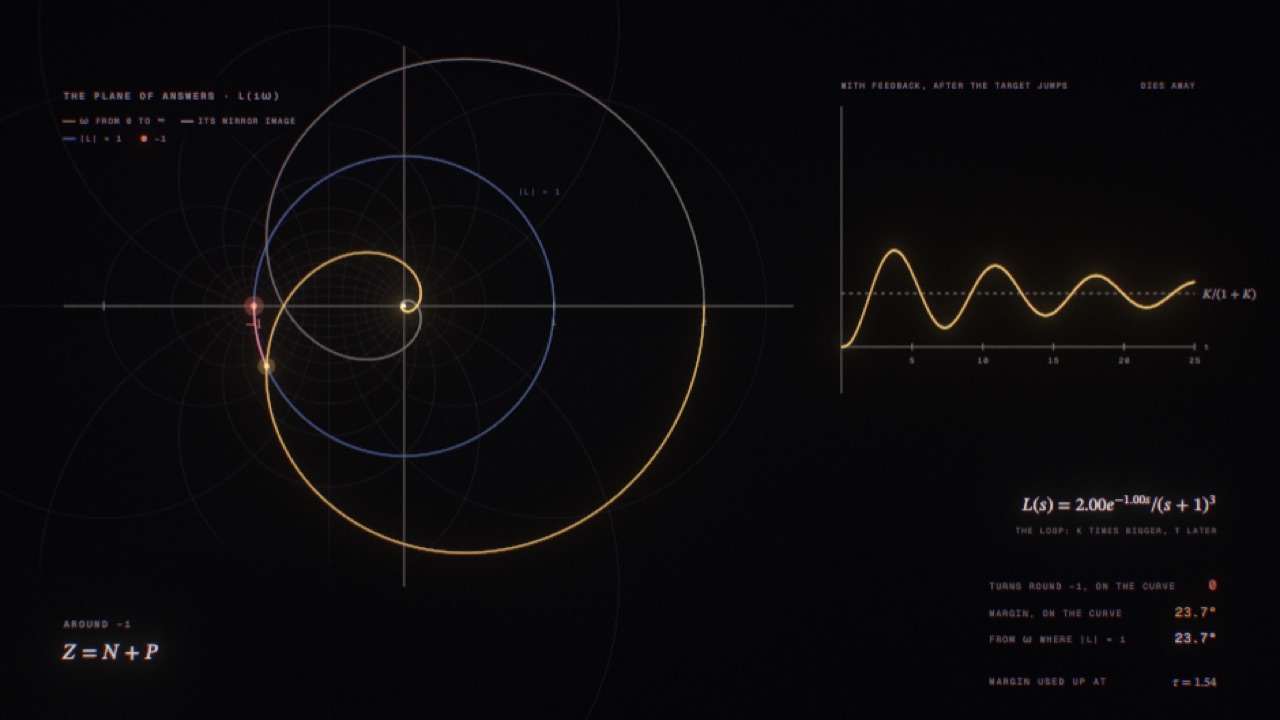 Plate IIAround −1How much gain, and how much delay, before the curve winds round −1?Open →
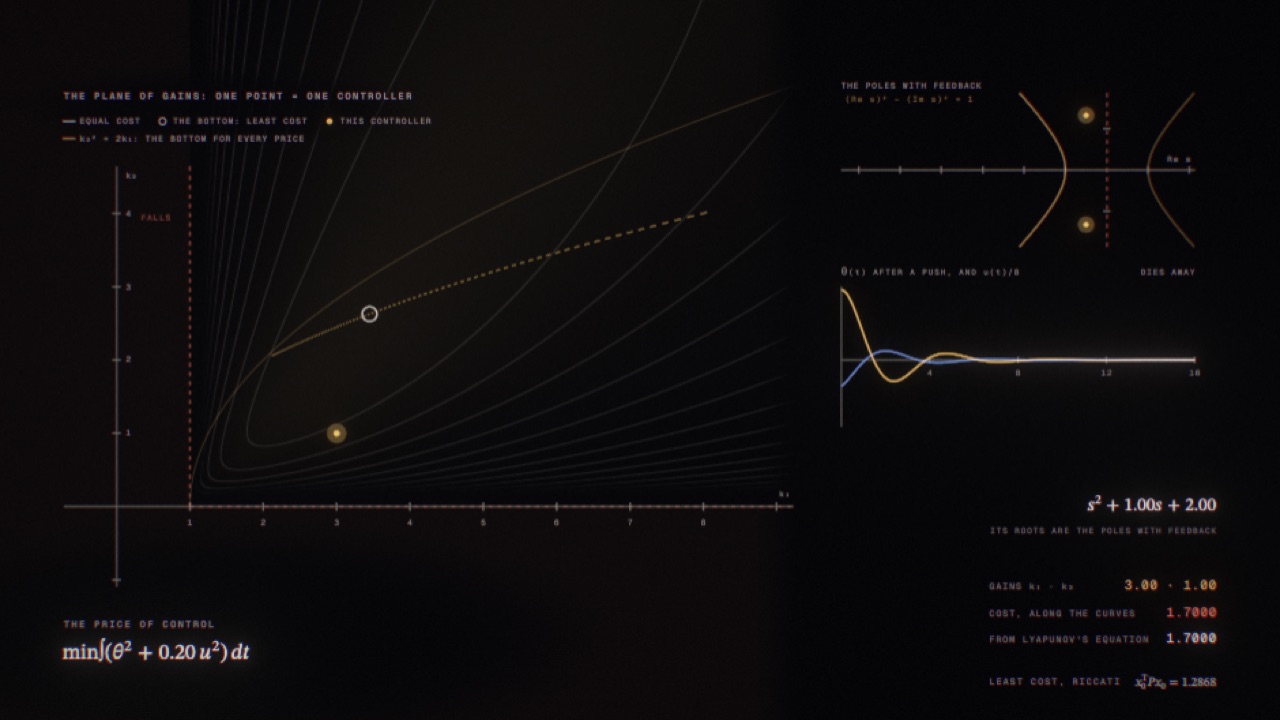 Plate IIIThe price of controlWhich controller balances the stick at the least cost?Open →
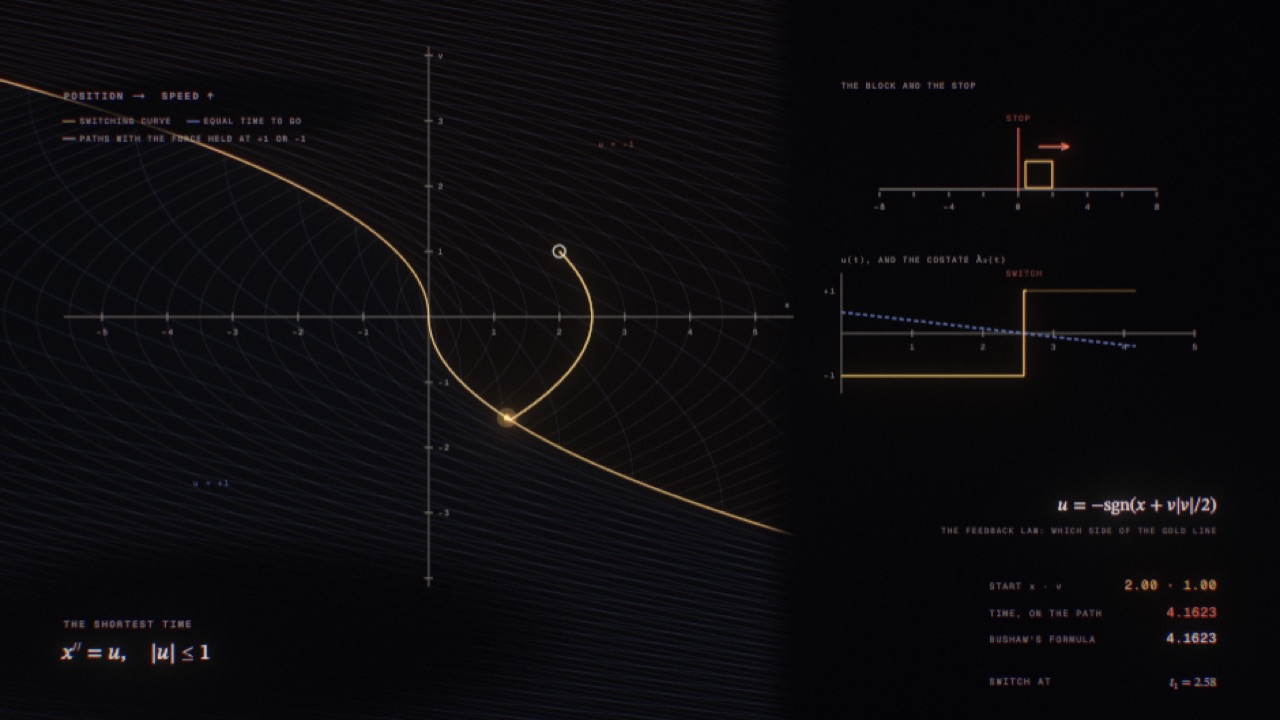 Plate IVThe shortest timeWith the force capped, how soon can it come to rest at the origin?Open →
The Order Beneath · No.19NoncommutativeNoncommutative geometry
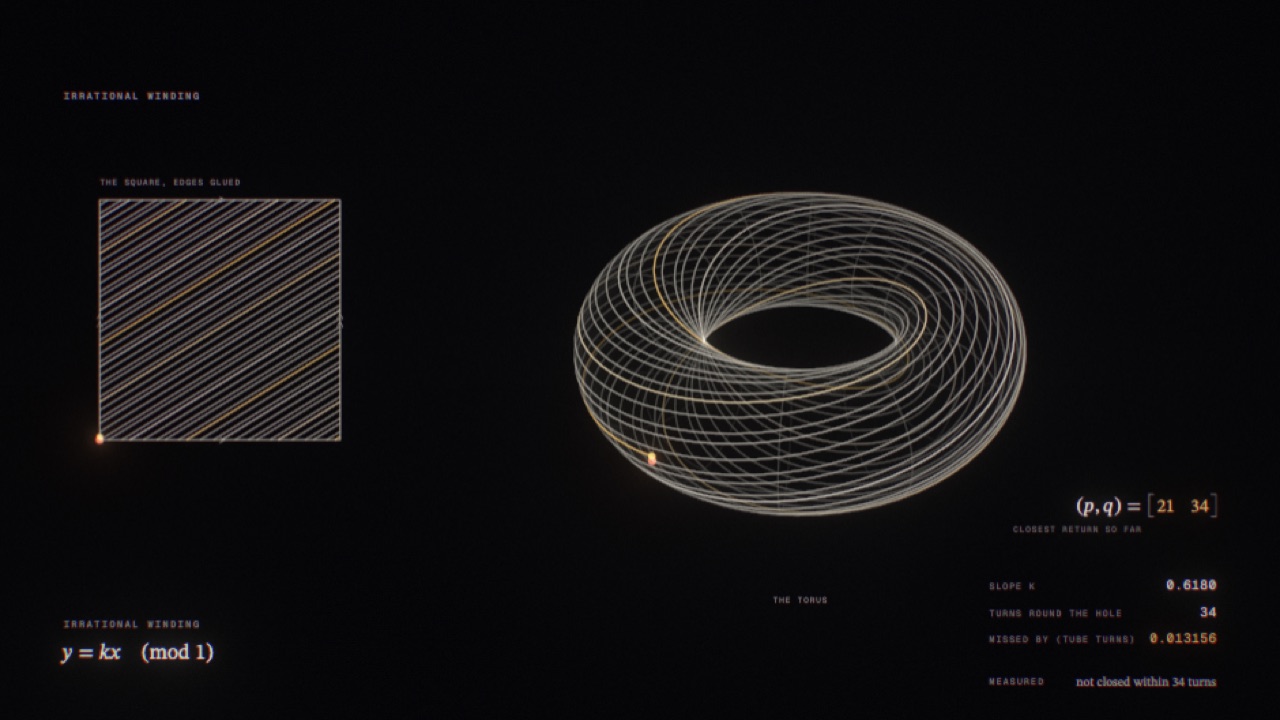 Plate IA slope just offMove the slope just a little: does the line still close?Open →
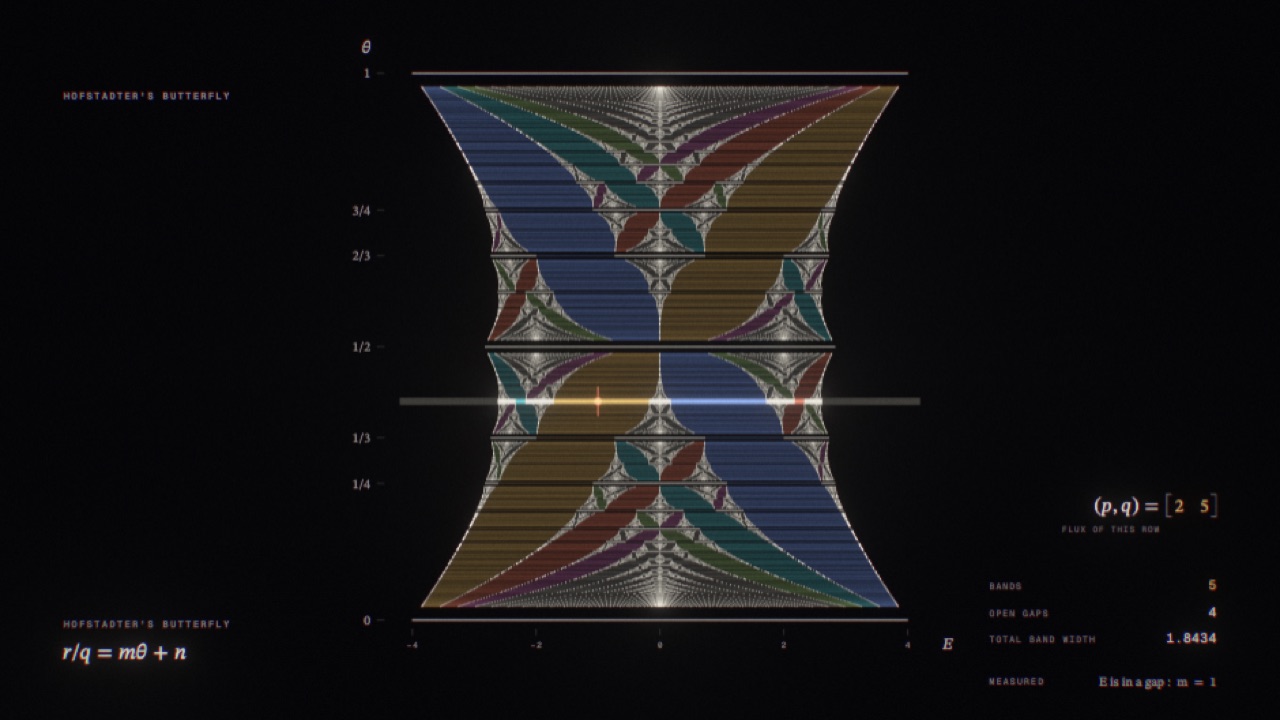 Plate IIOne row of the butterflyWith a flux of p/q, how many bands are there?Open →
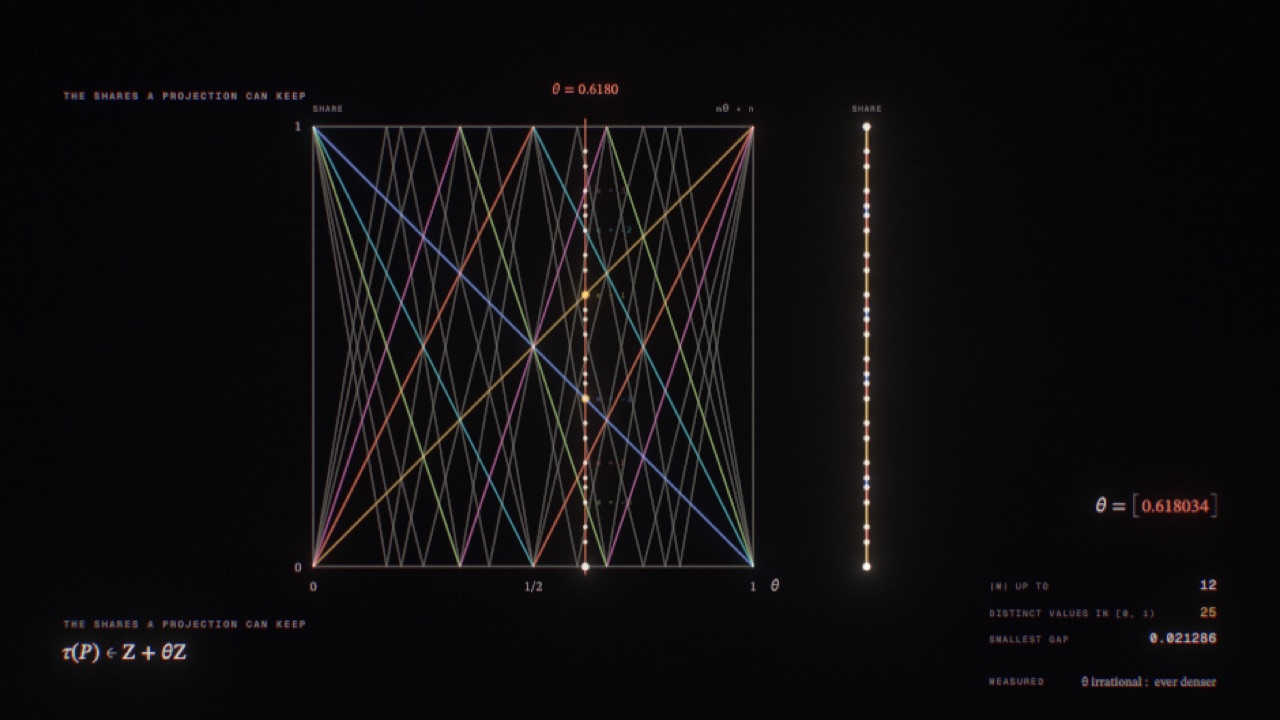 Plate IIIThe shares a projection can keepChange θ: which shares can a projection keep?Open →
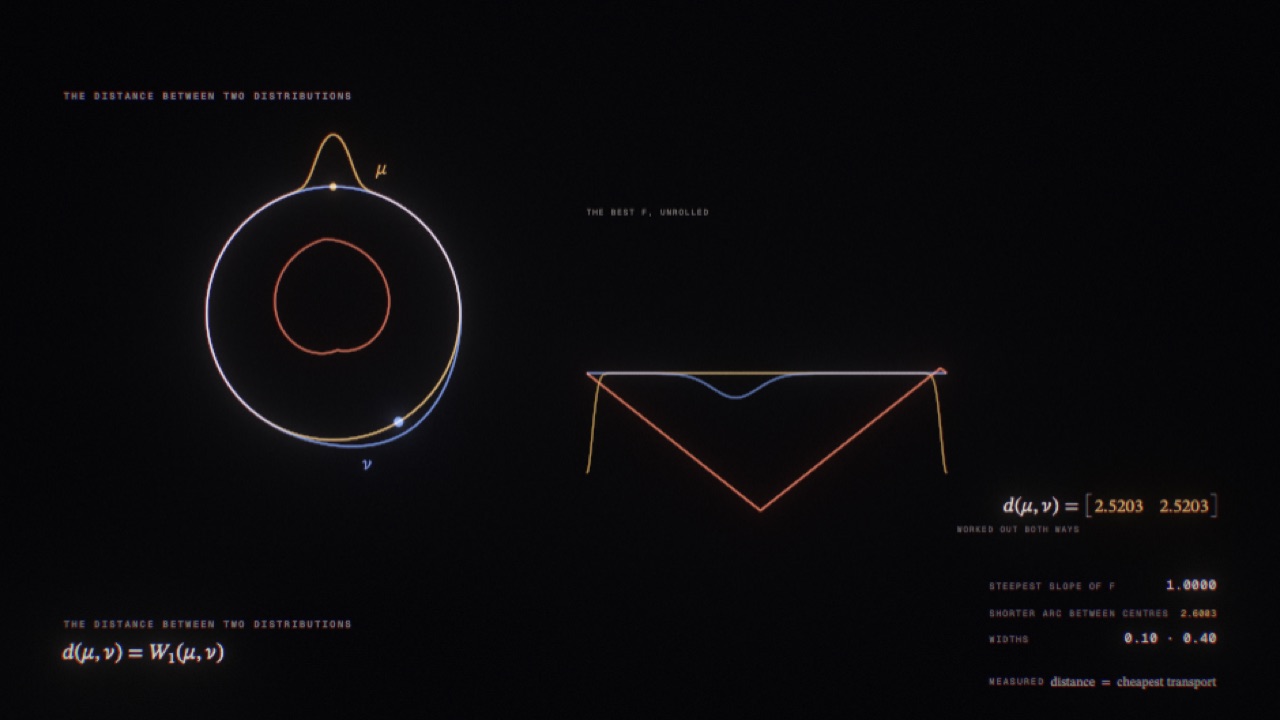 Plate IVThe distance between two distributionsHow far apart are two distributions on a circle?Open →
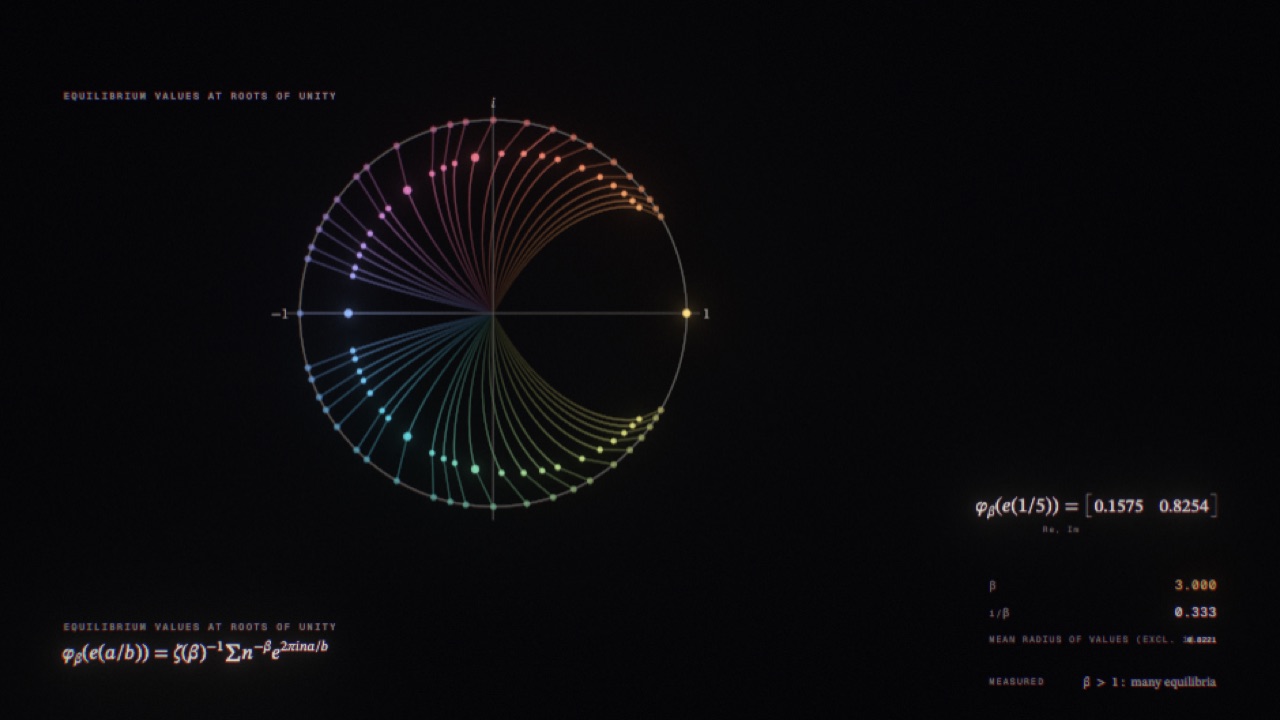 Plate VRoots of unity as the system coolsAs the system cools, where do the equilibrium state's values at the roots of unity go?Open →
More tools will follow.